

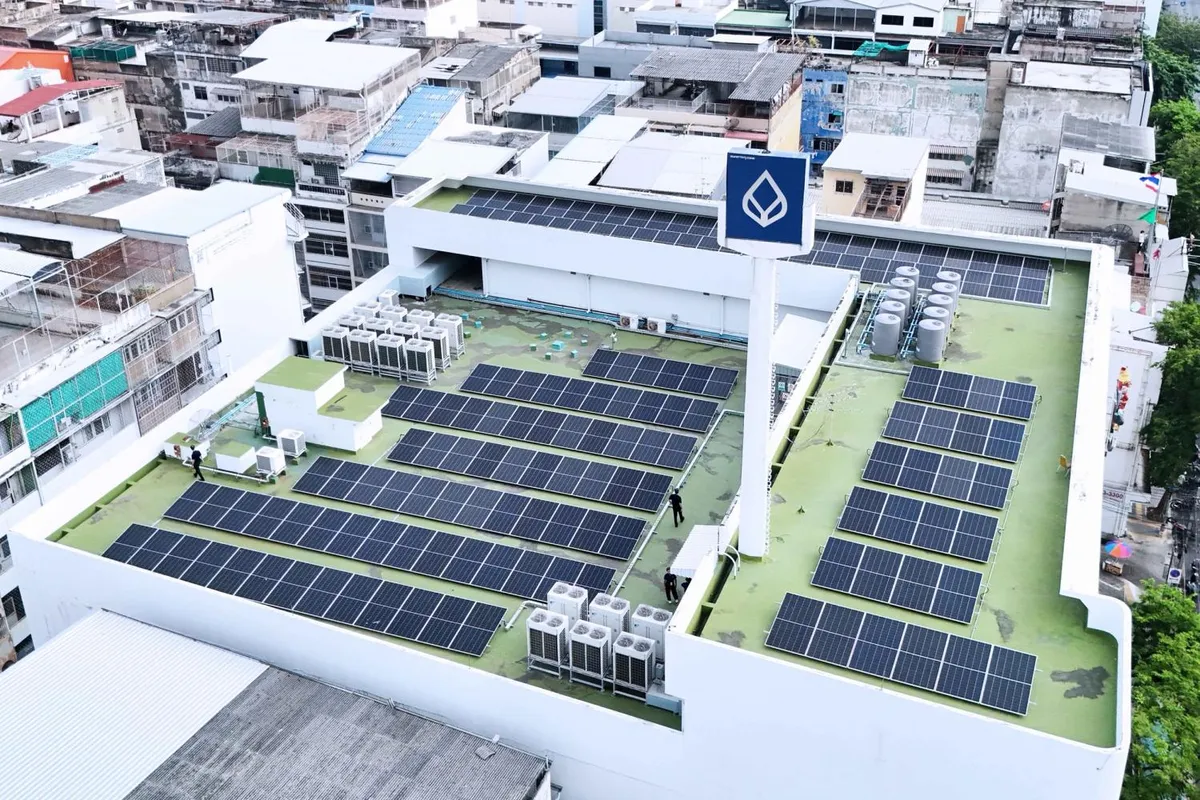
Leading Thai Banks Bolster Green Finance Offerings
Thailand’s six Domestic Systemically Important Banks (D-SIBs) are significantly expanding their financial support for environmentally-conscious initiatives. These institutions, including Bangkok Bank, Krungthai Bank, Kasikornbank, Siam Commercial Bank (under SCB X), Bank of Ayudhya, and TMBThanachart Bank, are collectively increasing financing for renewable energy, green infrastructure, eco-friendly businesses, and sustainable consumer products, according to recent sustainability reports.
Bangkok Bank Expands Sustainable Portfolio
Bangkok Bank (BBL), the nation’s largest lender by assets, continues to broaden its sustainable finance offerings through its Bualuang Green Financing for Transition to Environmental Sustainability program. The bank reported 19.5 billion baht in transition financing during the past year, aimed at supporting a low-carbon economy transition for all customer segments. Beyond loans, BBL provides advisory services to enhance climate resilience. For corporate clients, outstanding environmental loans reached 139 billion baht last year, with sustainability-linked loans totaling 6.8 billion baht. The bank offers five specialized loan products for corporations, including those for renewable energy, environmental transition, energy conservation, electric mass transit, and green real estate. For small and medium-sized enterprises (SMEs), BBL’s sustainable loan portfolio grew to 3.89 billion baht, featuring products for solar panel installation, sustainable transitions, and environmentally friendly activities. Retail customers also benefit from sustainable lending, with balances reaching 112 billion baht, supporting green housing improvements, solar installations, EV charging stations, and accessibility upgrades.
Kasikornbank Drives ESG Financing Growth
Kasikornbank (KBank) has also reported substantial progress in sustainable lending, with environmental, social, and governance (ESG) loans totaling 117 billion baht in 2025. This portfolio includes 52.8 billion baht for retail customers, 40.4 billion baht for corporate clients, 18.8 billion baht for wholesale businesses, and 5.05 billion baht for SMEs. Between 2022 and 2025, KBank’s cumulative sustainable financing and investment portfolio expanded to 199 billion baht. The bank has committed to achieving net-zero emissions in its own operations by 2030 and aims to be a leading provider of climate solutions, offering essential knowledge and tools to guide customers on their decarbonization journeys.
Krungsri Elevates Sustainability Targets
Bank of Ayudhya (Krungsri) has set ambitious goals for social and sustainable finance (SSF). Initially targeting 250 billion baht by 2030, the bank raised this goal to 350 billion baht in early 2026 due to increasing demand. By the end of 2025, Krungsri’s SSF portfolio stood at 256 billion baht. The bank finances renewable energy projects, including solar, wind, hydropower, and waste-to-energy, with total outstanding loans of 10.4 billion baht. Solar power represents the largest share of this renewable energy portfolio. Krungsri is also developing a transition plan to mitigate climate-related risks within its loan portfolio, focusing on high-emission industries. This initiative includes calculating financed emissions and developing transition plans for at least one carbon-intensive sector, with initial analyses conducted on the power generation and land transport sectors.
SCB X Integrates ESG into Lending
SCB X, the holding company for Siam Commercial Bank (SCB), reported a cumulative sustainable finance portfolio of 223 billion baht between 2023 and 2025. In 2025 alone, the bank provided 78.7 billion baht in sustainable loans to 35 corporate clients, 404 million baht to 59 SMEs, and 313 million baht to 39 retail customers. SCB integrates ESG considerations into its loan approval processes and the development of financial products. The bank offers green loans for renewable energy, EVs, and energy-efficient buildings, as well as sustainability-linked loans with preferential rates tied to specific ESG performance targets, such as energy efficiency improvements and GHG emission reductions.
TMBThanachart Bank Supports Green Transport and SMEs
TMBThanachart Bank (ttb) has expanded its sustainable financing activities, particularly for green transport and SME transitions. In 2025, sustainable finance constituted 12% of total corporate lending, with 12 billion baht in green and blue loans and 30.3 billion baht in SME financing. The bank also provided 14.7 billion baht in loans to retail customers for EV purchases, representing 16.5% of its consumer auto finance portfolio. Ttb supports auto dealers with floor plan financing for EVs totaling 28.8 billion baht. The bank offers a comprehensive suite of ESG-focused financial solutions, including green and blue loans for climate mitigation and environmental conservation, and sustainability-linked loans to incentivize ESG performance improvements.
Krungthai Bank Develops Sustainable Finance Framework
Krungthai Bank (KTB) has established a range of sustainable financial products, including sustainable, green, and sustainability-linked loans. Its sustainable loan program supports entrepreneurs and SMEs in green businesses, while the green loan program targets those transitioning to more environmentally sustainable operations, focusing on reducing GHG emissions and pollution. Sustainability-linked loans incorporate performance targets to encourage businesses to enhance their ESG performance.
Financial Sector Fuels Nation’s Low-Carbon Transition
The growing commitment from Thailand’s leading banks underscores the financial sector’s crucial role in driving the nation’s low-carbon transition. With increasing emphasis from regulators, investors, and customers on climate action, banks are expanding financing solutions for renewable energy, cleaner transport, and resource efficiency. As institutions surpass existing targets and set more ambitious goals, sustainable finance is emerging as a significant growth area for Thailand’s banking industry and a vital tool for achieving the nation’s long-term net-zero aspirations.
