

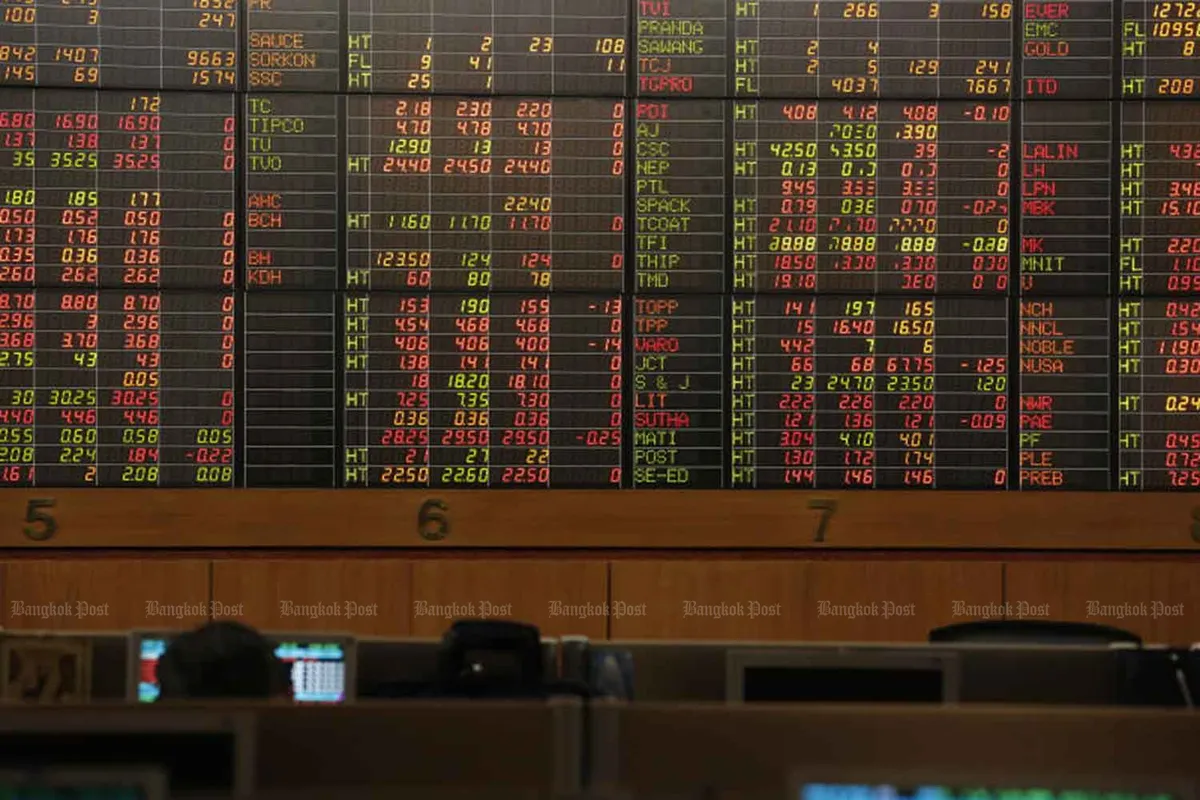
Capital Departs Thai Stock Market Amidst Baht Depreciation
Significant capital outflows are impacting the Thai stock market, driven by an increased likelihood of interest rate hikes by the U.S. Federal Reserve as inflation continues to rise. This trend is affecting emerging markets broadly, including Thailand’s bourse.
Global Economic Factors Driving Outflows
Markets are currently pricing in a 72% probability of a December rate increase by the U.S. Federal Reserve. Meanwhile, the Bank of Thailand faces limited room to adjust its own rates, with concerns that such a move could negatively affect the country’s delicate economic recovery, according to industry analysis.
The yield on U.S. 10-year Treasury notes has surpassed 4.56%, signaling ongoing apprehension about long-term interest rates and persistent inflation. This surge in U.S. bond yields is placing direct pressure on global financial and capital markets, including Thailand.
Impact on Thai Bonds and Currency
Foreign investors have divested Thai bonds worth approximately 11 billion baht so far this month. Monday alone saw net selling of 6.5 billion baht, contributing to a rise of 8 basis points in Thailand’s 10-year bond yield, which reached 2.29%.
This situation reinforces expectations that Thailand’s Monetary Policy Committee will maintain current policy rates throughout the year to safeguard economic stability. The combination of capital outflows and anticipated rate increases by major central banks is widening interest rate differentials, consequently weakening the Thai baht.
Stock Market Performance and Baht’s Decline
The Stock Exchange of Thailand (SET) index briefly exceeded the 1,600-point mark on Thursday but experienced a pullback on Friday and Monday. The market saw a rebound on Tuesday, mirroring trends in other Asian stock markets, and was trading around 1,580 points by mid-afternoon.
The Thai baht fell to a two-month low against the U.S. dollar on Monday, trading at 32.92. Analysts suggest that as long as the baht continues to depreciate, substantial fund inflows are unlikely in the near term.
Inflation Outlook and Market Influences
Recent market analysis indicates a short-term relief rally in artificial intelligence and growth stocks, influenced by a drop in West Texas Intermediate crude prices following Iran’s announcement of a ceasefire with Israel. This development has eased some inflationary pressures.
However, the overall market upside remains constrained. The U.S. 10-year Treasury yield has not decreased in correlation with oil prices and remains elevated around 4.57%. This sustained high yield reflects ongoing concerns regarding inflation and monetary policy.
Looking ahead, inflation in Thailand is expected to remain elevated for the next few quarters, primarily due to rising oil prices exacerbated by ongoing Middle East conflicts. While inflation dipped below 3% in May, it is projected to significantly increase this month and in the coming months. Projections suggest Thai inflation could reach as high as 4% in the next two quarters before potentially easing in the second quarter of next year.
