

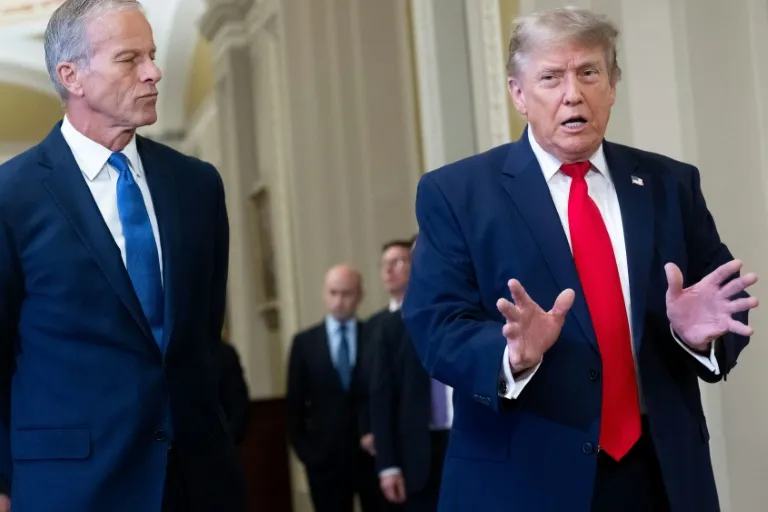
A planned signing ceremony for a bipartisan housing affordability package was abruptly canceled by the President, who stated he would not endorse the legislation until Congress passes his proposed voting restrictions, dubbed the SAVE America Act. The unexpected decision came just two hours before the high-profile event, intended to showcase Republican action on a key economic concern for voters ahead of the November midterm elections.
President’s Ultimatum on Voting Legislation
The President announced the cancellation on his social media platform, declaring, “Today’s Housing News Conference and Signing is hereby cancelled until such time as we pass the desperately needed SAVE AMERICA ACT, which I consider to be a National Emergency.” The proposed election measure mandates proof of citizenship for voter registration and photo identification for casting a ballot. While supporters contend it is essential for election integrity, critics argue it disproportionately impacts voting rights, particularly for minority voters and married women who may face challenges in obtaining required documentation.
Stalled Legislation and Internal Divisions
The SAVE America Act has encountered significant hurdles in the Senate, with Republican leadership reportedly warning the President that it lacks the necessary support to overcome procedural rules. Despite the ongoing challenges and his persistent assertions regarding the 2020 election results, the President proceeded with a scheduled lunch meeting with Senate Republicans.
Contentious Senate Meeting
Reports indicate the lunch meeting became confrontational when the President questioned senators who had recently voted in favor of a resolution rebuking his actions regarding the Iran war. This resolution, adopted with bipartisan support, directed the President to end hostilities or seek congressional authorization for continuing military engagement. Senator Bill Cassidy of Louisiana described the exchange, stating, “You have not told the American people what’s going on. It was supposed to last four weeks; it’s lasted four months. Our original objectives have not been achieved and I want to know what’s going on.” Cassidy, who lost a primary election to a candidate backed by the President, was ineligible for re-election in November.
Following the meeting, the President appeared visibly frustrated, telling reporters, “I don’t like a few people, but that’s okay — I think you know who they are.” The vote on war powers occurred as the President aims to finalize an agreement with Iran after months of conflict that have impacted global energy markets and highlighted divisions within his own party.
Housing Bill’s Significance Downplayed
Earlier, as he entered the lunch with Senate Majority Leader John Thune, the President deflected questions about the housing bill, instead highlighting a positive outlook on the Middle East conflict and claiming significant concessions from Iran. The housing bill, which passed with broad bipartisan backing, was intended to address affordability by increasing housing supply, easing construction regulations, and expanding homeownership opportunities. This legislation faced challenges from high rents, elevated mortgage costs, and a shortage of available homes.
The President had previously supported the housing package, viewing it as an opportunity to emphasize efforts to reduce living costs amidst persistent inflation, partly attributed to the conflict in the Middle East. However, he later dismissed the bill as being of “minor importance” and stated it “pales in comparison” to the passage of the SAVE America Act.
Presidential Power and Symbolic Rejection
The President’s refusal to sign the housing bill may ultimately hold symbolic weight. Under constitutional provisions, a bill automatically becomes law after ten days if the President neither signs nor vetoes it while Congress remains in session. This development follows a previous instance where the President canceled a Senate confirmation hearing for his nominee for director of national intelligence, prioritizing the election bill.
