

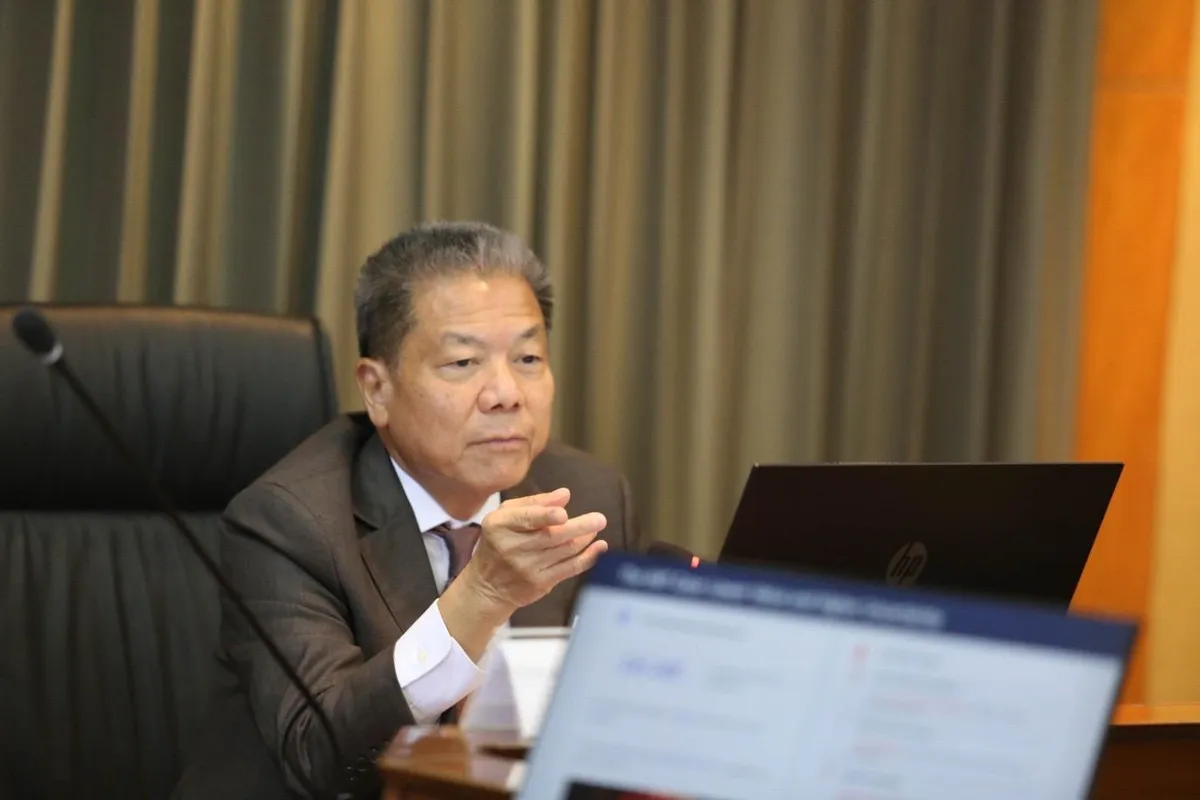
NBTC Chairman’s Role Questioned Amid Qualification Allegations
The National Broadcasting and Telecommunications Commission (NBTC) chairman is currently facing significant legal uncertainty following the submission of a detailed report questioning his eligibility for the position. The report, compiled by former members of the Senate Committee on Information Communication Technology and Telecommunications (ICT), outlines several alleged violations of the Frequency Allocation Act of 2010.
Key Allegations Against NBTC Chairman
Gen Anantaporn Kanjanarat, formerly the chairman of the Senate ICT Committee, presented a comprehensive fact-finding report to the NBTC selection committee. This report, co-authored by eight other former Senate committee members, specifically targets Dr. Sarana’s qualifications and adherence to the law.
Violation of Frequency Allocation Act
Central to the allegations are claims that Dr. Sarana lacks the necessary qualifications and has fulfilled conditions that contravene the Frequency Allocation Act of 2010. The report cites provisions within the act that prohibit individuals who have served as a director, executive, or consultant for a broadcasting or telecom entity within the year preceding their selection as an NBTC commissioner.
Evidence suggests that Ramathibodi Hospital at Mahidol University, where Dr. Sarana previously held an executive position, possesses an NBTC license for its “Rama Channel” television station. This connection is reportedly a key factor in the alleged qualification breach.
Full-Time Service Mandate and Conflicts of Interest
Furthermore, the report alleges a violation of Section 26 of the act, which mandates that NBTC commissioners serve on a full-time basis. Investigations indicate that following his appointment to the NBTC, Dr. Sarana allegedly continued to serve as an independent director for Bangkok Bank and maintained an active medical practice at both public and private hospitals.
Additional concerns are raised regarding Articles 8 and 18 of the law. Article 8 stipulates that commissioners must not be state officials, employees of state agencies or enterprises, nor directors or advisors of such entities. They are also prohibited from self-employment in professions that create direct or indirect conflicts of interest with their NBTC duties.
Article 18 requires prospective commissioners to resign from any such prohibited posts within 15 days of their selection by the Senate, a step preceding royal appointment. Failure to meet this deadline, according to the law, prevents the Senate from confirming their candidacy.
Timeline and Evidence of Continued Practice
The presented evidence indicates that Dr. Sarana remained an employee of Mahidol University until April 12, 2022, just one day prior to his royal appointment as NBTC chairman. The report further states that Dr. Sarana failed to provide concrete proof of his resignation or the cessation of his private professional activities within the legally mandated timeframe.
To substantiate these claims, the committee report references Dr. Sarana’s personal income tax filings. These documents reportedly show continuous income derived from medical services, independent professional practice, and private sector contracts extending through 2023, even after assuming his NBTC role.
NBTC Selection Committee Reviewing Options
The NBTC selection committee is currently evaluating the situation and determining whether to initiate a new recruitment process. In response, Dr. Sarana has submitted a letter to the selection committee, formally objecting to its authority in handling his case.
