

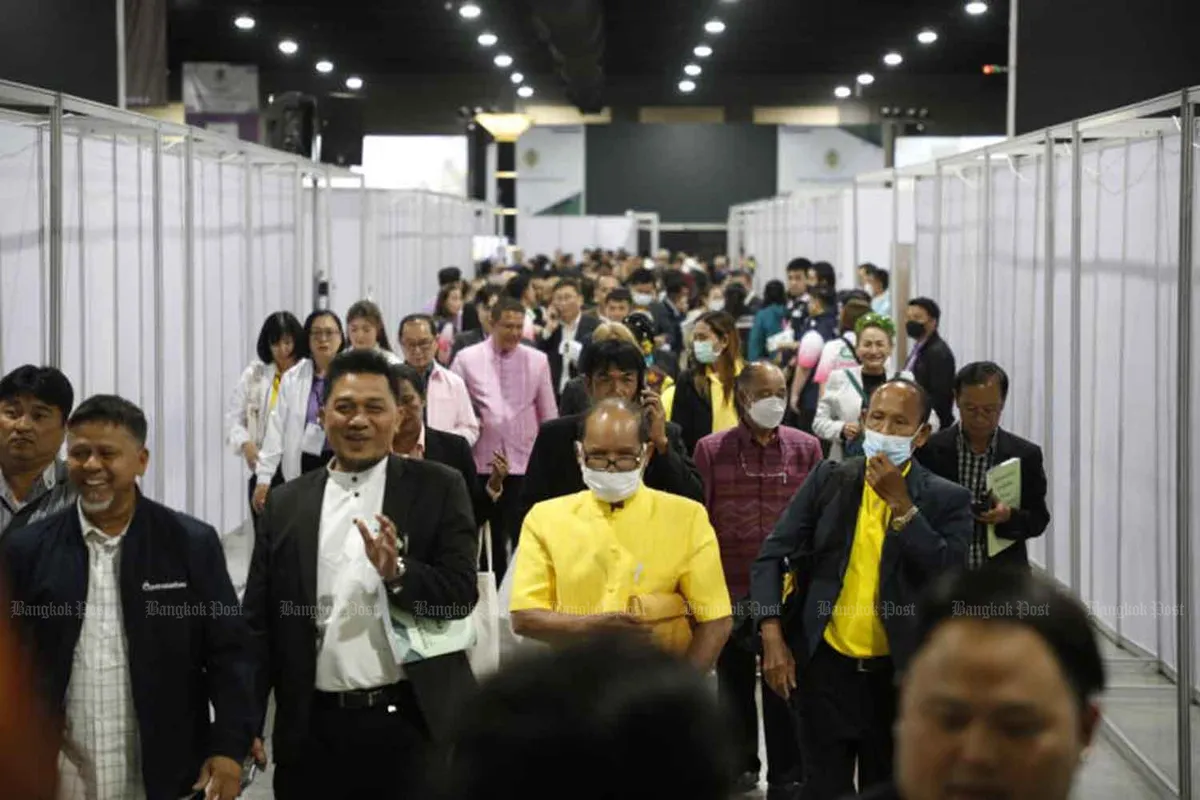
The investigation into alleged irregularities in the recent Senate elections is proceeding according to schedule, with the Election Commission (EC) committed to completing its review within the legally defined timeframe. The commission has emphasized its thorough process, stating that it must examine and rule on each complaint before any referral to the courts.
Election Commission’s Deliberation Process
Mr. Narong, a representative of the EC, outlined the commission’s methodical approach, noting that deliberations occur weekly. As of the latest update, three out of twelve scheduled meetings dedicated to the case had been completed, with the fourth slated for the upcoming week. “We are confident the process will be completed within the legal timeframe,” Mr. Narong stated, underscoring the commission’s adherence to established procedures.
Addressing public and political calls for a swift referral to judicial bodies, Mr. Narong clarified the EC’s mandate. “The EC is not a post office that simply forwards whatever is submitted to us. We cannot do that because it would be against the law. We must issue a ruling on every case,” he explained. This statement highlights the commission’s responsibility to conduct its own independent assessment of the evidence and allegations before making any decisions on dismissal or referral.
Mr. Narong also refuted claims that the EC was intentionally delaying the proceedings. He reiterated the commission’s dedication to concluding its review within the planned twelve meetings, assuring stakeholders that the process is ongoing and not being unduly prolonged. The commission’s workload, he added, includes addressing complaints from various elections, not solely the Senate case, necessitating a balanced allocation of resources and time.
Independent Review and New Evidence
In its pursuit of impartiality, the EC is reportedly reviewing the entire case file independently. Commissioners are examining the evidence directly, rather than solely relying on the findings or conclusions presented by any investigative subcommittees. This approach aims to ensure a comprehensive and unbiased assessment of all submitted materials.
Regarding new evidence brought forth by Mr. Parit Wacharasindhu, a Member of Parliament from the People’s Party, Mr. Narong confirmed that all such information would be duly considered as part of the ongoing investigation. The inclusion of all relevant evidence is crucial for a thorough examination of the allegations.
Navigating Political Pressure
Despite persistent criticism and scrutiny from opposition parties, Mr. Narong maintained that the EC is operating without succumbing to external pressure. He asserted his commitment to his duties, stating, “I am simply performing my duties under the law. If I could not withstand the pressure, I would have resigned.” This stance emphasizes the commission’s resolve to carry out its legal obligations impartially.
Background of the Senate Election Case
The Senate election collusion case has emerged as a significant political investigation following the nationwide Senate elections held on June 26, 2024. The core allegations suggest the existence of an organized network that coordinated Senate candidates across all twenty designated occupational groups. Furthermore, senior politicians, cabinet members, and influential provincial political families are accused of providing support for this alleged operation.
The investigation, a joint effort between the EC and the Department of Special Investigation (DSI), has led to formal accusations against a substantial number of individuals. Currently, 229 people face charges, comprising 138 senators and 91 political figures. This broad scope reflects the alleged depth and reach of the coordinated effort.
Conflicting Recommendations and Next Steps
A notable complexity within the investigation has been the emergence of conflicting recommendations from different investigative bodies. An initial panel established by the EC had recommended referring the case to the Supreme Court. However, a subsequent subcommittee, in a 5-2 vote, concluded that no electoral offenses had been committed, presenting a divergence in findings that the EC must now reconcile.
The EC’s current phase involves carefully evaluating these differing conclusions and all associated evidence. The commission’s ultimate decision will determine whether the case proceeds to judicial review or is dismissed. The public and political observers are keenly awaiting the resolution of this high-profile investigation, which has significant implications for the integrity of the electoral process.
Key Takeaways
- The Election Commission (EC) is actively investigating alleged irregularities in the June 26, 2024, Senate elections.
- The EC assures the public that the investigation is on track and will be completed within the legal timeframe, with 3 of 12 scheduled meetings already held.
- Commissioners are conducting an independent review of the case, considering all submitted evidence, including new information.
- The EC emphasizes its legal obligation to rule on each complaint rather than simply forwarding them for judicial consideration.
- The investigation involves 229 accused individuals, including senators and political figures, and is a joint effort with the Department of Special Investigation (DSI).
- Conflicting recommendations from different investigative panels within the EC add complexity to the case.
Frequently Asked Questions
What is the main allegation in the Senate election case?
The primary allegation is that an organized network coordinated Senate candidates across all 20 occupational groups, allegedly with support from senior politicians, cabinet members, and influential political families.
How many people have been formally accused in this case?
As of the latest reports, 229 individuals have been formally accused, including 138 senators and 91 political figures.
What is the Election Commission’s role in this investigation?
The EC is responsible for investigating the allegations, reviewing all evidence, and making a ruling on each complaint. This ruling will determine whether the case is dismissed or referred for judicial consideration. The EC must conduct its own assessment and cannot simply forward complaints.
Conclusion
The Election Commission’s commitment to a thorough and legally compliant investigation into the Senate election irregularities is paramount. By adhering to its procedural mandates and conducting independent reviews, the EC aims to ensure a just and transparent outcome. The ongoing deliberations, despite external pressures and internal complexities, signal a determined effort to address the allegations within the established legal framework, ultimately contributing to the public’s confidence in the electoral system.
