

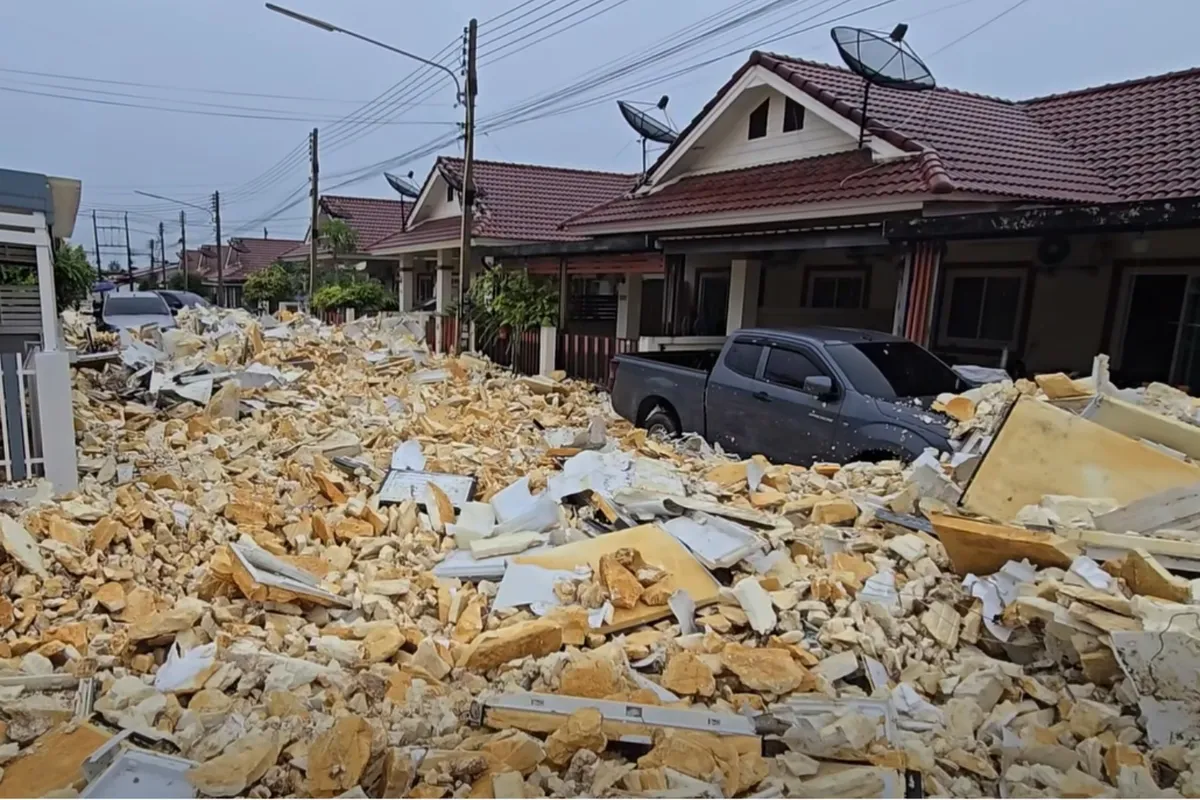
Residents of Boonraksa Ville 2 in Chon Buri experienced a significant flood event when torrential rains caused a wall to collapse, allowing a massive accumulation of recycling waste to inundate their village. The incident, which took place in the late morning during a heavy downpour, has prompted calls for a thorough investigation into the waste management practices of a nearby recycling operation.
Recycling Waste Causes Village Flood
The deluge began when intense rainfall overwhelmed drainage systems and exerted pressure on the rear wall of the Boonraksa Ville 2 housing estate. This wall, separating the residential area from adjacent land, ultimately gave way. The land behind the estate is privately owned and reportedly leased to foreign operators who manage a recycling business specializing in old refrigerators and freezers.
According to Arthit Inprasit, the president of the homeowners’ association, the recycling process involves the removal of valuable components from these appliances. This leaves behind substantial quantities of foam waste. When the heavy rains hit, this foam was dislodged and swept into a large, cohesive mass. This mass then pressed against the rear wall of the estate with considerable force. The structural integrity of the wall was compromised, leading to its collapse.
The breach allowed not only floodwater but also the accumulated foam debris to surge directly into the residential area, causing widespread disruption and damage within Boonraksa Ville 2.
Official Response and Damage Assessment
Following the incident, officials from the Bo Win municipality and the Si Racha district were quickly dispatched to the scene. Their immediate actions focused on addressing the flooding and clearing the debris. Drainage channels were opened to facilitate the flow of water and alleviate the inundation.
Efforts to clear the substantial piles of foam waste were initiated. Concurrently, authorities were preparing to conduct a comprehensive survey to assess the full extent of the damage caused by the flood and the influx of recycling materials. This assessment is crucial for understanding the impact on properties and infrastructure within the village.
Residents Demand Investigation into Recycling Operations
The incident has fueled significant concern among the residents of Boonraksa Ville 2. Local media reports indicate that residents are now formally calling on authorities to launch a thorough investigation into the recycling operation. Their primary concerns revolve around ensuring that the business is operating in compliance with environmental regulations and legal requirements.
Specifically, residents are seeking clarity on several key points:
- Regulatory Compliance: Whether the recycling facility adheres to all relevant laws and permits governing waste management and industrial operations.
- Waste Management Practices: An examination of the methods used for handling and storing waste materials, particularly foam, to prevent future environmental hazards.
- Operational Oversight: An inquiry into the oversight mechanisms in place to monitor the activities of foreign operators and ensure responsible business conduct.
- Preventative Measures: The implementation of measures to prevent a recurrence of such an incident, including robust containment strategies for waste materials and adequate drainage infrastructure.
The homeowners’ association president, Arthit Inprasit, emphasized the need for accountability and proactive solutions. The community hopes that the investigation will lead to stricter enforcement of environmental laws and improved safety standards for waste management facilities operating in the region.
Broader Implications for Waste Management
This event in Chon Buri highlights a critical issue concerning the management of industrial waste, particularly in areas experiencing rapid development and foreign investment. The incident underscores the potential environmental risks associated with recycling operations if not managed with the utmost care and adherence to regulations.
The accumulation of foam waste, a byproduct of refrigerator and freezer recycling, proved to be a significant environmental hazard when combined with heavy rainfall. The sheer volume and buoyancy of the foam allowed it to exert immense pressure on the retaining wall, leading to its failure. This suggests a potential lack of adequate containment measures at the recycling site.
Local authorities face the challenge of balancing economic development, which often includes recycling and manufacturing industries, with the imperative to protect residential areas and the environment. The investigation into the Boonraksa Ville 2 incident will likely set a precedent for how such operations are regulated and monitored in the future.
Conclusion: Moving Forward with Stricter Oversight
The flooding of Boonraksa Ville 2 serves as a stark reminder of the importance of stringent waste management protocols and effective oversight of industrial activities. As officials work to clear the debris and assess the damage, the community’s demand for a comprehensive investigation into the recycling operation’s compliance and practices is paramount. Ensuring that businesses operate responsibly and sustainably is crucial for preventing future environmental incidents and safeguarding the well-being of residents in Chon Buri and beyond.
