

The burgeoning global demand for data centers, driven by the artificial intelligence (AI) revolution, is prompting urgent discussions about their significant environmental footprint. As these facilities expand rapidly, concerns are mounting over their substantial energy and water consumption, alongside a general lack of transparency regarding their environmental impact. In response, the United Nations has called upon major AI companies to publicly disclose the full environmental costs associated with their data centers and to commit to using renewable energy sources.
The Growing Demand for Data Centers
The scale of data center energy needs is projected to be immense. By 2030, these facilities could consume more electricity than all but five of the world’s largest countries. Furthermore, their water requirements could be sufficient to meet the basic needs of the entire population of sub-Saharan Africa for a full year. These stark figures were highlighted by UN Secretary-General António Guterres during London Climate Action Week, coinciding with the launch of the UN’s AI Environmental Transparency Initiative.
Thailand is a significant player in this expanding landscape. Projections indicate that the country’s investments in data centers will reach approximately US$4.31 billion by 2030, reflecting an average annual growth rate of 18% from 2024. This expansion is expected to result in a total capacity of 2.93 gigawatts, according to CGS International Securities. The Board of Investment has already reported a substantial number of applications for tax support in the first quarter of this year, with a significant portion of the 1.01 trillion baht in project value allocated to data centers and cloud services.
Opportunities and Challenges of Hyperscaler Investment
The influx of hyperscale data center investment presents both considerable benefits and notable drawbacks for Thailand. On the positive side, the establishment of local cloud regions offers crucial digital infrastructure. This development means Thai businesses no longer need to rely on distant servers in Singapore, Japan, or the United States, leading to reduced latency, enhanced reliability, and improved regulatory compliance. These advantages are particularly beneficial for sectors like AI, financial services, e-commerce, healthcare, and logistics, contributing to the broader digital economy.
Hyperscaler investments also represent significant foreign direct investment, bolstering the national GDP, upgrading digital infrastructure, and positioning Thailand as a key regional cloud hub. However, the headline investment figures can be somewhat misleading. A substantial portion of the capital expenditure is directed towards imported equipment, particularly high-value components like graphics processing units (GPUs). Consequently, only a fraction of the announced investment directly translates into domestic economic activity.
The primary local economic benefits stem from construction, land leases, power infrastructure development, electricity consumption, facility operations, maintenance, security, and other associated local services. Moreover, Thailand’s potential role as a primary cloud region or disaster recovery site for the Asia-Pacific region could generate export revenue from digital infrastructure services.
The Capital Outflow Concern
Despite these advantages, the cloud computing sector is structurally characterized by a net capital outflow. Customers pay foreign hyperscalers for cloud services, and a significant portion of the profits ultimately returns to multinational corporations headquartered overseas. While local cloud regions can improve data residency by keeping data physically within Thailand, this does not equate to data sovereignty, as the cloud platforms themselves remain under the ownership and operation of foreign companies.
Beyond Infrastructure: Fostering a Digital Ecosystem
The true value of hyperscaler investment extends beyond the mere construction of data centers. It lies in leveraging this infrastructure as a foundation for a more comprehensive digital economy. Cloud providers often invest in initiatives beyond physical infrastructure, including partnerships with universities, technical training programs, workforce development, startup incubation, and access to advanced cloud and AI platforms. These efforts can cultivate local technical talent, enhance innovation capacity, and stimulate the creation of new digital businesses.
However, these economic benefits are not automatic. A nation’s ability to capture long-term value is heavily contingent on the robustness of its innovation infrastructure. Countries like Singapore and Japan have successfully capitalized on hyperscaler investments by complementing world-class cloud infrastructure with strong universities, vibrant startup ecosystems, accessible venture capital, competitive technology firms, and sustained digital transformation across both public and private sectors.
Two Potential Futures for Thailand
Thailand faces two distinct potential outcomes regarding its data center development. In a scenario with a weaker structural foundation, hyperscalers would build data centers, and Thai companies might migrate existing workloads to the cloud. However, the majority of spending would continue to flow to foreign providers. In such a case, the emergence of local software companies would be limited, knowledge transfer would remain minimal, and Thailand would largely remain a consumer of digital technology rather than a producer and exporter. While the country would gain modern digital infrastructure, the long-term economic value captured would be moderate.
Conversely, a stronger structural framework could transform hyperscaler investment into a catalyst for broader economic change. Universities could expand educational offerings in cloud computing, AI, and cybersecurity. Startups could flourish by developing innovative digital and AI-driven products. Enterprises might adopt cloud-native solutions developed by Thai companies, venture capital could become more active, and local system integrators and managed service providers could scale their capabilities. Over time, this could lead to Thai software companies exporting digital products and services, creating high-value jobs, strengthening domestic technology firms, and enhancing the nation’s long-term competitiveness.
Strategies for Maximizing Value
To fully capitalize on hyperscaler investments, Thailand must focus on developing its infrastructure, including scaling up talent in cloud computing, cybersecurity, and AI. Strengthening university-industry collaboration and providing robust support for Thai startups are also critical. Hyperscaler investment should be viewed as enabling infrastructure, not the ultimate objective. The true goal should be to cultivate a digital economy that generates Thai intellectual property, fosters Thai technology companies, develops Thai talent, and drives digital exports.
The Digital Council of Thailand supports foreign investment in technology and data centers, emphasizing the need for careful management due to the impact on critical resources like electricity and water. Prioritizing technology and knowledge transfer is seen as essential for maximizing the value of foreign investment.
Integrating Growth and Sustainability
Major technology providers are increasingly emphasizing the integration of growth and sustainability. Amazon Web Services (AWS) Thailand, for instance, is investing over $5 billion in the country, projecting a contribution of more than $10 billion to Thailand’s GDP and supporting over 11,000 jobs annually. AWS highlights its commitment to responsible development, achieving 100% renewable energy matching in 2023 and aiming to be water-positive by 2030. They also note that their cloud infrastructure is significantly more energy-efficient than on-premises alternatives.
Google, with a $1 billion investment in Thailand, is focused on building advanced, energy-efficient data center infrastructure. Their approach emphasizes sustainability, connectivity, and community engagement to achieve a net-positive impact, positioning Thailand to be at the forefront of innovation.
Addressing Rising Consumption and Resource Strain
Global electricity consumption for data centers is projected to rise significantly, with AI workloads driving unprecedented power demand. This surge is creating a new challenge where AI capacity is constrained by power availability, making data center power security a critical factor in the global AI race. By 2030, data center power consumption could exceed 1,200 TWh, potentially straining grid supply and impacting all data center users.
In Thailand, data center capacity is expected to grow substantially, with a notable shift towards the Eastern Economic Corridor (EEC). The government is upgrading the EEC’s power grid to accommodate this growth. Energy officials are also preparing to introduce a new electricity tariff structure for data centers, classifying them as “large-scale electricity users” to reflect their intensive and continuous power and water demands.
Diversifying Energy Sources and Geographic Distribution
Industry leaders advocate for a diversified geographic distribution of data centers to avoid straining power and water transmission systems in concentrated areas like the EEC. Expanding to western provinces with robust power infrastructure is suggested. While fossil fuels may initially dominate, a central role for clean energy is crucial for Thailand’s long-term carbon neutrality goals. This transition requires a significant increase in renewable energy sources in the total power supply.
Strategies to achieve this include investing in new renewable power generation facilities and enabling older solar and wind farms to sell electricity directly to industries. This approach could reduce reliance on state electricity agencies, potentially lowering electricity prices for households and industries alike, while helping Thailand meet its climate commitments and maintain industrial competitiveness.
A Multi-Vehicle Approach to the Automotive Industry
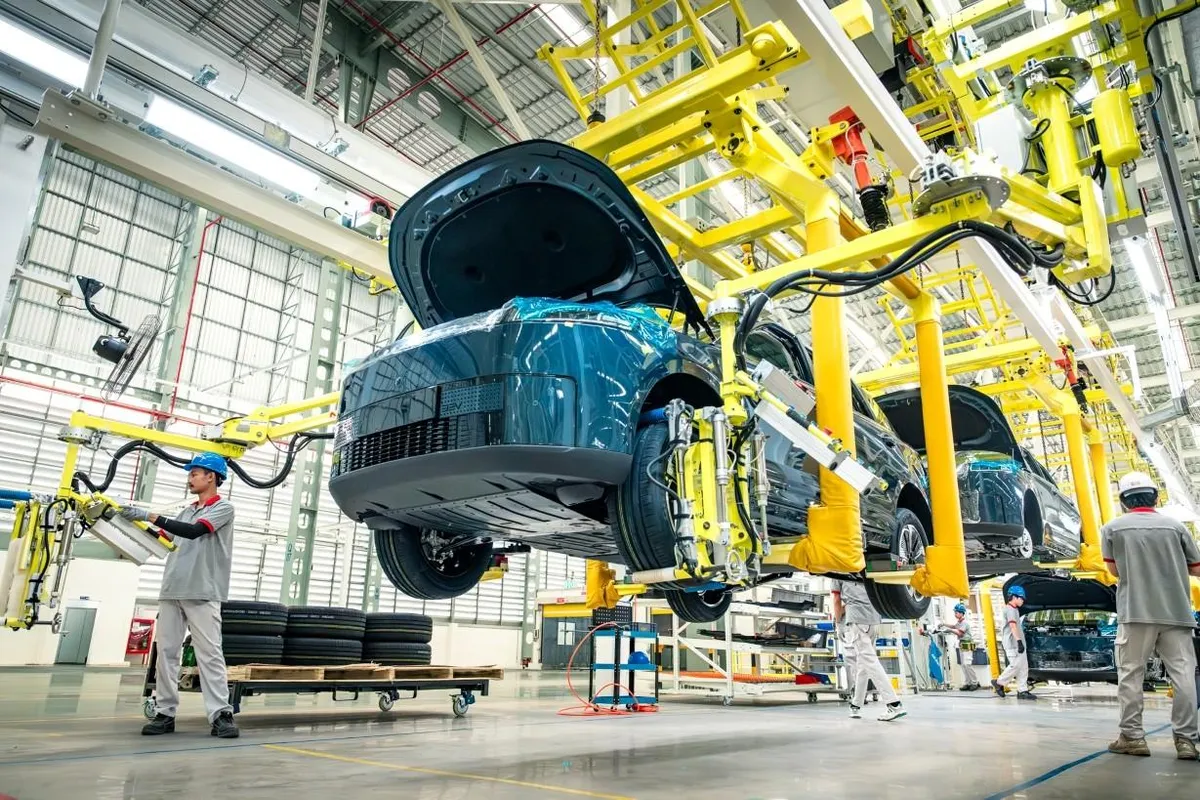
In parallel, Thailand’s automotive sector is navigating its transition towards electric vehicles (EVs). While the government aims to promote battery EV (BEV) production, industry leaders suggest a broader approach is needed, supporting various vehicle types beyond just BEVs. Current incentive schemes, while encouraging foreign EV makers to invest in local assembly, heavily favor one segment of the industry.
Thailand’s ambition for BEVs to constitute 30% of total auto output by 2030 faces challenges, particularly as existing incentives expire. Concerns exist that automakers might shift towards importing BEVs rather than producing them locally, potentially undermining domestic manufacturing and the auto parts industry. Given Thailand’s established role as a base for internal combustion engine cars, hybrid EVs, and plug-in hybrids, maintaining a diverse manufacturing base and protecting existing investors is crucial for preserving its reputation as an automotive hub.
Automakers like Hyundai are investing in Thailand as a regional export base, sourcing a significant portion of EV component costs locally. Companies like Chery Automobile are calling for sustained, long-term government support, citing China’s multi-decade journey to shift consumer preference from combustion engines to EVs. The introduction of range-extended EVs (REEVs) and plans to expand production and local parts manufacturing signal a move towards a more diverse and sustainable automotive future for Thailand.
Ultimately, Thailand’s success in both the data center and automotive sectors will depend on its ability to balance rapid technological advancement with sustainable resource management, strategic infrastructure development, and robust support for domestic innovation and industry.
