

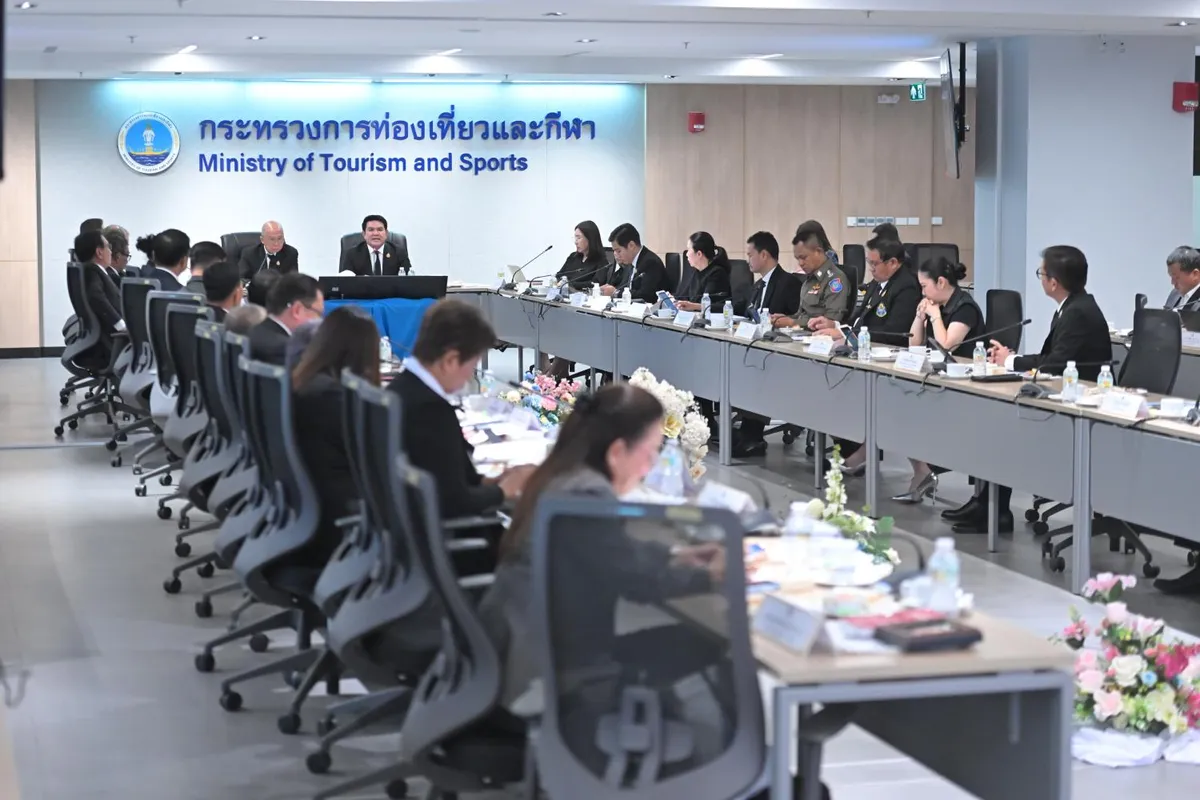
Thailand is set to implement a significant restructuring of its government bodies responsible for tourism and sports, aiming to boost economic contributions and streamline administration. The proposed changes involve separating the tourism and sports sectors, which have been managed under a single ministry since 2002, and integrating tourism more closely with culture. This initiative, a long-standing proposal revisited by successive governments, seeks to enhance the effectiveness of tourism promotion and development.
Addressing Fragmented Governance in Tourism
The current structure, established under the Reorganisation of Ministries, Sub-Ministries and Departments Act in 2002, places the Ministry of Tourism and Sports in charge of promoting and developing both sectors, overseeing entities like the Tourism Authority of Thailand (TAT) and the Sports Authority of Thailand. The minister also enforces key legislation related to tourism and sports.
However, experts highlight a critical issue: fragmented governance. Yuthasak Supasorn, former TAT governor and current chairman of the Industrial Estate Authority of Thailand, explains that while tourism is deeply connected to numerous sectors—including the economy, culture, infrastructure, environment, sports, and foreign affairs—its public administration in Thailand is spread across more than 20 organizations under various ministries. This includes the ministries of Culture, Transport, and Interior.
This fragmentation leads to several problems:
- Hidden Economic Costs: Lack of policy cohesion results in overlapping budgets and inconsistent development strategies.
- Misaligned Marketing and Development: Tourism marketing efforts are often not synchronized with actual destination development.
- Slow Decision-Making: The complex administrative framework hinders swift responses to the rapidly evolving global tourism market.
Global Models for Tourism Administration
International comparisons reveal diverse approaches to managing national tourism industries. There is no single ‘perfect’ model, as structures often reflect a nation’s specific priorities and context. Some countries opt for standalone tourism ministries, while others integrate tourism with different portfolios.
Standalone Tourism Ministries
Countries like Italy, Mexico, and the Philippines have dedicated tourism ministries. These bodies can provide clear leadership and enable faster formulation of national strategies. However, coordination with other government departments can be challenging, potentially leading to policy silos.
Integrated Tourism Models
- Tourism and Culture: China’s Ministry of Culture and Tourism supervises policy, research, and development, effectively linking cultural heritage promotion with tourism. Egypt’s Ministry of Tourism and Antiquities similarly merged these portfolios in 2019, managing heritage sites and generating revenue for their upkeep. A potential drawback is an overemphasis on heritage, possibly slowing broader tourism infrastructure development.
- Tourism and Infrastructure: Japan’s Ministry of Land, Infrastructure, Transport and Tourism aligns tourism planning with infrastructure projects like airports and railways. While this ensures robust physical development, it might lead to less focus on tourism marketing and visitor experience.
- Tourism and Commerce: Germany integrates tourism under its Federal Ministry of Economic Affairs and Energy, viewing tourism primarily as an economic driver linked to investment and SMEs. This approach may give less weight to cultural and sustainability aspects.
- Tourism and Sports: Thailand, alongside South Korea and Poland, currently combines tourism and sports. This can foster sports tourism but may lead to budget competition and prioritize event planning over long-term tourism development.
Dedicated Tourism Agencies
Azerbaijan’s State Tourism Agency offers a model of flexibility and project-based management, suitable for destination development. However, it can also create overlapping responsibilities with existing ministries.
The Proposed Thai Restructure
Under the proposed changes, Thailand aims to create a new Ministry of Culture and Tourism. The Ministry of Tourism and Sports will be dissolved, with its tourism functions transferred. The TAT, the Tourism Department, the Designated Areas for Sustainable Tourism Administration, and the Tourist Police are expected to fall under the purview of the new Culture and Tourism Ministry.
Tourism and Sports Minister Surasak Phancharoenworakul stated that the restructuring intends to enhance administrative efficiency by separating tourism and sports and strengthening tourism’s economic contribution. The Office of the Public Sector Development Commission is expected to present the proposal to the cabinet soon, with legal frameworks anticipated by late this year or early next year. The culture permanent secretary will also assume the role of culture and tourism permanent secretary.
Potential Benefits and Concerns
Stakeholders have expressed mixed views on the proposed merger.
Advantages Cited:
- Reduced Budget Overlap: Sorathep Rojpotjanaruch, representing restaurant and accommodation businesses, believes the merger will help reduce redundant spending, particularly in event organization and soft power promotion.
- Leveraging Cultural Assets: Culture plays a crucial role in Thailand’s brand identity, supported by gastronomy, arts, and traditions. The Culture Ministry’s existing role in managing heritage sites like temples and archaeological areas aligns well with tourism promotion.
Concerns Raised:
- Overshadowed Development: There are worries that the ministry’s focus on conservation might overshadow broader tourism development, potentially hindering economic growth and business support. Sorathep Rojpotjanaruch noted concerns about a potentially conservative mindset impacting tourism marketing, especially regarding managing overtourism at heritage sites.
- Integration Challenges: Merging workforces and ensuring a smooth transition are critical. Disruptions could create a policy vacuum at a time when the industry faces significant challenges.
- Inter-Ministerial Collaboration: Effective tourism management requires strong cooperation with other ministries, such as the Interior Ministry (regulating hotels) and the Natural Resources and Environment Ministry (overseeing national parks).
Recommendations for Future Governance
Adith Chairattananon, honorary secretary-general of the Association of Thai Travel Agents, emphasized that Thailand, a major revenue generator from tourism, should invest heavily in its tourism supply chain through dedicated ministry-led development. He supports creating a tourism economics office within the new ministry, similar to those in agriculture and finance, to enhance policymaking through data analysis and research.
Yuthasak Supasorn advocates for a broader reform of Thailand’s tourism governance framework, extending beyond this specific ministry restructuring. Drawing on OECD research, he identified five characteristics of highly competitive tourism sectors: whole-of-government integration, effective destination management, data-driven governance, robust public-private partnerships, and strong national leadership. He suggests a governance model comprising destination governance, a national tourism authority, and regional destination management organizations to break down silos, improve coordination, and unlock the industry’s full potential for sustainable growth.
The proposed restructuring represents a significant step, but its success will hinge on effective implementation, inter-agency collaboration, and a strategic vision that balances cultural preservation with economic development and innovation in Thailand’s vital tourism sector.
