

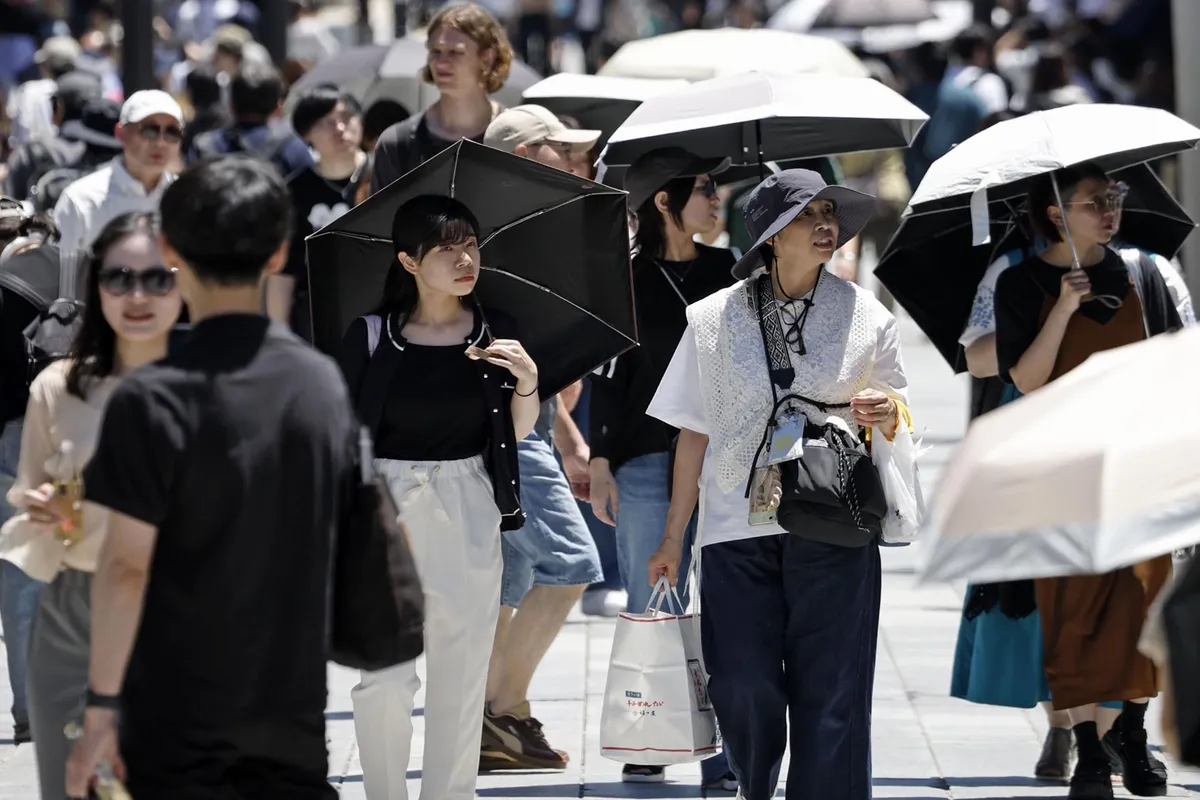
Southwest Japan is currently experiencing a severe heatwave, with temperatures soaring across the region. The Japan Meteorological Agency (JMA) has reported that numerous observation points have registered extreme heat, prompting public health warnings. On a recent day, 43 out of the country’s 914 observation sites recorded temperatures of 35 degrees Celsius (95 degrees Fahrenheit) or higher, a threshold defining an “extremely hot day” by the agency. Furthermore, a significant majority, 491 sites, surpassed the 30 degrees Celsius (86 degrees Fahrenheit) mark.
Record Temperatures and Heatstroke Warnings
The intensity of the heat has led to specific warnings for residents and visitors in affected areas. In Fukuoka and the neighboring Kumamoto Prefecture, authorities have issued advisories urging the public to take precautions against heatstroke. This advisory comes as temperatures reached concerning levels in several locations. For instance, Hita in Oita Prefecture recorded a high of 38.3 degrees Celsius (100.9 degrees Fahrenheit), while Kurume in Fukuoka Prefecture registered 38.1 degrees Celsius (100.6 degrees Fahrenheit).
Wider Regional Impact and Forecast
The current heatwave is not isolated to a few specific cities; it is impacting a broad swathe of the country. The JMA forecasts that these scorching conditions are expected to persist and potentially spread, affecting western and eastern Japan through the following Saturday. This extended period of high temperatures raises concerns about public health, infrastructure, and daily life for millions.
Understanding Extreme Heat in Japan
The JMA’s classification of an “extremely hot day” at 35°C (95°F) highlights the significant health risks associated with prolonged exposure to such temperatures. Heatstroke, or sunstroke, can range from mild symptoms like dizziness and nausea to severe, life-threatening conditions including heat exhaustion and heatstroke, which can cause organ damage and neurological issues. Vulnerable populations, including the elderly, young children, and individuals with pre-existing health conditions, are particularly at risk.
Preventative Measures Against Heatstroke
Public health officials consistently recommend several key strategies to mitigate the risks of heat-related illnesses:
- Stay Hydrated: Drink plenty of fluids, especially water, even if you do not feel thirsty. Avoid excessive consumption of caffeine and alcohol, which can contribute to dehydration.
- Seek Cool Environments: Spend time in air-conditioned spaces whenever possible. If air conditioning is unavailable, utilize fans and seek shade. Public facilities like libraries or community centers may offer respite.
- Limit Outdoor Activity: Reduce strenuous activities, particularly during the hottest parts of the day, typically between late morning and mid-afternoon. If outdoor work is necessary, take frequent breaks in cool, shaded areas.
- Dress Appropriately: Wear lightweight, loose-fitting clothing made from breathable fabrics. Light colors are preferable as they reflect sunlight.
- Monitor Vulnerable Individuals: Check on elderly family members, neighbors, and young children regularly. Ensure they are staying cool and hydrated.
- Recognize Symptoms: Be aware of the signs of heatstroke, which can include heavy sweating, clammy skin, headache, nausea, dizziness, and confusion. Seek medical attention immediately if these symptoms appear.
Broader Implications of Sustained Heat
Beyond immediate health concerns, prolonged heatwaves can have wider societal and economic impacts. Agriculture can suffer from crop damage due to excessive heat and lack of water. Energy grids may face increased strain from higher demand for air conditioning. Public transportation schedules can be disrupted, and outdoor events may need to be canceled or postponed. The tourism sector, particularly in areas like Kyushu which is known for its natural beauty and hot springs, can also be affected, with visitors potentially altering travel plans to avoid extreme heat.
Looking Ahead: Continued Vigilance
As the JMA’s forecast indicates a continuation of high temperatures across western and eastern Japan, the need for public awareness and adherence to safety guidelines remains paramount. The current situation underscores the importance of preparedness for extreme weather events, which are becoming more frequent and intense in many parts of the world. Residents are advised to stay informed about local weather updates and follow official recommendations to ensure their safety and well-being during this challenging period of intense heat.
