

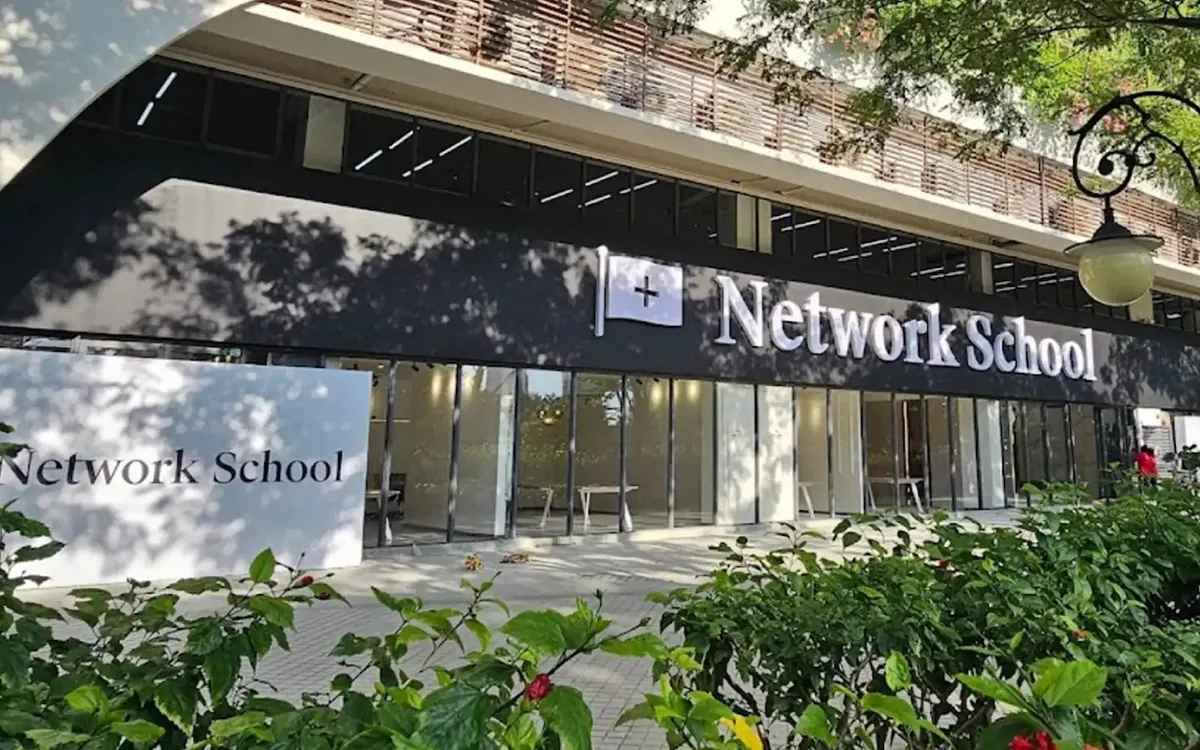
Malaysia has officially revoked the business license for Network School, a tech-driven initiative described as a “startup society,” operating within the Forest City development in Johor. The decision, effective July 22, 2026, was announced by Johor Chief Minister Onn Hafiz Ghazi, citing concerns over national sovereignty and adherence to Malaysian laws.
Network School’s Operations and Controversies
Network School, also known as NS0 Malaysia Sdn Bhd, was established at Forest City, a massive $100 billion development situated on reclaimed land in Johor state. The project’s website characterizes it as a “startup society” and a “frontier community,” aiming to experiment with novel forms of social organization. These initiatives are often backed by tech billionaires seeking to explore new models of community living separate from traditional nation-state structures.
The revocation follows a period of scrutiny and public discussion, particularly fueled by social media claims. Initial concerns centered on allegations that Network School had facilitated the entry of Israeli nationals into Malaysia. This is a sensitive issue given Malaysia’s strong support for the Palestinian cause and the absence of diplomatic relations between Malaysia and Israel.
While an inspection by the Malaysian immigration department last week confirmed that members of Network School possessed valid travel documents, broader concerns persisted. A significant point of contention has been the vision articulated by Network School’s founder, particularly in his 2022 book, “The Network State.” This vision outlines a plan to establish decentralized communities that operate independently of existing nation-states. Critics and social media users have voiced apprehension that such a model could pose a threat to Malaysia’s sovereignty.
Government’s Decision and Rationale
The Johor state government has formally endorsed the decision made by the Iskandar Puteri City Council’s special meeting to revoke Network School’s business license and cease all its activities. Chief Minister Onn Hafiz Ghazi stated on social media that the decision was reached after a thorough review, adhering to due process and applicable legal provisions. This review encompassed inspection reports, enforcement findings, and submissions made by the company itself.
“The state government wishes to emphasize that Johor always welcomes high-quality investments that benefit the economy, create job opportunities, and drive state development,” Ghazi stated. “However, no investor, company or organization may be placed above the sovereignty of the country’s laws.”
The Chief Minister also called for enhanced due diligence by relevant government agencies. This includes strengthening background checks, scrutinizing ownership structures, verifying sources of funding, understanding operational models, and carefully examining the narratives promoted by any prospective or existing companies and organizations operating within the state.
Broader Context of ‘Startup Societies’
Network School is part of a global trend where tech entrepreneurs and investors are exploring the concept of “startup societies” or “seasteading.” These projects aim to create new forms of governance and social structures, often in dedicated zones or even on artificial islands. Proponents argue that these experimental communities can foster innovation in areas like economics, governance, and technology, potentially offering solutions to complex global challenges.
However, these initiatives frequently encounter significant hurdles, particularly concerning legal frameworks, national sovereignty, and social integration. The Malaysian government’s action underscores the challenges faced by such ambitious projects when they intersect with established national laws and political sensitivities. The emphasis on national sovereignty and the supremacy of law signals a clear boundary for foreign investment and innovative ventures within Malaysia.
Future Implications
The revocation of Network School’s license serves as a strong message regarding Malaysia’s stance on ventures that could potentially challenge its legal and political integrity. While the country remains open to foreign investment and technological advancement, it maintains a firm position on safeguarding its sovereignty and ensuring all operations comply with national laws.
The incident also highlights the increasing scrutiny applied to new types of organizations and community models, especially those with ambitious goals related to governance and social structure. The government’s call for stricter due diligence indicates a proactive approach to managing potential risks associated with future investments and initiatives.
Network
