

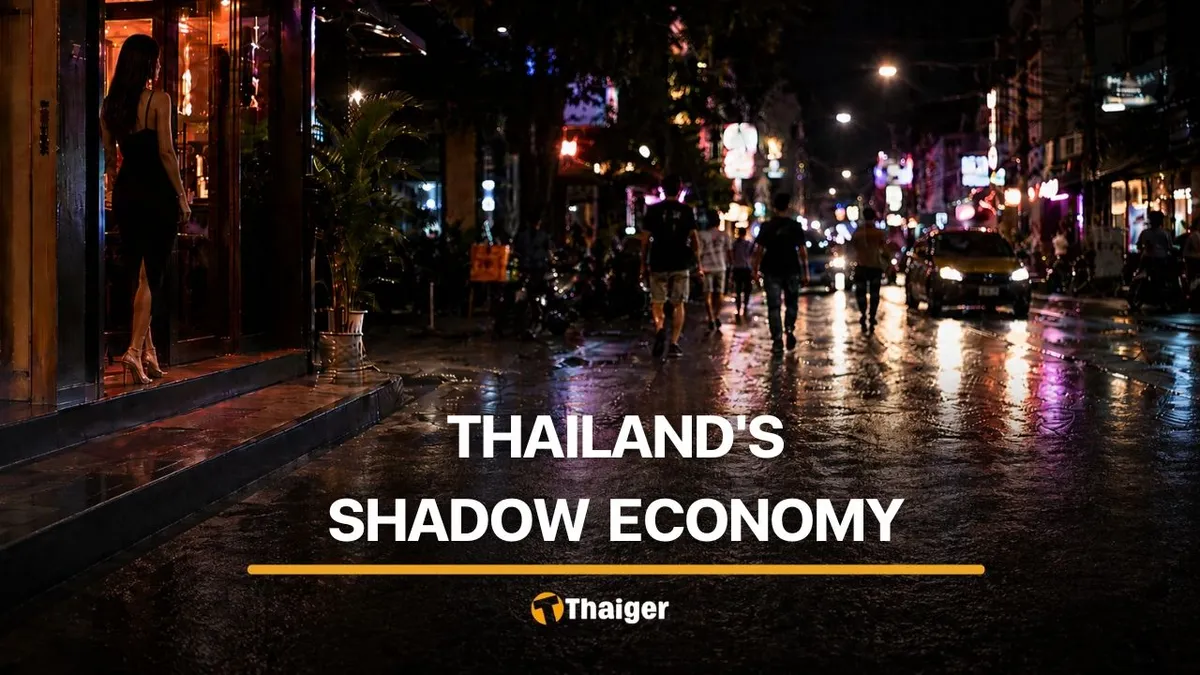
Prostitution in Thailand, often debated as a moral or legal quandary, is undeniably a significant economic force. Despite its substantial revenue generation and support for a web of interconnected businesses, much of its financial activity remains outside official records and public discourse. Understanding prostitution’s true role in Thailand necessitates looking beyond the transactions in its famed red-light districts to the broader economy that relies upon them.
Historical Context: From Regulation to Criminalization
The history of prostitution in Thailand stretches back to the Ayutthaya period (1351-1767), when it was a government-regulated profession. Sex workers were subject to mandatory health checks and paid income taxes, much like any other occupation. Reforms during King Monkut’s reign (1851-1868) aimed to improve the lives of sex workers, introducing “protection houses” that offered education for those wishing to transition to other careers. Following the abolition of slavery in 1905, many women previously enslaved as concubines entered the sex trade. The Contagious Diseases Prevention Act of 1908 further legalized the practice and provided medical support for sex workers.
The presence of foreign military personnel, first Japanese troops during World War II and later American servicemen during the Vietnam War, significantly expanded the industry. What was once a service primarily for Thai elites transformed into a large-scale commercial enterprise, reportedly employing around 400,000 women at its peak.
However, under pressure from international bodies, Thailand enacted laws to criminalize the practice. The 1960 Prostitution Act and the 1966 Entertainment Places Act marked this shift. The most recent legislation, the 1996 Prevention and Suppression of Prostitution Act, deems prostitution illegal if conducted “openly and shamelessly” or if it “causes nuisance to the public.” Yet, the visible presence of sex work in entertainment districts raises questions about the extent of enforcement.
The Economic Mechanics of the Industry
In establishments like go-go bars, customers frequently purchase “lady drinks,” which grant them time to socialize with performers. Should a customer wish to leave with an entertainer, they typically pay a “bar fine” to the venue, compensating for the lost revenue from the worker’s early departure. Any subsequent arrangements for sexual services are negotiated directly between the customer and the worker.
Estimates suggest that in 2022, approximately 3.2 million foreign visitors engaged in sex tourism, with the industry contributing an estimated 1.1 trillion baht to Thailand’s Gross Domestic Product (GDP). This figure represents far more than just payments for sexual services; it reflects the broader economic activity generated by these tourists. This includes spending on accommodation, food, transportation, and entertainment, creating a significant multiplier effect across various sectors.
For instance, a tourist’s expenditure on hotels, local transport, dining, and nightlife, even without explicitly including the cost of sexual services, flows into numerous businesses. This interconnected spending highlights how the industry supports a wider economic ecosystem.
The Impact of Criminalization: A COVID-19 Case Study
The COVID-19 pandemic and the subsequent halt in international travel offered a stark illustration of the economic dependence on sex tourism and the government’s approach to the industry. While stimulus programs aided related sectors, sex workers themselves received minimal support.
The Hotel Sector
The hotel industry, heavily reliant on international visitors, was devastated. In 2019, millions of foreign tourists visited areas like Pattaya, generating substantial revenue. The pandemic led to a dramatic drop in occupancy rates and revenue per available room (RevPAR). Although the government provided financial support, such as soft loans and subsidies for domestic travel, these measures primarily benefited businesses, not the sex workers who often facilitated the hotel stays.
Bars and Restaurants
Similarly, the food and beverage sector, a major component of tourism income, suffered immensely. Restaurants and bars in tourist areas, particularly those near red-light districts, experienced a collapse in demand. While government subsidies helped some establishments stay afloat and programs offered financial aid to bar and restaurant employees, sex workers were largely excluded from these relief efforts.
The pandemic underscored a significant disparity: while businesses dependent on the sex industry received government protection, the workers themselves faced severe hardship. According to reports, a large percentage of sex workers struggled to afford basic necessities, with many unable to access government financial aid. Furthermore, the redirection of health services for COVID-19 testing reduced access to essential sexual health services, increasing risks for sex workers.
The Case for Legalization and Regulation
Discussions around legalizing or decriminalizing prostitution in Thailand have occurred periodically, with a notable debate in 2003 and more recent suggestions in 2024 to formalize parts of the industry within taxable entertainment complexes. A primary obstacle remains public perception and deeply ingrained social stigma.
Formalizing the industry could yield significant economic benefits for the government through taxation. Estimates suggest that taxing bar fines, “lady drinks,” and services could generate billions of Thai baht annually. Businesses would gain legal certainty, potentially improving access to financing and insurance.
Crucially, legalization could provide sex workers with access to healthcare, social security benefits, and legal protections. This would not only improve their well-being but also allow them to contribute more formally to the economy and social security systems. Moreover, legal pathways could offer recourse for victims of trafficking and abuse, who currently face immense barriers to seeking justice due to the industry’s illicit status.
Moving Forward: Regulation Over Suppression
While legalization presents potential economic advantages and improved worker protections, it does not fully resolve the broader economic vulnerabilities tied to sex tourism. Bringing the industry into the formal economy could provide policymakers with clearer data on its true economic contribution, enabling more informed decisions on public health and economic strategy.
Formal recognition could also bring an estimated 250,000 workers into the formal economy, boosting overall economic growth. The long-term goal could involve transitioning workers into less precarious employment in other sectors of the tourism economy.
Currently, decisions remain largely speculative due to the undocumented nature of much of the industry’s economic activity. However, a move towards regulation, rather than continued suppression, could offer a more transparent understanding of its economic linkages and provide much-needed protections for those involved.
Conclusion: Towards Transparency and Protection
Prostitution, or sex tourism, in Thailand is a complex and lucrative industry with economic implications extending far beyond the immediate transactions. The dynamics often reflect deep-seated inequalities, exacerbated by policies that frequently fail to safeguard vulnerable populations.
While not a singular solution, bringing the industry into the formal economy through legalization or decriminalization could generate substantial tax revenue, enhance worker protections, and provide policymakers with the transparency needed for effective public health and economic planning. Continuing to suppress or ignore the industry merely obscures its economic value and leaves those dependent on it without adequate legal or social support.
