

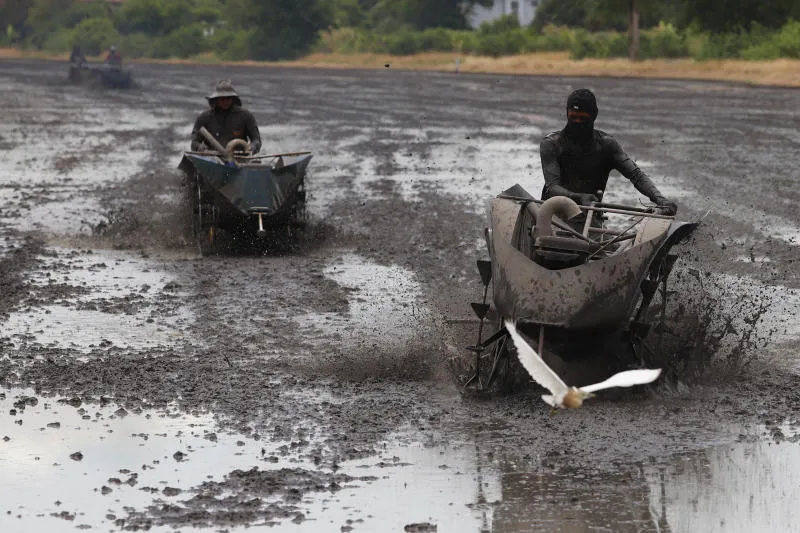
Thailand’s rice exports are projected to reach approximately 7 million tonnes for the full year of 2026, despite a significant decline in the first half of the year. This forecast comes as the nation navigates global market dynamics, including increased international production and geopolitical tensions. Officials anticipate a potential rebound in the latter half of the year, driven by strategic stockpiling among importing nations concerned about potential drought conditions.
First Half Performance and Contributing Factors
In the initial six months of 2026, Thailand shipped 3.28 million tonnes of rice, marking an 18.8% decrease compared to the same period in the previous year. Arada Fuangtong, head of the Ministry of Commerce’s Foreign Trade Department, attributed this downturn to several key factors during a recent briefing. An increase in global rice production by competing nations has intensified market competition, while ongoing conflicts in the Middle East have also disrupted trade flows and potentially impacted demand patterns.
Furthermore, Ms. Arada noted that the export price of Thai rice has been higher than that offered by other major exporting countries. This price differential, while reflecting the quality and premium nature of Thai rice, can make it less competitive in price-sensitive markets, contributing to the reduced export volumes in the first half of the year.
Outlook for the Remainder of 2026
Looking ahead to the last five months of 2026, a more optimistic outlook is emerging. Ms. Arada indicated that demand for Thai rice shipments could see an increase. This potential rise is largely fueled by countries accelerating their efforts to build rice reserves. Concerns over potential droughts in various agricultural regions worldwide are prompting nations to secure larger stockpiles of essential food commodities, including rice, to ensure food security.
This strategic stockpiling by importing countries could create a significant opportunity for Thai rice exporters to boost their sales and recover some of the ground lost in the first half of the year. The global demand for reliable food sources remains high, and Thailand, as a major rice producer, is well-positioned to meet this demand if market conditions prove favorable.
Thailand’s Position in the Global Rice Market
Thailand has historically held a strong position in the international rice trade, often ranking as the world’s second-largest exporter. However, recent trends indicate increased competition, particularly from Vietnam, which surpassed Thailand in export volumes during the first half of 2026. This shift highlights the dynamic nature of the global agricultural market and the need for Thailand to maintain its competitive edge through quality, efficiency, and strategic market engagement.
In the preceding year, 2025, Thailand’s rice exports were revised to 8.3 million tonnes, a decrease of 16.5% from the year before. This downward trend underscores the challenges faced by the Thai rice sector in recent times, including fluctuating global prices, currency exchange rates, and the competitive landscape. The industry is continually adapting to these pressures, with a focus on maintaining export quality and exploring new market opportunities.
Strategies for Future Growth
To bolster future export performance, the Thai rice industry may need to focus on several key areas. Maintaining the high quality that Thai rice is known for will be crucial, potentially alongside efforts to enhance production efficiency and reduce costs to become more competitive on price. Diversifying export markets and exploring niche segments that value premium quality could also be beneficial. Furthermore, staying abreast of global climate patterns and potential impacts on food production will be vital for anticipating future demand and positioning Thailand effectively in the global supply chain.
The projected 7 million tonnes for 2026, while a recovery from the first half’s performance, still represents a notable figure in the global context. The ability of Thailand to meet this target will depend on a combination of favorable weather conditions, stable global demand, and effective trade policies. The coming months will be critical in determining whether the anticipated increase in stockpiling demand translates into robust export growth for Thai rice.
Conclusion
The Thai rice export sector faces a complex environment in 2026, characterized by initial declines followed by a hopeful outlook for the latter half of the year. While global production increases and regional conflicts present challenges, the prospect of increased stockpiling due to drought concerns offers a potential avenue for growth. Achieving the projected 7 million tonnes will require strategic navigation of market dynamics, a continued focus on quality, and adaptability to evolving global food security needs. The performance in the remaining months of 2026 will be closely watched as an indicator of the sector’s resilience and future trajectory.
