

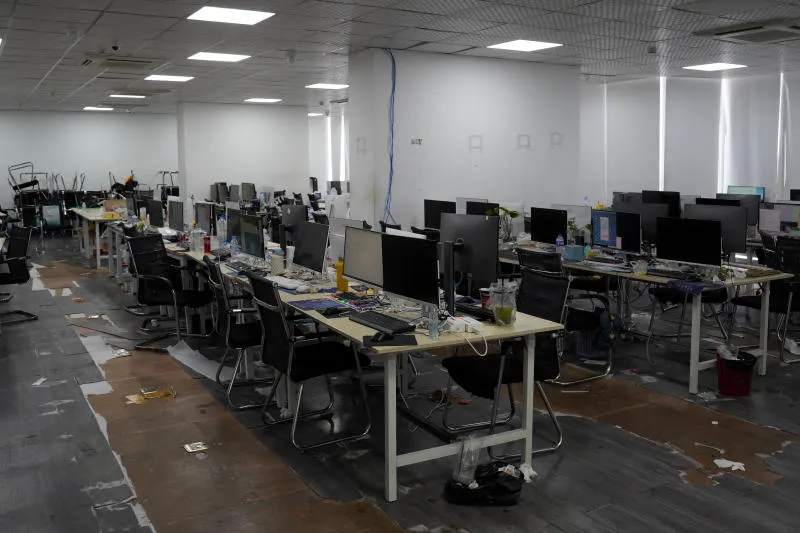
Scam Operations Continue Amidst Ineffective Interventions
Online scam centers in Cambodia remain operational, despite ongoing government efforts to dismantle them. A recent analysis indicates that many interventions have been reactive and ineffective, with survivors reporting instances of being moved across the country to avoid authorities during crackdowns. These movements were reportedly facilitated by apparent collusion between compound managers and law enforcement personnel.
Government Rejects Findings, Cites Extensive Efforts
The government in Phnom Penh has strongly refuted claims of failure in combating online scam operations. A senior minister responsible for tackling these scams stated that the recent report is “selective, one-sided, and lacking full understanding of the realities on the ground.” He emphasized the scale and continuity of nationwide enforcement efforts, which include coordinated police operations, arrests, asset seizures, and the dismantling of criminal compounds across multiple provinces. These efforts, he asserted, are being undermined by the report’s narrative.
Southeast Asia: Epicenter of Global Cyberfraud
Southeast Asia has emerged as a primary hub for the global cyberfraud industry. Compounds, largely operated by Chinese criminal syndicates, house tens of thousands of workers. Many of these individuals are trafficked and endure brutal living conditions. These operations have proliferated across Cambodia, Laos, the Philippines, and lawless regions along the Myanmar-Thai border since the onset of the pandemic.
Independent investigations have uncovered evidence of widespread abuse and industrial-scale fraud, resulting in billions of U.S. dollars lost by victims worldwide. The Cambodian government acknowledges the difficulty in tackling these scam centers, citing the transnational, highly adaptive nature of the criminal networks, which are intentionally designed to evade law enforcement.
Pressure Mounts to Protect Trafficking Victims
Phnom Penh and neighboring countries are facing increased pressure from foreign governments, including the United States, to crack down on these operations. U.S. estimates suggest Americans lost $10 billion to Southeast Asian scam centers in 2024 alone. International human rights organizations have raised serious concerns about the treatment of individuals within these compounds.
Abuse and Exploitation Documented
Researchers have interviewed numerous individuals who were held against their will at these compounds. All interviewed individuals reported experiencing or witnessing abuse, with some women describing instances of rape. A significant criticism leveled against authorities is the practice of treating individuals fleeing or released from scam compounds as irregular migrants, rather than as victims of human trafficking.
The analysis concludes that Cambodia’s crackdown has fallen short in key areas, failing to adequately investigate and shutter prominent compounds, and crucially, to protect and assist those who escape or are removed from these exploitative environments.
Enforcement Actions and Deportations
In response to the issue, Cambodia has revoked the licenses of 25 casinos suspected of involvement in scams. Approximately 1,500 suspects from 19 countries have been charged. Furthermore, nearly 19,000 foreigners have been deported, with an additional 290,000 voluntarily leaving the country.
