

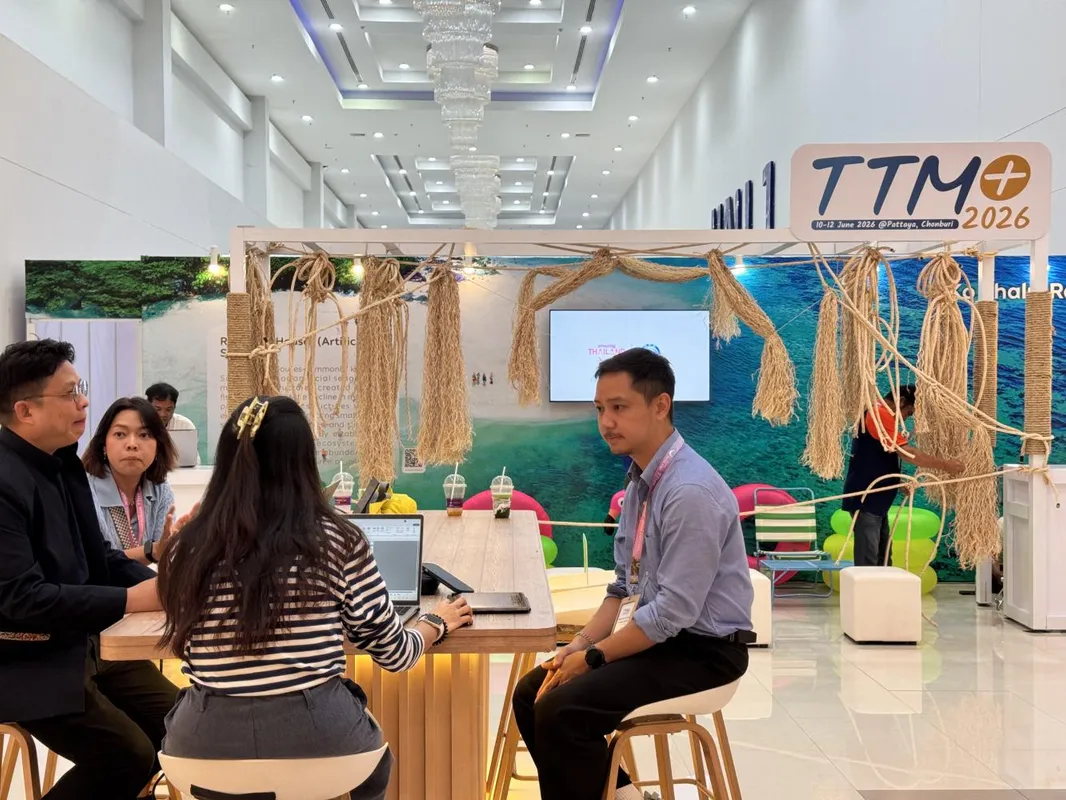
A significant travel trade fair is underway in Pattaya, aiming to bolster Thailand’s tourism sector by connecting local operators with international buyers. The event seeks to stimulate travel demand and counter potential risks arising from global conflicts and fluctuating energy prices.
TTM+ Focuses on Wellness and Hidden Gems
The Thailand Travel Mart Plus (TTM+), scheduled from June 10-12, is prioritizing the promotion of wellness tourism, sustainable travel products, and lesser-known destinations. This strategic focus is designed to attract a diverse range of travelers and enhance Thailand’s appeal.
The fair has attracted 429 international buyers, with substantial representation from China (85), India (38), the United Kingdom (21), Australia (14), and Saudi Arabia (13). Notably, approximately 41% of these buyers are participating in TTM+ for the first time, indicating fresh interest in the Thai market.
On the seller side, 428 Thai businesses are present, primarily from major tourist hubs like Bangkok, Phuket, Chon Buri, Surat Thani, and Krabi. Organizers anticipate around 15,408 business matching sessions, with an estimated revenue generation of at least 5 billion baht.
Attracting High-Spending and Niche Markets
Officials from the Tourism Authority of Thailand (TAT) have stated their commitment to attracting niche and high-spending segments, including those interested in wellness, sports, and sustainable travel. The agency aims to increase arrivals from short-haul markets while simultaneously maintaining its long-haul visitor numbers.
Adith Chairattananon, honorary secretary-general of the Association of Thai Travel Agents, expressed optimism that the event will create positive momentum for the latter half of the year. He projects a growth of 10-15% in arrivals, potentially reaching 32-33 million by the year’s end.
Mr. Chairattananon highlighted TTM+ as a crucial platform for Thailand to demonstrate its safety and readiness to welcome tourists. He noted that many foreign agents, particularly from China and Europe, are already familiar with Thailand and are eager to explore new offerings.
Economic Outlook and Future Prospects
“The second half of the year should be better than the first half, despite ongoing economic uncertainty, as Thailand has many events, such as Tomorrowland and the Gastech exhibition,” Mr. Chairattananon stated. This suggests a belief in Thailand’s resilience and its ability to leverage major events for economic benefit.
Khaled Abdo Aldhabab, business development manager at Hesen Almusafer, a Saudi Arabian travel agency, confirmed the strong and persistent demand for Thailand among Saudi tourists. Despite a reduction in flight availability, he emphasized that Thailand remains the top priority destination in Asia for this market.
Mr. Aldhabab is looking forward to connecting with new tourism operators in Thailand and expressed interest in fostering two-way tourism, which would also encourage more Thai citizens to visit Saudi Arabia.
Flight data indicates that air travel from the Middle East to Thailand has improved, with a 23% reduction in flights, an increase from the 30% reduction observed in the previous month. However, he cautioned that tourists visiting during the current high season might adjust their spending due to global economic concerns.
On average, Saudi tourists typically spend 10-15 days in Thailand, with an average expenditure of US$5,000 per trip. Mr. Aldhabab urged the Thai government to intensify marketing efforts in Saudi Arabia and to facilitate an increase in flight capacity.
Hesen Almusafer is currently exploring collaborations with international hospitals in Thailand to develop and promote wellness programs specifically tailored for the Saudi market, further underscoring the focus on this lucrative segment.
