

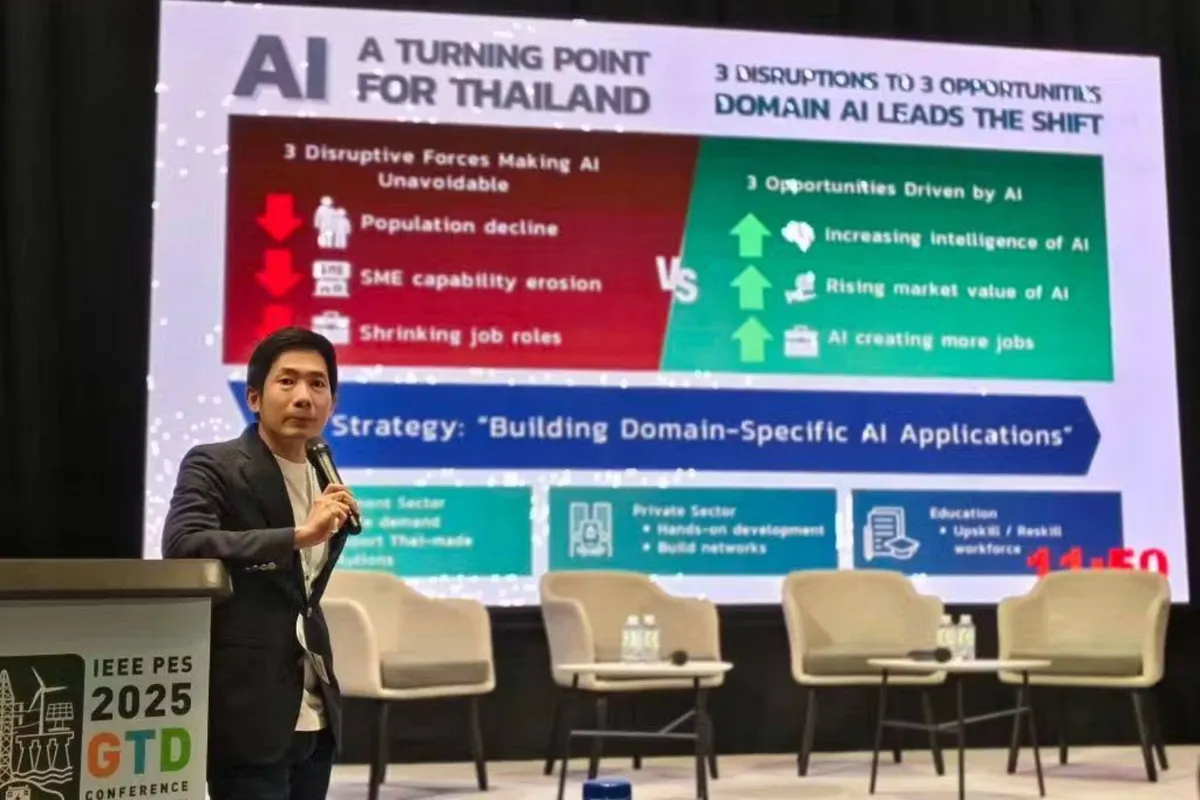
Efforts to foster widespread AI literacy and basic user development are crucial for addressing unemployment and aiding workforce adaptation. However, these initiatives alone will not be sufficient to propel Thailand into a new era of economic expansion, according to insights from industry experts.
Focus on Advanced AI Innovation
While current national strategies prioritize training individuals in basic and advanced AI usage, a critical gap exists: the absence of top-tier innovators capable of developing and optimizing complex AI models from the ground up. These elite minds are highly sought after by global technology corporations.
To bridge this talent deficit, it is recommended that Thailand consider importing highly skilled AI professionals from the region. This would allow local developers to collaborate with these experts, gain valuable experience, and ultimately elevate their own capabilities.
Developing Entrepreneurial AI Leaders
The nation should also focus on cultivating entrepreneurs who possess a deep understanding of AI and can effectively integrate this knowledge with specific industry expertise. This fusion is key to driving significant growth.
To compete on a global scale, Thailand can leverage its unique datasets and existing strengths in sectors such as healthcare, agriculture, wellness, and services. However, merely applying basic AI in these areas will not secure a leading market position. Maintaining a competitive edge necessitates the integration of advanced, resource-intensive AI models with this domain knowledge.
Addressing Infrastructure and Market Barriers
Achieving this advanced level of AI development requires substantial investment in infrastructure, particularly high-performance computing resources and robust data systems. These are currently limited within the country.
Furthermore, local AI startups often encounter a challenging domestic market. Traditional corporate cultures can make large corporations and leading hospitals hesitant to engage with small technology firms, typically comprising only a few individuals. This reluctance hinders the growth of deep-tech startups.
Creating Supportive Ecosystems
To overcome these obstacles, the establishment of supportive sandboxes and incubation spaces is essential. These environments would open up markets for deep-tech startups, enabling them to collaborate with major industry players, secure dedicated funding, and achieve successful scaling.
Initiatives are already underway, such as incubation programs targeting high-potential AI ventures in the healthcare and wellness sectors. The aim is to build a strong local foundation before expanding internationally.
By providing the necessary infrastructure, funding, and an open market for these emerging ventures to flourish, Thailand can foster a generation of high-level entrepreneurs capable of driving innovation, rather than solely academic researchers. Solutions developed for globally scalable problems in healthcare and agriculture have the potential for worldwide export, creating a vital new economic engine for the nation.
