

Stronger Neighborhoods: The Foundation for a Thriving Bangkok
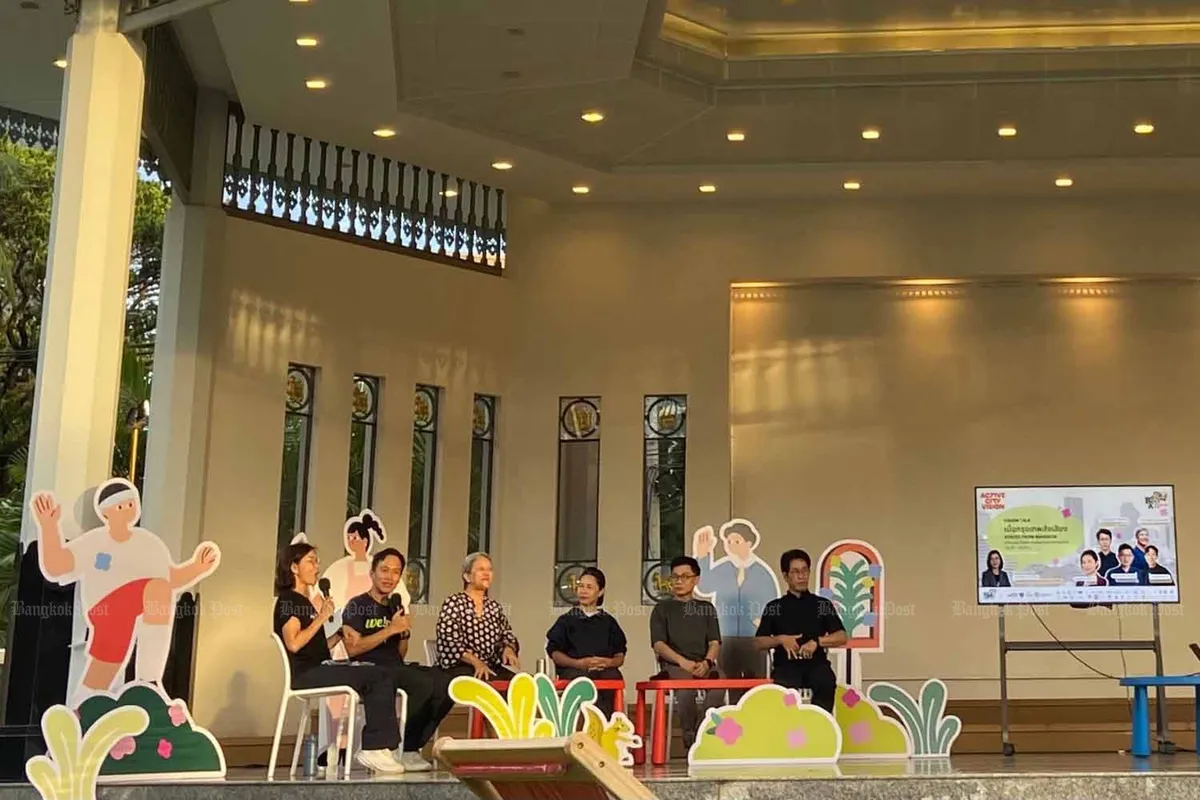
The path to a revitalized Bangkok lies in strengthening its neighborhoods, a central theme discussed at a recent forum examining the future of the capital. The event, part of the 2026 Bangkok Active Election campaign, brought together diverse voices to explore five critical areas for urban improvement: public life, intergenerational harmony, environmental sustainability, inclusivity, and effective policy implementation.
A significant consensus emerged: when essential services, public spaces, and daily necessities are easily accessible within residential areas, residents are freed from arduous and potentially hazardous commutes. The development of robust neighborhoods is seen as instrumental in fostering a safer and more equitable city.
Experts Advocate for Decentralized Urban Amenities
A panel of experts, including a journalist, a sociologist, an architect, a television producer, and an ecologist, highlighted a prevalent issue: the concentration of many vital city facilities in a limited number of districts. For those residing in outlying areas, reaching public amenities like parks often involves lengthy, crowded, and sometimes perilous journeys.
“My walk to the public park is so difficult. The one-way road is so busy with cars. I could say it is life-threatening to access,” shared Karuna Buakumsri, a Thai journalist. She emphasized the need for Bangkok to cultivate distinct neighborhoods in each area, creating spaces where residents can connect and engage in activities without the burden of extensive travel.
Dignity Through Accessibility and Community
Prasarn Ingkanunt, founder of the webpage Manoottangwai, stated, “We must start from making the neighborhood a companion to its residents.” This sentiment was echoed by Yossapon Boonsom, co-founder of We!Park, who added, “The central concern should be the people’s dignity.” The discussion extended beyond mere urban planning, asserting that a neighborhood is more than just structures; it is where relationships are forged, a sense of belonging is cultivated, and individuals live with dignity.
The principle of equal access to opportunities and public spaces was presented as a catalyst for fostering human dignity, reducing the need for social comparison. Boonlert Visetpricha, a lecturer at Thammasat University, argued that creating equitable cities must commence at the residential level.
Prioritizing Habitats and Inclusive Infrastructure
“The town should be based on the middle class. Considerations should include diversity, economic aspects and wealth equality. We could start with habitats first. For example, before Singapore improved their parks, they started with a good habitat for their people. Then we can move to the second point, public transportation. Cut off sidewalks benefit the lower class who have to ride motorcycles, which are more risky on the road.” This perspective underscores the importance of infrastructure that serves all residents, irrespective of their socioeconomic status.
Sornnaruch Karnjanavanich, former president of the Green World Foundation, commented, “Roads are public space, not just for cars. They are the veins that link every place. The city should be designed to benefit people, not just the economy.” This philosophy extends to public parks, with Boonlert suggesting that truly inclusive spaces are those that are community-owned and maintained, safe for use at all hours, and managed by local residents.
The Ideal Governor: Visionary and Courageous
The forum concluded with a discussion on the qualities required in a future governor to enact these transformative changes. “The next Bangkok’s governor has to be the person who can see how to make people happy with what Bangkok already has. They have to exercise a political will and have the courage to change,” stated Karuna Buakumsri, in reference to the upcoming gubernatorial election.
