

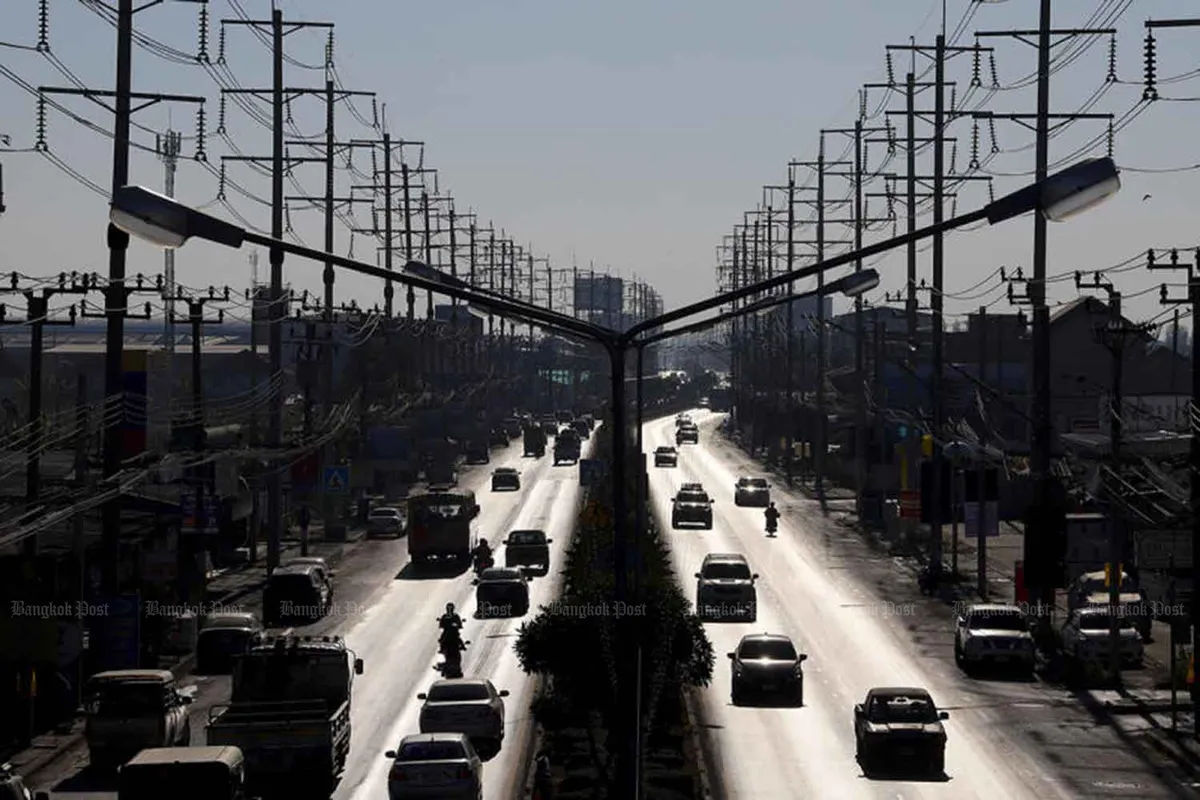
The Interior Ministry is requesting 20 billion baht to alleviate the financial burden on households currently paying for public and road lighting through their monthly electricity bills. This significant sum is intended to cover the costs associated with powering streetlights and other public illumination, thereby removing this charge from residential consumers.
Addressing a Decades-Long Financial Strain
The initiative aims to resolve a long-standing issue where households have indirectly funded public lighting infrastructure for over three decades. The practice, which began in 1987, involves a small surcharge on electricity units consumed by households, designated to cover the expenses of lighting public spaces and roadways. Initially set at a minimal rate of 0.02-0.03 baht per unit, this charge has since escalated to 0.10 baht per unit, reflecting increased energy costs and potentially further hikes if left unaddressed.
One proponent of the change highlighted that this practice has persisted for so long without significant public discourse or governmental action. The current system places the financial responsibility squarely on individual households, a situation that has been criticized for its inequity and lack of transparency. The proposed 20 billion baht fund is seen as a crucial step towards rectifying this situation and ensuring that public services are funded through appropriate governmental channels rather than consumer utility bills.
The Rationale Behind the Funding Request
The Ministry’s request for 20 billion baht is predicated on the need to establish a sustainable funding mechanism for public lighting. Officials argue that government organizations, which benefit from public lighting, currently do not bear direct costs. This lack of financial accountability, they contend, reduces the incentive for these bodies to implement energy-saving measures, such as transitioning to more efficient LED lighting systems. By shifting the funding responsibility, the government aims to encourage greater efficiency and cost-consciousness in the management of public lighting infrastructure.
Furthermore, the proposal suggests that local administrative organizations, which collect local taxes, should assume responsibility for funding street lighting within their respective jurisdictions. This decentralization of responsibility could lead to more localized and responsive management of street lighting, aligning costs with the authorities that directly serve the communities.
Next Steps in the Budgetary Process
The Interior Minister, Polapee, indicated that the initial step involves comprehensive discussions regarding budgetary preparation. These discussions will include key stakeholders such as the Energy Minister, the Metropolitan Electricity Authority (MEA), and the Provincial Electricity Authority (PEA). The aim is to ensure a coordinated approach and to gather all necessary information for a robust proposal.
Following these consultations, a formal proposal will be presented to Prime Minister Anutin Charnvirakul for consideration and approval. This process underscores the government’s commitment to addressing the issue and finding a viable solution that benefits all citizens.
Historical Context of the Lighting Surcharge
The practice of charging households for public lighting dates back to 1987. At that time, the surcharge was introduced at a rate of 0.02 to 0.03 baht per electricity unit. This was a relatively small amount, intended to cover the nascent costs of illuminating public areas. However, over the years, as electricity consumption and costs have risen, this surcharge has also increased, reaching 0.10 baht per unit.
The concern is that without intervention, this rate could continue to climb, placing an ever-increasing burden on households. The lack of direct payment by government entities means they have little motivation to invest in energy-efficient technologies that could significantly reduce these costs. For instance, widespread adoption of LED streetlights could offer substantial savings in electricity consumption and maintenance, but the current funding model does not adequately incentivize such upgrades.
Potential Impact and Future Outlook
The proposed 20 billion baht allocation represents a significant governmental commitment to resolving this long-standing financial issue. If approved, it would provide immediate relief to households by removing the surcharge from their electricity bills. This could lead to a noticeable reduction in monthly expenses for many families.
Beyond the immediate financial relief, the initiative seeks to establish a more equitable and efficient system for funding public infrastructure. By encouraging government bodies and local administrations to take greater financial responsibility for public lighting, the move could foster better resource management and promote the adoption of sustainable technologies. The success of this proposal hinges on the collaborative efforts of various ministries and authorities, culminating in a decision by the Prime Minister.
The Interior Ministry’s proactive approach signals a potential turning point in how public services are funded, moving towards a model that is perceived as fairer and more economically sound. The coming discussions and the eventual decision on the 20 billion baht request will be closely watched by consumers and policymakers alike.
