

Southeast Asia’s economic landscape is undergoing a significant transformation, with Vietnam emerging as a standout performer. A recent assessment reveals an economy operating at full capacity, marked by a noticeable increase in English proficiency and a palpable energy among its younger population, eager for continued growth and development.
Vietnam’s Ambitious Economic Trajectory
Hanoi recently hosted the third edition of the ASEAN Future Forum, a significant event that drew in-person attendance from the heads of government of Cambodia, Laos, Thailand, and Timor-Leste. The forum also saw participation from a United States deputy secretary of state and a United Nations undersecretary, with leaders from other Asian nations joining virtually. This gathering underscored Vietnam’s growing regional influence.
Vietnam has outlined a long-term vision to achieve upper-middle-income status by 2030 and a high-income developed economy by 2045. Projections indicate that if the nation sustains its current economic growth rate of 7-10% annually, its economic output could surpass that of Thailand within three years, which is currently experiencing growth around 3% per year. Leaders, including Prime Minister Le Minh Hung and President To Lam, have expressed considerable confidence in their nation’s economic and societal direction, even amidst global challenges.
Shifting Regional Leadership Dynamics
Vietnam and Singapore are now positioned as the leading economies within ASEAN, a role previously held by Indonesia and Thailand. Under President Prabowo Subianto, Indonesia appears to be navigating economic challenges, with concerns over state-led centralization and potential nationalization. Thailand, conversely, has faced two decades of political instability, characterized by protests, coups, and judicial interventions, which have dampened its economic growth prospects.
Vietnam’s economic scale and strategic planning position it to lead the bloc. Singapore, though a small island nation, demonstrates significant regional influence and provides principled guidance on critical issues, such as the illegitimate military rule in Myanmar.
Border Dispute and Myanmar Crisis Persist
The territorial dispute between Thailand and Cambodia over the Overlapping Claims Area (OCA) presents a persistent challenge. Following Thailand’s revocation of a 2001 bilateral Memorandum of Understanding, Cambodia has escalated the dispute to a Compulsory Conciliation body under the U.N. Convention on the Law of the Sea. This revocation was partly influenced by domestic nationalist sentiments, which were a key campaign platform for the Bhumjaithai Party-led coalition government.
The protracted legal process under UNCLOS is expected to create friction within ASEAN. While a fragile peace accord is in place, renewed border tensions are a possibility. However, with Cambodia set to chair the Francophonie summit and Thailand experiencing relative political stability, there may be diplomatic incentives to de-escalate the situation.
Myanmar’s Internal Struggles and International Standing
Myanmar remains a significant regional concern. Following recent elections, the military-backed government, led by Min Aung Hlaing, has sought to bolster its legitimacy through high-profile visits to India and China. This international outreach is aimed at countering the ongoing civil war and encouraging support from external partners, including the European Union, Japan, and several ASEAN member states.
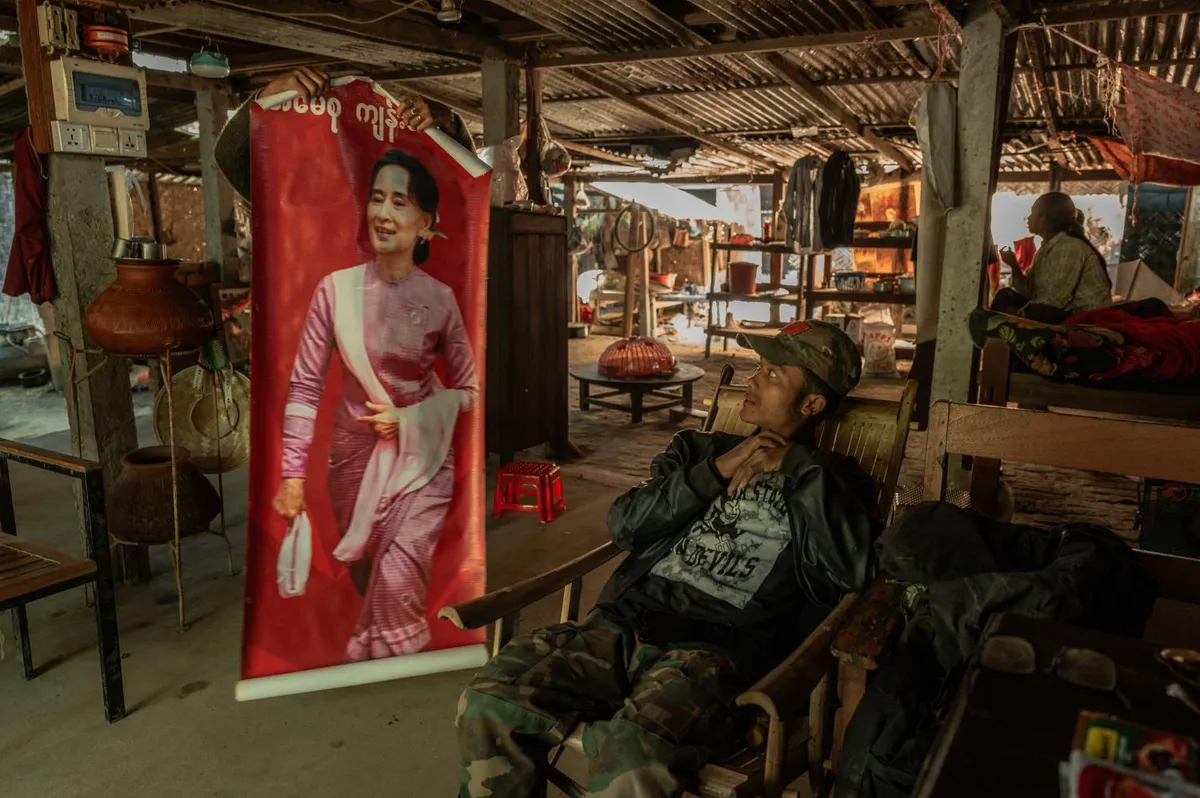
The resistance coalition in Myanmar faces the daunting task of regaining momentum. Analysts suggest a need for a dramatic shift in strategy, potentially involving drone operations to reclaim territory and alter perceptions. The future political direction hinges on battlefield developments. The National Unity Government (NUG) leadership is reportedly in need of revitalization, though finding a figure with the stature of Aung San Suu Kyi, who remains under house arrest, proves difficult.
China’s Influence and Regional Caution
China’s support for Myanmar’s military government is evident, further highlighted by the recent detention of Min Zin, an American citizen and executive director of the Institute for Strategy and Policy. China’s Foreign Ministry confirmed his detention on suspicion of espionage. This action is widely interpreted as a signal to regional think tanks and dissidents operating outside Myanmar, urging increased caution and self-censorship.
The detention of Min Zin underscores China’s commitment to its relationship with Myanmar, which includes significant economic interests such as deep-sea ports, pipelines, and rare-earth mining operations.
Myanmar’s Diplomatic Ambitions
Min Aung Hlaing is reportedly focused on regaining Myanmar’s standing on the international stage. His immediate goals include securing Myanmar’s seat at ASEAN-centered summits and reclaiming its position at the United Nations, currently held by the appointee of the ousted civilian government. In the longer term, Myanmar aims to resume its rotational chairmanship of ASEAN.
