

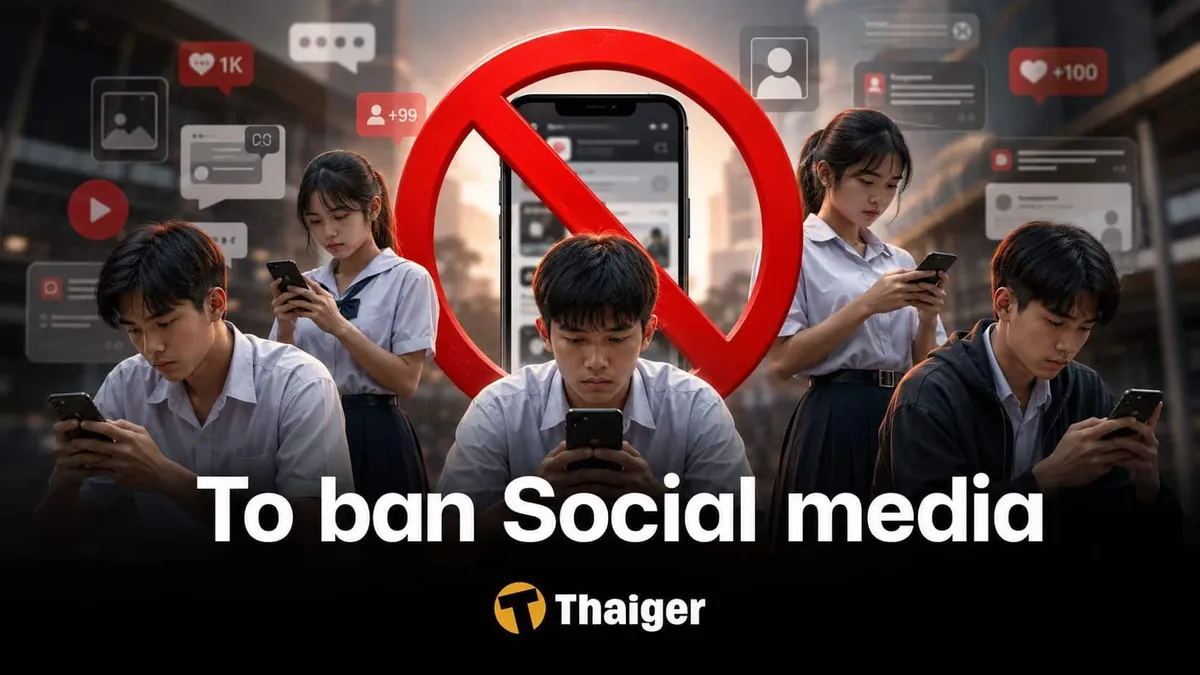
Thailand Explores Social Media Restrictions for Minors Amid Screen Time Concerns
Authorities in Thailand are actively considering the implementation of legislation that would prohibit individuals under the age of 16 from accessing social media platforms. This potential move stems from escalating concerns regarding the significant amount of time young people in the country are dedicating to screen-based activities.
Growing Worries Over Digital Habit Formation
The proposal was brought forward by Deputy Prime Minister Songsak Thongsri, who also chairs the board of the Thai Health Promotion Foundation, also known as ThaiHealth. Citing data from the foundation, Mr. Thongsri highlighted that over 93 percent of the Thai population engages with the internet, with the average daily usage reaching 7 hours and 54 minutes. Of particular concern is the finding that approximately 72.6 percent of children aged zero to two years old experience more than an hour of screen time daily. This level of exposure, according to the agency, poses a potential risk to their learning, communication abilities, and age-appropriate developmental milestones.
Addressing Online Risks for Young Users
Beyond developmental considerations, ThaiHealth has identified a spectrum of online dangers that children and adolescents face. These threats include cyberbullying, sexual exploitation, online gambling, and exposure to advertising that may promote risky behaviors, such as vaping. The foundation asserts that such risks can negatively impact mental well-being, exacerbate stress and anxiety, and influence daily habits, ultimately contributing to broader societal issues over time.
International Precedents and Collaborative Efforts
ThaiHealth has announced its intention to thoroughly investigate the potential impact and feasibility of measures designed to curb excessive use of online media by children and teenagers. This examination will draw upon the experiences of countries that have already enacted similar legislation. Australia, for instance, has been cited as a nation that has introduced a ban on social media for individuals under 16 and has established penalties for platforms that fail to effectively prevent underage users.
In parallel, the foundation is collaborating with the Ministry of Digital Economy and Society to bolster online protections for children. This joint initiative involves advocating for new policies, monitoring illicit websites, developing a system for reporting harmful content, and promoting the innovative use of technology. The work is structured around four key pillars: enhancing media and digital literacy, creating educational resources, conducting public awareness campaigns for healthy media consumption, and fostering cooperation among government bodies, businesses, and civil society.
Expert Advice for Balanced Development
Child health specialists, whose advice has been shared by the foundation, recommend that parents establish screen time limits tailored to their child’s age. They also encourage promoting physical activity, play, and shared family learning experiences to foster a holistic development—physically, emotionally, socially, and intellectually. The agency emphasizes that cultivating digital resilience from an early age is a crucial step in safeguarding young people from online hazards.
