

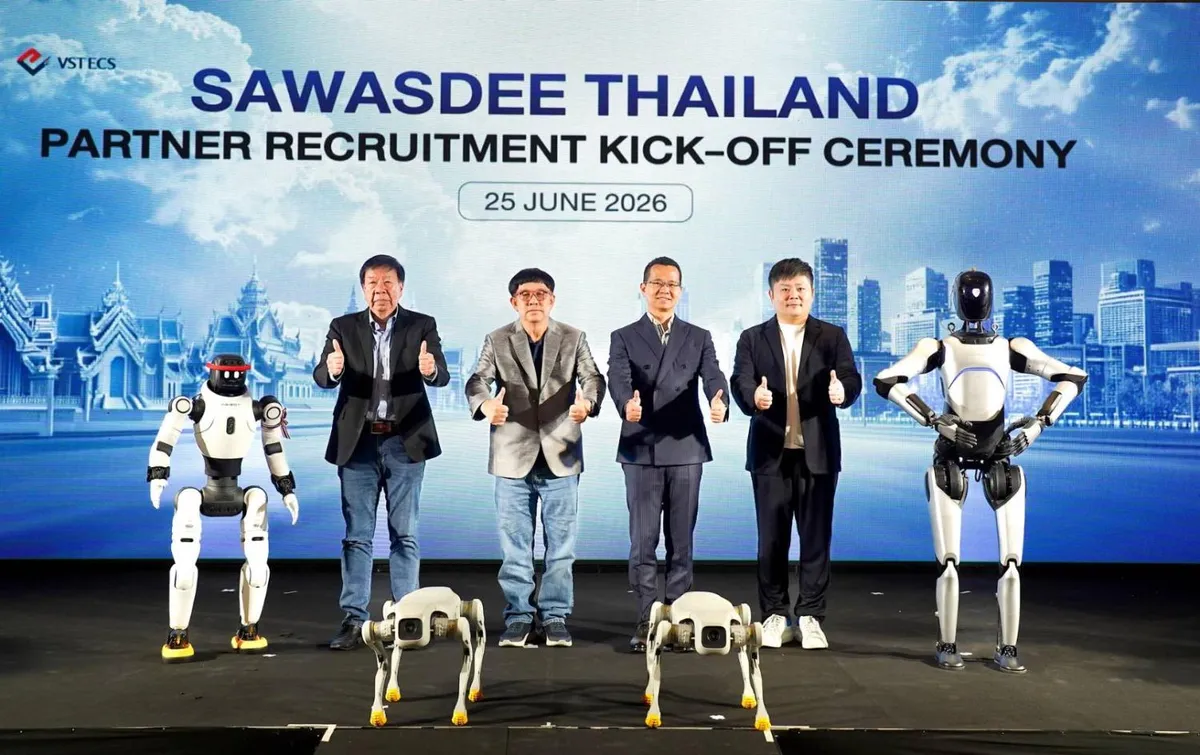
AgiBot Establishes Regional Headquarters in Thailand, Eyes AI Robotics Growth
AgiBot Innovation, a burgeoning force in artificial intelligence and robotics, has chosen Thailand as its Asia-Pacific regional headquarters, signaling a significant commitment to the region’s burgeoning tech landscape. The company, which claims to be the fastest-growing entity in AI and robotics history since its founding in February 2023, has already produced its 10,000th robot unit.
Abel Deng, president for Middle East and Asia-Pacific at AgiBot, stated that Thailand was selected as the first overseas market for international operations, launched in the fourth quarter of the previous year. The nation’s established position as a digital hub within the Asia-Pacific, leading in 5G, fiber deployment, the Internet of Things, and AI data centers, was a key factor in this decision. Deng highlighted the immense potential for robot applications across various sectors, from retail and entertainment to industrial monitoring and patrols, with AgiBot’s hardware ranging from compact interactive robots to robust robot dogs.
Driving Innovation Through Partnerships and Data
AgiBot is actively seeking to accelerate the adoption of humanoid robotics and develop novel use cases tailored for local markets. To this end, the company has partnered with VST ECS (Thailand), a prominent IT distributor. This collaboration aims to bolster the integration of physical AI into everyday applications.
Deng acknowledged that the embodied AI and humanoid industry is still in its nascent stages, with significant challenges including the acquisition of superior algorithms and sufficient data for model training. AgiBot plans to address this through a “data flywheel” strategy: customizing more application scenarios to generate real-world data, which in turn will enhance robot capabilities and foster the development of new use cases. The company emphasized the need for partners to assist in data collection and leverage local data centers for model training, with the ultimate goal of building a general-purpose robot system in Thailand.
To foster this ecosystem, AgiBot is making its platforms open source, promoting accessibility for partner developers. The company is actively recruiting solutions developers to customize robots for specific industries and local requirements. Deng articulated AgiBot’s vision: to make robots cost-effective, easily accessible, open for local innovation, and scalable through robust partnerships.
Thailand as an Intelligence Hub
Deng envisions Thailand evolving into an intelligence hub, driven by AI-powered transformations. He believes that by embracing this technology, Thailand can significantly boost productivity, with robots capable of handling tasks ranging from complex industrial manipulations to providing elderly care.
A Roland Berger study projects that the global humanoid robotics market could generate between $300 billion and $750 billion in annual revenue by 2035, with long-term potential to reach $4 trillion by 2050. AgiBot is positioning itself to capitalize on this projected market expansion.
VST ECS (Thailand) Invests in Future Robotics Markets
Somsak Pejthaveeporndej, chief executive of VST ECS (Thailand) Co Ltd, stated that after 38 years primarily operating as an IT wholesaler, the company is making substantial investments in humanoid and intelligent robots to create new market opportunities for its reseller partners. This strategic diversification moves beyond the limitations of the traditional IT sector, which is currently impacted by rising memory prices and supply shortages.
VST ECS has invested over 10 million baht to acquire demonstration robots and establish a dedicated team for maintenance and spare parts inventory, ensuring reliable service for its clients. The company will offer flexible business models, including outright sales, short- and long-term rentals (weekly, monthly, yearly), and lease-to-own options.
Target sectors for VST ECS include services, entertainment, healthcare, retail, events, and security. Pejthaveeporndej highlighted the flagship AgiBot A2 Ultra humanoid robot as a tool for organizations to enhance customer experiences, welcoming visitors and creating interactive brand activities. The company aims to cultivate a community of local developers capable of programming and customizing these robots, integrating advanced features like security systems or satellite communications to meet diverse Thai industry needs.
Pejthaveeporndej clarified that these robots are not intended to replace human jobs but rather to perform tasks that are challenging for humans and to improve industrial productivity. He expressed optimism, predicting that the humanoid robot market will present a massive opportunity in Thailand within the next three to five years.
