

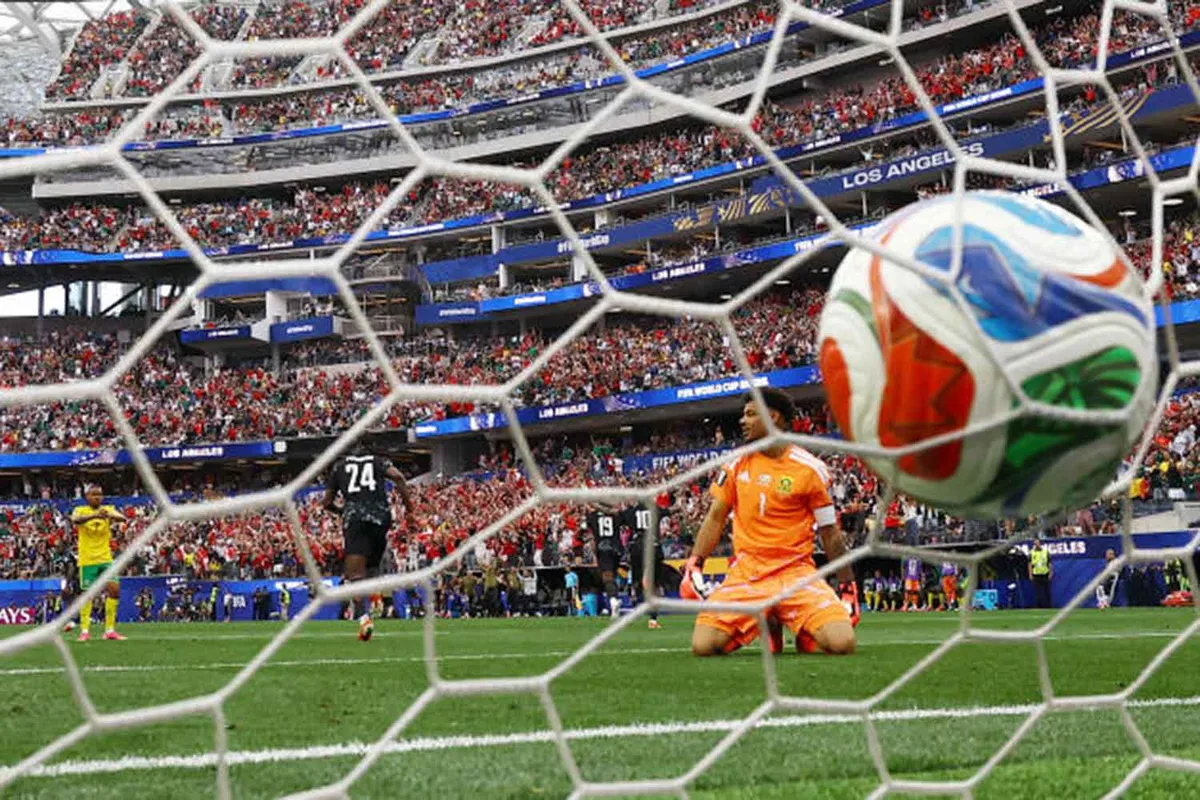
Canada has achieved its first-ever victory in a FIFA Women’s World Cup knockout stage, securing a dramatic win against South Africa thanks to a stoppage-time goal. The decisive moment came from Eustaquio, who capitalized on a misjudged header clearance just outside the penalty area and unleashed a powerful shot into the lower left corner of the net. This historic win propels Canada into the round of 16, where they will face the winner of the match between Morocco and the Netherlands. Their next fixture is scheduled for Monday in Monterrey, Mexico.
Dominant Performance and Key Moments
Throughout the match, Canada demonstrated a clear advantage in possession and offensive pressure. They outshot their opponents significantly, recording 12 attempts to South Africa’s 6, with seven of those on target compared to South Africa’s two. This statistical dominance reflected the flow of the game, with Canada controlling much of the play, particularly in the second half.
A notable moment in the game was the appearance of Canadian captain Alphonso Davies. The Bayern Munich defender made his first appearance since suffering a hamstring injury on May 6, entering the field in the 75th minute. His presence immediately impacted the Canadian attack, as he quickly set up Promise David for a shot that narrowly missed the left post.
Defensive Resilience and Near Misses
South Africa’s defense worked diligently to thwart Canadian advances, particularly in the first half, where they managed to avoid conceding despite several close calls. Goalkeeper Ronwen Williams played a crucial role in keeping her team in the game. In one instance, Williams came off her line to challenge a shot from Canada’s Tani Oluwaseyi. The rebound fell towards the goal, where Jonathan David was poised for a tap-in, but Mbekezeli Mbokazi’s timely clearance prevented the goal.
Both teams were competing in their first-ever World Cup knockout match, adding an extra layer of pressure and significance to the encounter. The early minutes of the game were played at a high intensity, but the most promising opportunities for Canada in the first half stemmed from set pieces. A particularly dangerous chance came in the 44th minute when Moise Bombito’s header from a corner kick was blocked on the goal line by Teboho Mokoena. Tajon Buchanan followed up with a rebound shot, but Williams was able to make the save at the right post.
Another contentious moment occurred in stoppage time when Canada’s Richie Laryea went down in the box following a challenge from Khuliso Mudau. The on-field decision was no penalty, and a subsequent review upheld this call.
First-Half Statistics and Fan Support
The statistics at halftime clearly indicated Canada’s superiority in the first 45 minutes. They led in total attempts with 8 compared to South Africa’s 3, and in shots on target, with 4 to South Africa’s 1. Earlier in the 17th minute, Jonathan David missed a volley opportunity from a corner, and shortly after, Williams denied Derek Cornelius’ header from another set-piece delivery.
The stadium was largely filled with Canadian supporters, a testament to the team’s growing fanbase. This strong turnout provided a notable atmosphere, offering some consolation for Canada after their loss to Switzerland in their final Group B match, which had cost them a potential home advantage in Vancouver.
Path to the Knockout Stage
Canada’s progression to the knockout stage was aided by a result in Group A, where South Africa’s victory over South Korea secured them second place. This outcome was significant given the large Korean population residing in and around Los Angeles, contributing to the crowd dynamics in the tournament.
The team’s historic first knockout win marks a significant milestone for Canadian women’s soccer, demonstrating their growing capability on the international stage. The focus now shifts to their round of 16 clash, where they will aim to continue their World Cup journey.
