

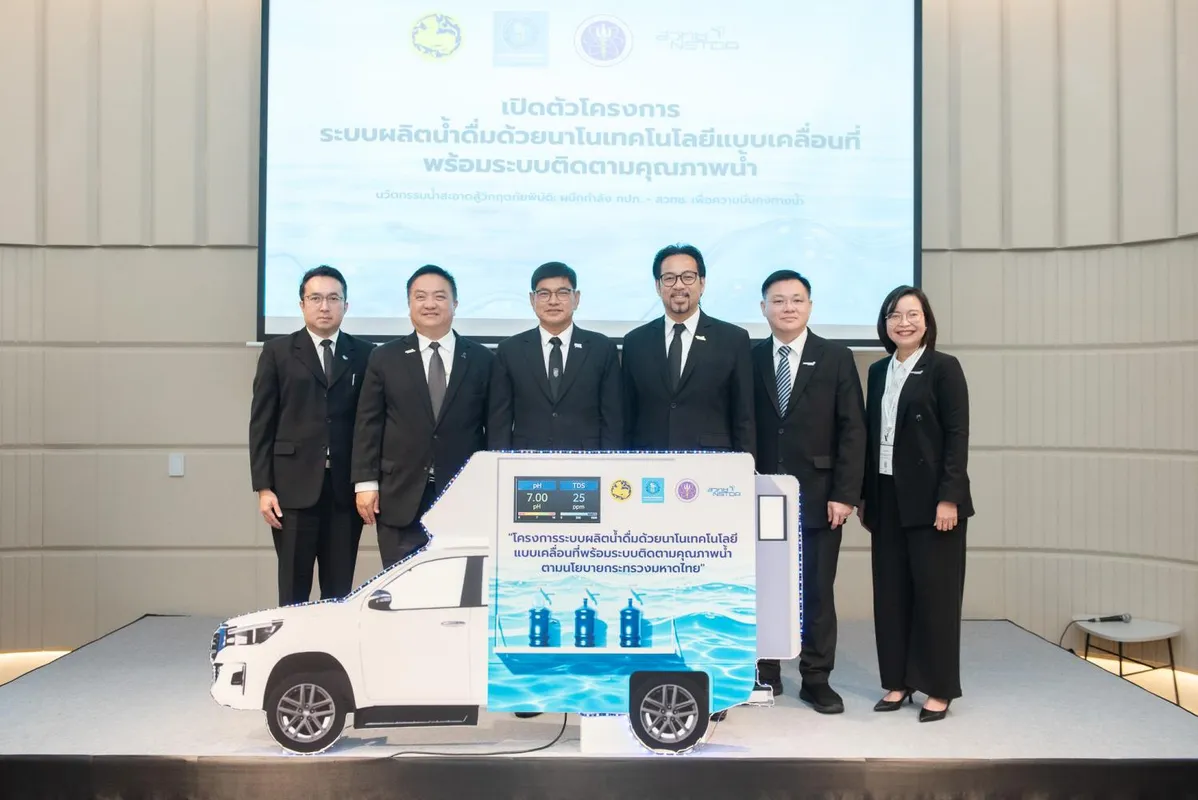
In response to recurring natural disasters and escalating water quality concerns, Thailand has introduced innovative mobile water treatment units powered by nanotechnology. The Provincial Waterworks Authority (PWA) and the National Nanotechnology Centre (Nanotec), operating under the National Science and Technology Development Agency (NSTDA), have unveiled the AquaNano vehicles. These advanced units are designed to provide immediate access to safe drinking water in areas affected by floods, contamination, or disruptions to conventional water supply systems.
AquaNano Vehicles: A Mobile Solution for Water Crises
The AquaNano vehicles represent a significant advancement in emergency water provision. Unlike fixed water treatment plants that can be rendered inoperable by disasters, these mobile units can be rapidly deployed to affected regions. Their primary function is to produce potable water from available raw water sources, ensuring a continuous supply even during critical events. This initiative comes as a direct response to the vulnerabilities exposed by severe flooding incidents since 2021 in various parts of Thailand, including Mae Sai, Chiang Rai, Chiang Mai, and Hat Yai. These events highlighted the limitations of traditional water production methods when infrastructure is compromised.
The development of these nanotech trucks builds upon previous successes with stationary nanotechnology-based filtration systems. However, the mobility of the AquaNano units offers a crucial advantage: rapid deployment. Each vehicle is capable of producing up to 250 liters of drinking water per hour. This capacity allows for swift intervention, providing essential resources to communities facing immediate water shortages.
Addressing Deteriorating Water Quality
Beyond emergency response, the AquaNano project also addresses the growing problem of declining water quality across Thailand, particularly in the northern regions. Rivers and other water bodies have become increasingly contaminated with heavy metals and various industrial pollutants, posing long-term health risks. The advanced purification system integrated into the AquaNano vehicles is engineered to tackle these complex contamination issues.
The Seven-Stage Purification Process
According to NSTDA deputy executive director Worawarong Rakreungdet, the purification system employs a sophisticated seven-stage process. This multi-barrier approach combines several cutting-edge technologies:
- Advanced Nanomaterials: Utilized for highly efficient removal of microscopic contaminants.
- Adsorption Technology: Effectively captures and removes dissolved pollutants, including heavy metals.
- Silver-Based Antimicrobial Treatment: Disinfects the water, eliminating harmful pathogens and bacteria.
This comprehensive treatment process is designed to remove a wide range of contaminants, including pathogens, heavy metals, and organic pollutants. The result is treated water that meets stringent safety standards and is comparable in taste to commercially bottled water, making it readily acceptable for consumption.
Ensuring Real-Time Safety and Efficiency
Maintaining the integrity and effectiveness of the water treatment process is paramount. Each AquaNano vehicle is equipped with a sophisticated real-time water quality monitoring system. This system continuously tracks the performance of the filtration media and the overall purification process. Crucially, it alerts operators when the filter media require replacement, ensuring that the water consistently meets all required safety and quality benchmarks. This proactive monitoring prevents potential lapses in water safety and optimizes the lifespan and efficiency of the filtration components.
Transforming Emergency Water Supply
The introduction of these mobile units marks a strategic shift in how the PWA manages water supply during emergencies. Sutat Nutchapan, PWA deputy governor for Operations 3, explained that the authority can now move beyond relying solely on fixed treatment plants. The AquaNano vehicles enable the PWA to deliver clean drinking water directly to affected communities, bypassing the need for extensive and time-consuming transportation of water from distant, unaffected facilities.
With ten AquaNano vehicles now operational, the PWA can significantly reduce response times. Instead of hours or even days spent organizing water transportation, these mobile units can be deployed and begin producing safe drinking water within hours of a disaster striking. This enhanced capability is vital for mitigating the impact of floods, earthquakes, and other emergencies that can disrupt public water infrastructure and threaten community health.
Future Implications and Preparedness
The AquaNano initiative underscores Thailand’s commitment to leveraging technological innovation for disaster preparedness and public health. By integrating nanotechnology into mobile water treatment solutions, the country is better equipped to handle the challenges posed by climate change and increasing environmental pressures. The ability to rapidly deploy clean water solutions directly to impacted populations is a critical step in building more resilient communities and ensuring access to safe drinking water, regardless of the circumstances.
This forward-thinking approach not only saves lives during immediate crises but also contributes to long-term water security by addressing the persistent issue of water contamination. The success of the AquaNano program could serve as a model for other regions facing similar water-related challenges, demonstrating the power of nanotechnology in safeguarding public health and enhancing disaster response capabilities.
