

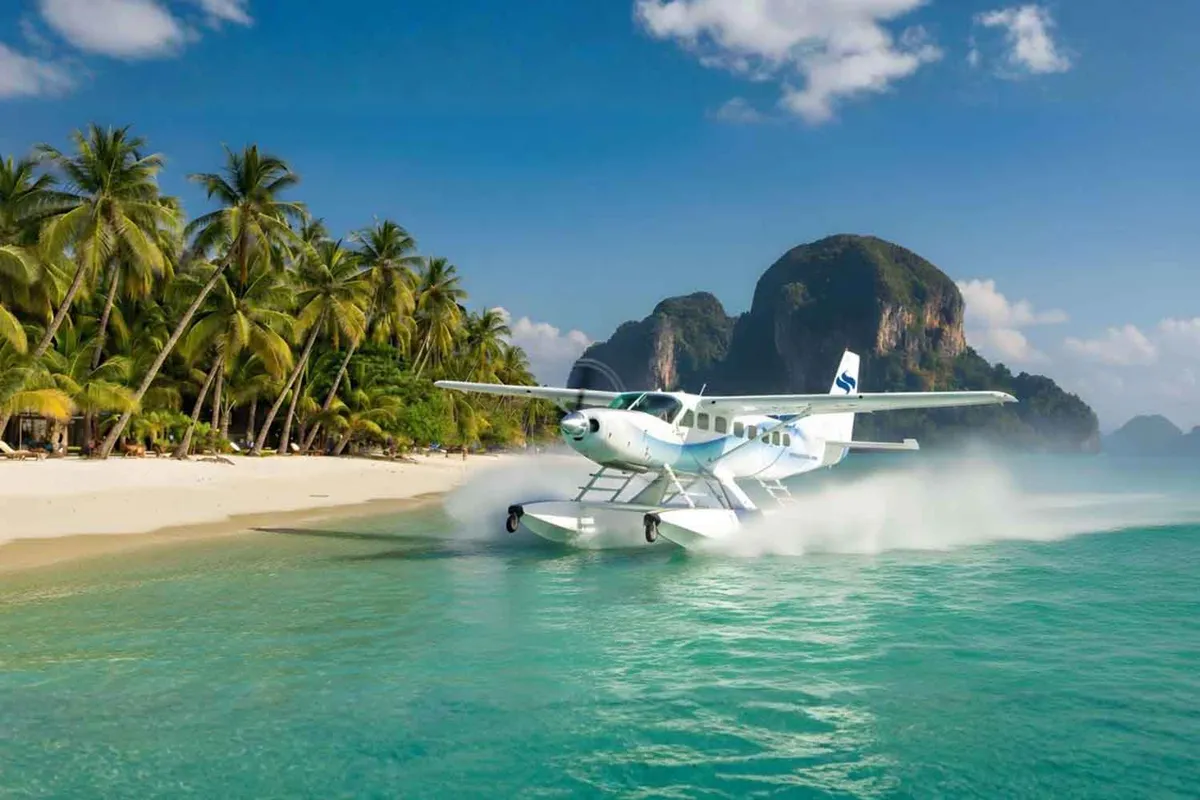
Thailand’s burgeoning seaplane industry faces significant regulatory obstacles, hindering its growth despite strong market demand. While the nation possesses vast coastlines and numerous islands ideal for seaplane operations, outdated regulations and complex environmental assessment requirements are slowing development compared to regional competitors like Vietnam and Indonesia. This has led to delays in the launch of new services and the expansion of existing ones.
Regulatory Roadblocks Hamper Seaplane Operations
Worakanya Siripidej, chief executive of Siam Seaplane, highlighted that the country’s regulations have not kept pace with technological advancements in the aviation sector. A key issue stems from a 2023 notification by the Natural Resources and Environment Ministry, which mandates environmental impact assessment (EIA) reports for certain types of projects. This requirement extends to temporary water landing sites and floating docks for seaplanes, necessitating an initial environmental examination that can cost millions of baht – a sum comparable to establishing a boat marina.
Ms. Siripidej stated that such a blanket requirement imposes a substantial burden on operators and has directly delayed Siam Seaplane’s planned service launches. She emphasized the need for regulations to be more adaptable and not apply a ‘one size fits all’ approach to diverse operational needs. The company, registered in Thailand in 2019 and having obtained its air operator certificate in 2024, is part of the Seaplane Asia Group, which already operates seaplane services in Indonesia and Cambodia. Currently, Siam Seaplane focuses on land-to-land charter flights within Thailand, utilizing a Cessna Grand Caravan aircraft on routes such as Bangkok to Samui and Samui to Phuket.
Evolving Regulations and Future Potential
In the past year, the Civil Aviation Authority of Thailand (CAAT) introduced regulations specifically for commercial seaplane operations, outlining standards for temporary water take-off and landing areas. However, Ms. Siripidej noted that these new rules primarily address temporary sites like floating docks and do not encompass larger, covered facilities such as water aerodromes capable of accommodating multiple aircraft, similar to those found in the Maldives, a global hub for seaplane activity. Furthermore, the legal framework has yet to address seaplanes landing on beaches, a common practice in many tourist destinations.
While acknowledging the CAAT’s new regulation as a positive first step, Ms. Siripidej believes that Thailand must proactively plan for future development if it aims to become a significant aviation hub. This forward-thinking approach is crucial for unlocking the full potential of seaplane services.
Government and Industry Collaboration for Growth
Recognizing the seaplane sector as a potential new engine for economic growth, the Thai government and industry stakeholders have established a strategic committee dedicated to seaplane development. This committee is chaired by the deputy transport minister and is intended to function as a one-stop service center. Its primary goal is to streamline coordination and approvals among various government agencies involved in seaplane operations, including the Department of National Parks, Wildlife and Plant Conservation, CAAT, and Aeronautical Radio of Thailand (Aerothai).
With the support of CAAT and Aerothai, Siam Seaplane has put forward a proposal to the Natural Resources and Environment Ministry. The proposal seeks to ease certain conditions related to the environmental impact assessment reports for seaplane facilities. This initiative is expected to reach a conclusion by the fourth quarter of the current year.
Expansion Plans and Market Outlook
Siam Seaplane is actively working towards commencing operations at new sites. Public hearings with local communities in Krabi are scheduled to conclude this year, paving the way for the company to begin construction of three temporary water take-off and landing sites in Tub Kaek and Koh Phi Phi. Additional facilities are planned for Bangtao and Makham Bay in Phuket, and Koh Yao Noi in Phangnga. If these plans materialize, the company anticipates launching its expanded services as early as January 2027.
Despite global economic and geopolitical uncertainties that necessitate ongoing adjustments to its strategic plans, Siam Seaplane has already seen significant interest. In January alone, the company received nearly 100 inquiries for its services. To meet anticipated demand, Siam Seaplane has ordered six additional Cessna Grand Caravan aircraft this year, bringing its fleet total to seven. The company projects revenues of 70 million baht for the upcoming year and aims for 650 million baht within five years, supported by a fleet of 7 to 15 aircraft.
Approximately 70% of the projected revenue is expected to come from seaplane services, with the remaining 30% from land-to-land charters. A 30-minute seaplane flight from Phuket to Koh Phi Phi is priced at around 50,000 baht and can accommodate 8 to 10 passengers. Ms. Siripidej emphasized the scalability of their business model, leveraging Thailand’s robust tourism sector and the potential for services to numerous destinations, including remote islands and inland dams. Seaplanes, she noted, serve as a vital logistical tool, enhancing accessibility to waterfront locations across Thailand that are otherwise difficult to reach.
Diversification and Future Endeavors
Looking beyond domestic operations, Siam Seaplane intends to expand its land-to-land charter flights internationally to Cambodia, Laos, Myanmar, and Vietnam starting next year. The company is also exploring collaborations with the National Institute for Emergency Medicine to provide aeromedical evacuation services, further diversifying its service offerings and contributing to critical infrastructure.
