

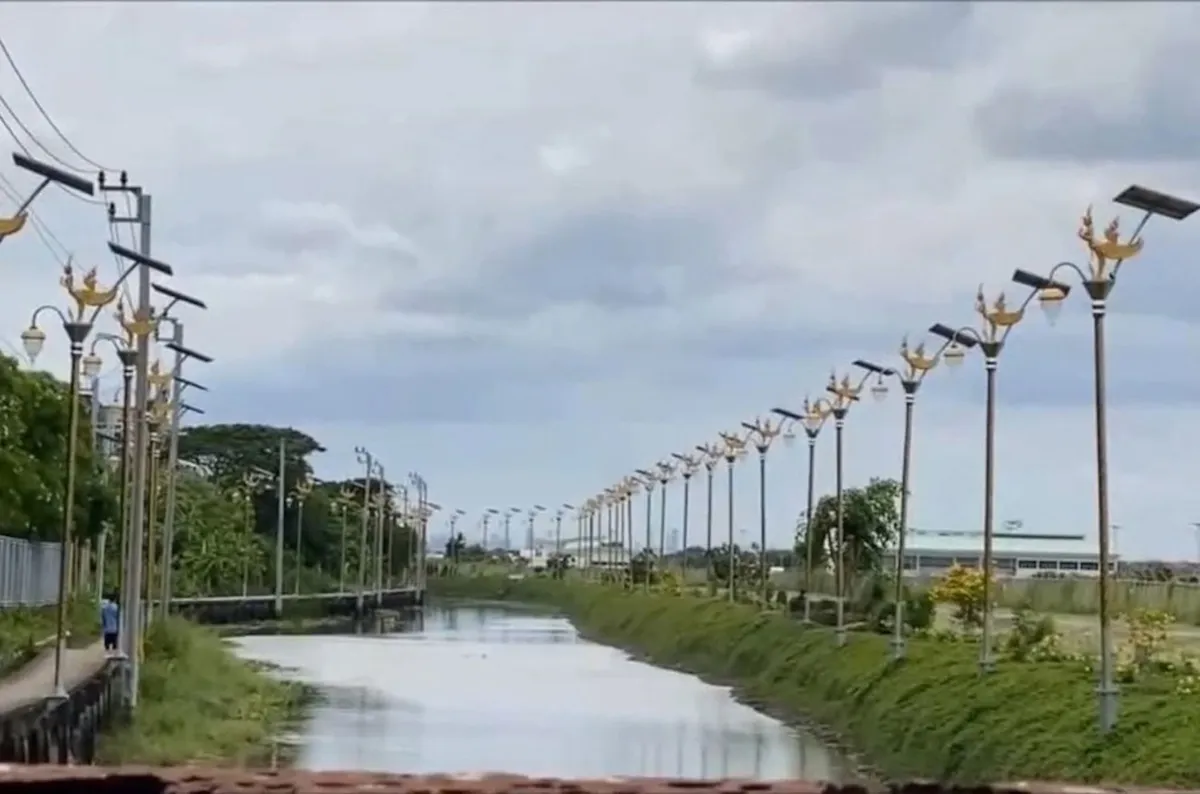
A court has sentenced two former officials to prison for their roles in a controversial Kinnaree lamppost scandal that involved the procurement of decorative streetlights in Racha Thewa, Bang Phli district. The case, which began in 2013 and saw further modifications approved in 2019, drew significant public scrutiny and outrage over its substantial budget and alleged irregularities.
The Racha Thewa Lamppost Project Unveiled
The Racha Thewa Tambon Administrative Organisation initially approved the procurement of solar-powered street lamps adorned with mythical Kinnaree figures. This project, intended to enhance the local landscape, later became the subject of intense investigation. The scale of the project became apparent when a budget of 871 million baht was allocated for the installation of over 6,700 lampposts. A notable aspect of the procurement was that all these lampposts were sourced from a single company, raising questions about the bidding process.
Legal Proceedings and Court Verdict
Following the public outcry and subsequent investigations, approximately 40 individuals faced charges related to malfeasance, corruption, and bid-rigging. The Criminal Court for Corruption and Misconduct Cases delivered its verdict on June 23. The court found Songchai Nokkhamin, the former president of the Racha Thewa Tambon Administrative Organisation, and a second defendant, identified as Wassana, guilty of malfeasance by a public official. Their convictions were based on violations of Section 157 of the Criminal Code and offenses under the 1999 Organic Act on Counter Corruption. However, eight other co-defendants in the case were acquitted by the court.
Public Outcry and Subsequent Project Suspension
Despite the notoriety surrounding the initial lamppost venture, the Racha Thewa Tambon Council made another attempt at decorative lighting. In June 2021, the council approved the purchase of an additional 720 decorative lamps at a cost of 68 million baht. This decision came at a time when Thailand was grappling with the severe economic and social impacts of the Covid-19 pandemic. The public reaction was swift and overwhelmingly critical, with many questioning the justification for such a significant expenditure during a national crisis. The intense criticism led to the suspension of this subsequent project.
Wider Implications and Procurement Reforms
The Racha Thewa lamppost scandal was not an isolated incident. Investigations into similar projects in other tambons (sub-districts) began to surface, revealing a pattern of questionable procurement practices and potential corruption within local government bodies. The cumulative impact of these revelations and public pressure ultimately spurred significant reforms. In 2023, new measures were introduced aimed at enhancing transparency, reducing waste, and curbing corruption in the procurement processes of local government administrations across the country. These reforms seek to ensure that public funds are utilized efficiently and ethically, preventing the recurrence of scandals like the one involving the Kinnaree lampposts.
The Kinnaree Symbolism and Project Intent
The choice of the Kinnaree figure for the lampposts was intended to add a unique cultural and artistic element to the public spaces in Racha Thewa. The Kinnaree, a mythical half-human, half-bird creature from Buddhist and Hindu mythology, often symbolizes grace, beauty, and auspiciousness. The project aimed to blend modern infrastructure with local cultural motifs, creating a distinctive aesthetic for the district. However, the execution and financial management of the project overshadowed its artistic aspirations, leading to its association with corruption and public funds mismanagement rather than cultural enhancement.
Lessons Learned and Future Outlook
The Kinnaree lamppost scandal serves as a stark reminder of the importance of robust oversight and accountability in public procurement. The legal repercussions for Songchai Nokkhamin and Wassana underscore the consequences of malfeasance in public office. The subsequent reforms implemented in 2023 are a direct response to the systemic issues exposed by this and similar cases. The focus now is on strengthening governance frameworks, promoting competitive bidding, and fostering a culture of integrity within local administrations to safeguard public resources and restore public trust. The goal is to ensure that future infrastructure projects serve the public good without becoming mired in controversy or allegations of corruption.
