

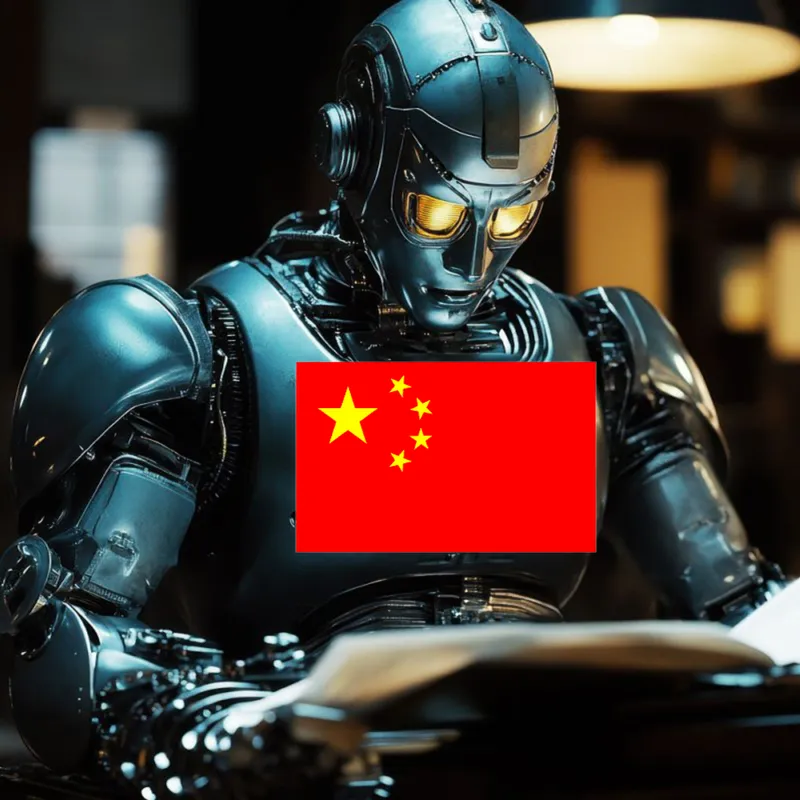
Beijing is reportedly exploring measures to restrict foreign access to its most advanced artificial intelligence (AI) models, signaling a growing trend among nations to treat cutting-edge AI as a strategic national asset requiring stringent controls. This potential move by China mirrors similar concerns and actions taken by the United States regarding the national security implications of AI technology.
China’s AI Advancements and Global Reach
In recent times, Chinese AI models, such as those developed by DeepSeek, have gained significant traction internationally. Their appeal stems from a combination of competitive pricing and rapidly improving capabilities. Companies like Alibaba, with its Qwen model, and ByteDance, known for its Doubao platform, are prominent players in this space. Additionally, startups like Z.ai have garnered attention for their models, such as GLM-5.2, which are approaching the performance of leading U.S. offerings at a considerably lower cost.
The emergence and global adoption of these models have led to discussions within China about safeguarding this burgeoning technology. Any decision to limit foreign access could have a substantial impact on the global AI landscape, potentially increasing costs for businesses worldwide that rely on these affordable and capable tools.
Discussions on Restricting Advanced AI Models
Meetings involving representatives from China’s Ministry of Commerce, along with executives from major tech firms including Alibaba and ByteDance, and startup Z.ai, have reportedly touched upon the possibility of imposing limitations on advanced AI models. These discussions reportedly included both closed-source proprietary systems and more open-weight versions.
According to sources familiar with the matter, a key focus of these discussions was the potential for stricter penalties related to AI theft. Participants reportedly considered classifying the leakage or theft of proprietary AI technology as an offense under China’s national security laws, which carry severe penalties. Furthermore, officials are said to have explored new measures that could restrict the sources of funding for domestic AI startups, aiming to exert greater control over their development and ownership.
The exact scope and implementation of these potential restrictions remain under deliberation. It is unclear whether these measures would apply only to future AI model releases or encompass existing ones. The timeline for any potential enforcement, or even if such measures will be enacted, is also uncertain.
National Security Concerns Drive AI Regulation
The focus on national security in the context of AI is not unique to China. The U.S. administration has also expressed significant concerns about the potential misuse of AI technology by adversarial nations. For instance, in June, the U.S. government ordered that foreign nationals be denied access to Anthropic’s advanced AI models, Fable and Mythos, due to national security risks. This led Anthropic to disable these models globally as real-time nationality verification proved challenging.
While export controls for the general-purpose Fable model have since been eased following the implementation of new safeguards, the cybersecurity-focused Mythos model remains restricted to select U.S. organizations. These actions highlight a broader international trend of viewing advanced AI as a critical component of national defense and economic competitiveness.
Some experts within the U.S. have also called for greater regulation of Chinese AI models, emphasizing the need for a balanced approach that addresses potential security threats without stifling innovation.
China’s Broader Efforts to Control AI Development
Beyond the discussions on limiting foreign access to AI models, China has been actively implementing various measures to bolster its domestic AI capabilities and exert control over the sector. In April, the country’s state planner intervened in a significant acquisition, ordering Meta to unwind its investment in the Chinese-founded AI startup Manus.
Furthermore, in early June, authorities introduced comprehensive new regulations aimed at tightening oversight of overseas deals involving Chinese investors, technology, and data, particularly where national security is a concern. Investigations have also been launched into companies like Manus and other Chinese AI startups that have relocated abroad, seeking to determine potential violations of export control laws.
Potential Regulatory Frameworks for Open-Source AI
Insights into potential future regulations for AI, particularly open-source models, may be gleaned from a roundtable discussion involving Chinese legal experts. A summary of these discussions, published in an official Supreme People’s Court journal, proposed a tiered regulatory system:
- Basic Open-Source Tools: These would be subject to a simplified filing process.
- More Advanced Technologies: These would undergo more rigorous security reviews.
- Most Sensitive Frontier Models: These could be barred from public release or restricted exclusively for domestic use.
This tiered approach suggests a nuanced strategy, aiming to balance the benefits of open-source AI development with the imperative to manage national security risks. The ongoing deliberations in Beijing underscore the complex challenges and strategic considerations involved in governing the rapidly evolving field of artificial intelligence on a global scale.
Conclusion
The reported considerations by Beijing to curb foreign access to its leading AI models reflect a global trend of treating artificial intelligence as a critical national asset. As China continues to advance its AI capabilities, balancing innovation with national security concerns remains a paramount challenge, influencing both domestic policy and international technological relations.
