

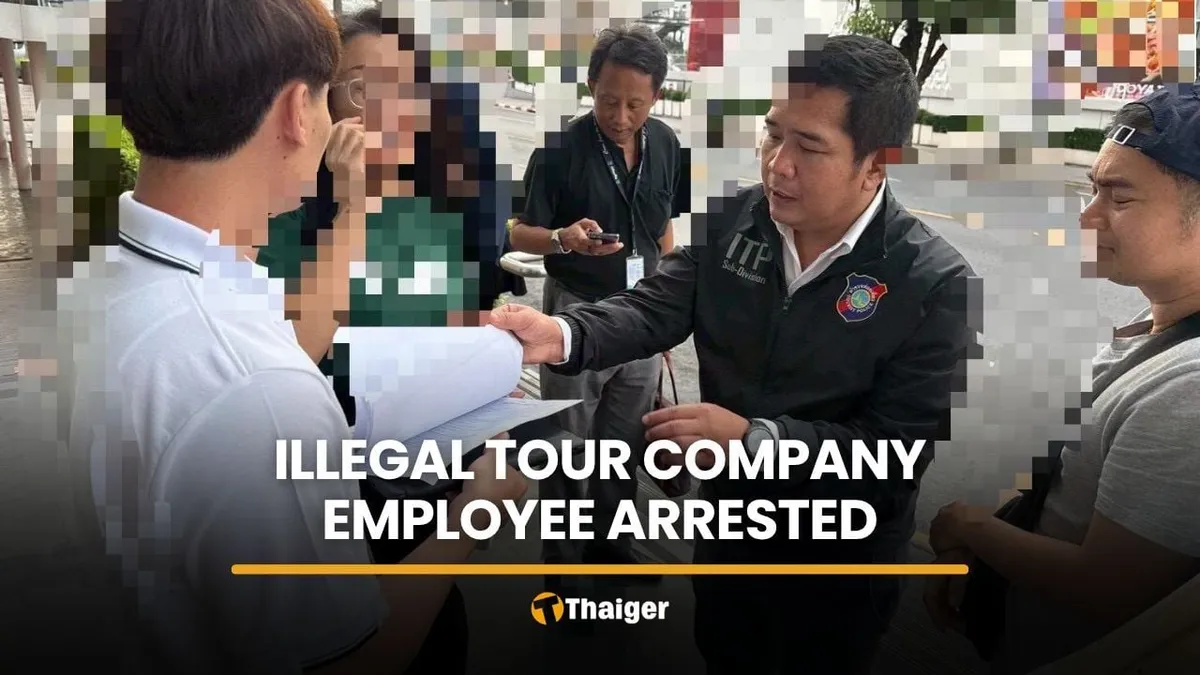
An employee of a tour company has been apprehended in Bangkok for allegedly selling overseas travel packages without a valid business license. The arrest occurred on July 10, following an investigation into a tour counter operating from a shopping center on Srinakarin Road. Officials discovered that the company’s tourism business license had previously been revoked.
Investigation into Unlicensed Tour Operations
The Department of Tourism, in collaboration with the Tourist Police, initiated an inspection after identifying a suspicious tour counter suspected of promoting and selling various international travel programs. During the operation, officials observed a female employee actively engaging with potential customers and promoting overseas tour packages.
A subsequent review of the Department of Tourism’s official registry revealed that the company, identified as Riwi, had once held a valid tourism business license. However, this license had since been officially revoked, meaning the company was no longer legally permitted to operate as a tour provider.
Evidence Gathering and Arrest
To substantiate their suspicions and gather concrete evidence, undercover officials posed as customers. They proceeded to purchase a tour package from the suspect employee. Following this transaction, the officials identified themselves, leading to the employee’s detention. When questioned about her authority to conduct such business and asked to present a valid tourism business license, the employee was unable to comply.
The employee was subsequently charged with operating a tourism business without the requisite license. This offense carries significant penalties under Thai law, including potential imprisonment for up to two years, a substantial fine of up to 500,000 baht, or a combination of both.
The arrested individual was then transferred to the Prawet Police Station, where further investigation and legal proceedings are underway.
Consumer Protection Advisory
In light of this incident, the Department of Tourism issued a strong advisory to the public. They urged all travelers to exercise due diligence before purchasing any tour packages. It is crucial to verify that tour operators possess valid and current licenses. This verification process is essential for safeguarding against potential fraud and ensuring that consumers receive services that adhere to established legal standards and quality benchmarks.
Related Incidents of Unlicensed Tourism Operations
This case highlights a broader concern regarding unlicensed tourism activities. In a separate, recent incident, a British national was arrested at Suvarnabhumi Airport. This individual was reportedly operating an unlicensed full-service nature tour business for over a decade, guiding tourists through protected national parks across Thailand.
Authorities indicated that the suspect allegedly led tourists through sensitive wildlife areas and along routes that typically require the expertise of officially licensed guides or trained Thai personnel. Such personnel are familiar with the specific terrain, local wildlife, and crucial safety protocols necessary for navigating these protected environments responsibly.
The operation of such unlicensed tours poses risks not only to the safety of the tourists but also to the delicate ecosystems within Thailand’s national parks. The Department of Tourism and law enforcement agencies continue to monitor and take action against illegal tourism operations to maintain industry standards and protect both visitors and natural resources.
Ensuring Legitimate Tour Operations
The Department of Tourism emphasizes the importance of a regulated tourism industry. Licensed tour operators are subject to specific requirements and oversight, ensuring a baseline level of professionalism, financial responsibility, and adherence to consumer protection laws. By operating legally, these companies contribute to Thailand’s reputation as a safe and reliable tourist destination.
Travelers can typically verify a tour company’s license status through official government channels or by requesting documentation directly from the operator. This simple step can prevent significant issues and ensure a more secure and enjoyable travel experience. The department continues its efforts to identify and prosecute entities operating outside the legal framework, thereby protecting the integrity of the tourism sector.
