

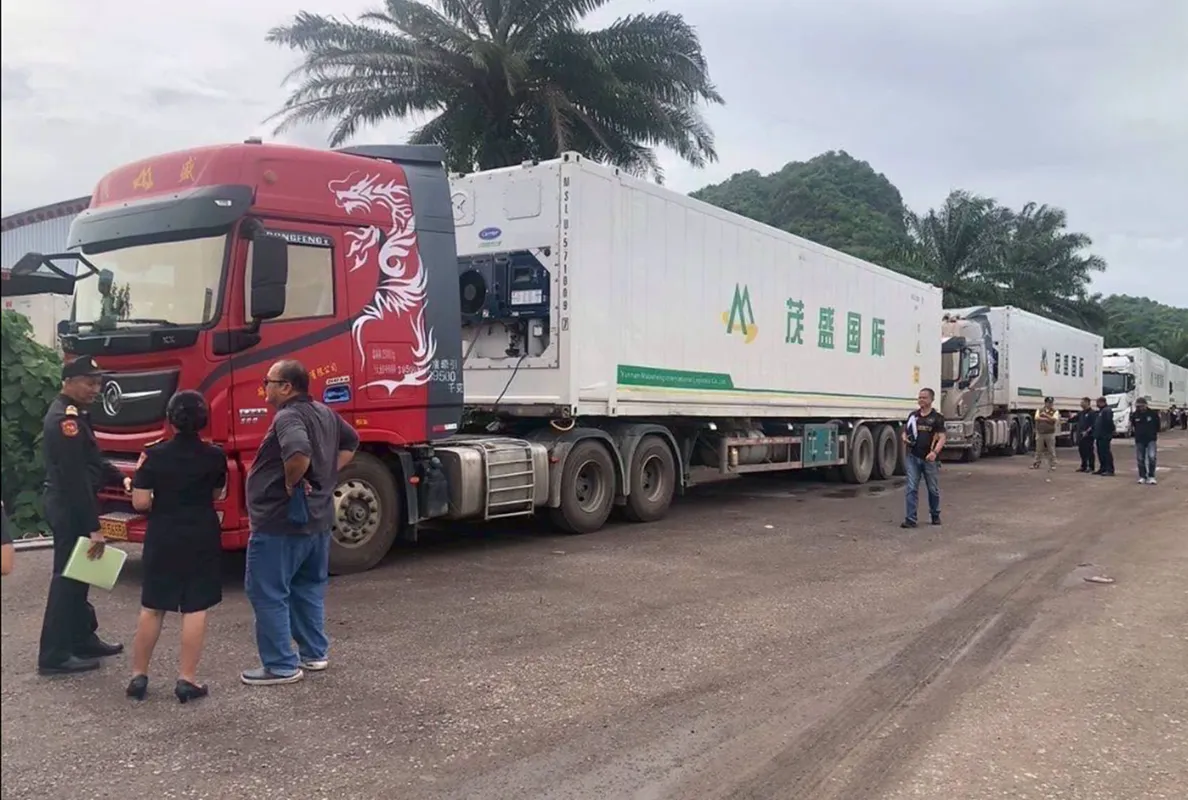
Thai authorities are intensifying efforts to ensure Chinese freight trucks adhere to regulations, particularly concerning their approved routes and operational scope within Thailand. The Department of Land Transport (DLT) is collaborating with highway police and other relevant agencies to prevent violations and safeguard the interests of local transport operators. This initiative comes in response to reports of Chinese trucks deviating from their authorized paths to pick up cargo, specifically fruit shipments, in southern Thailand.
GMS Agreement and Route Compliance
Chinese trucks are permitted to operate in Thailand under the framework of the Greater Mekong Subregion (GMS) Cross-Border Transport Agreement. This agreement, which includes Cambodia, China, Laos, Myanmar, Thailand, and Vietnam, aims to facilitate regional trade and transport. However, recent incidents suggest some operators have exceeded the boundaries set by this agreement.
Officials from the Chumphon Provincial Land Transport Office, alongside police, customs, immigration, provincial commerce departments, and local administrative bodies, conducted inspections in the Lang Suan district of Chumphon. These operations targeted markets and surrounding areas, including Lertporn and Morakot markets. The primary objective was to inspect vehicles, verify transport permits, and inform operators about the specific regulations governing international freight transport under the GMS accord.
Enforcement Operations in Chumphon
The enforcement action in Chumphon was designed as a proactive measure to intercept Chinese trucks attempting to operate beyond their designated routes into southern Thailand. During the operation, five Chinese-registered container trucks were discovered parked behind the Morakot Market. While no drivers were immediately present, checks of the vehicles’ registration records revealed they were licensed for international transport. These trucks had entered Thailand via the Chiang Khong customs checkpoint in Chiang Rai between June 29 and July 1, with their declared destinations being Bangkok and Chanthaburi.
The vehicles have since been impounded. Authorities are now conducting a thorough investigation involving the buyers, sellers, and any other parties implicated in arranging the freight collection outside the officially sanctioned transport routes. If violations are confirmed, legal proceedings will be initiated against those responsible.
Consequences for Non-Compliance
The DLT has issued a stern warning to all transport operators. Any Chinese truck found operating outside its approved route will be immediately stopped. Its transport documents will be subject to inspection, and drivers found to be in breach of the GMS agreement’s conditions will face significant legal penalties and fines. Furthermore, these drivers will be mandated to return to one of the nine authorized transport corridors established under the agreement. They will be explicitly prohibited from continuing their journeys to destinations not covered by their permits.
Protecting Local Interests
This crackdown underscores Thailand’s commitment to upholding the integrity of its transportation agreements and protecting the economic interests of its domestic transport sector. By ensuring that foreign operators adhere to established rules, Thai authorities aim to create a level playing field and prevent unfair competition.
Future Monitoring and Compliance
The DLT plans to continue monitoring cross-border freight operations closely. Enhanced surveillance and stricter enforcement measures are expected to be implemented at key entry points and along major transport routes. The goal is to ensure that all international freight operators, including those from China, operate within the legal framework and contribute positively to regional trade without disrupting local industries.
Broader Implications for Regional Trade
The GMS Cross-Border Transport Agreement is a vital component of economic cooperation in Southeast Asia. Its success hinges on the mutual adherence to its provisions by all member states and their operators. Thailand’s proactive enforcement signals its dedication to the agreement’s principles while also addressing specific operational challenges. This approach aims to foster continued growth in regional trade while maintaining order and fairness within the transport sector.
The department emphasized that compliance with the GMS agreement is crucial for all participating countries. By working together and enforcing regulations consistently, the region can maximize the benefits of cross-border transport, promoting economic development and connectivity across the Greater Mekong Subregion.
