

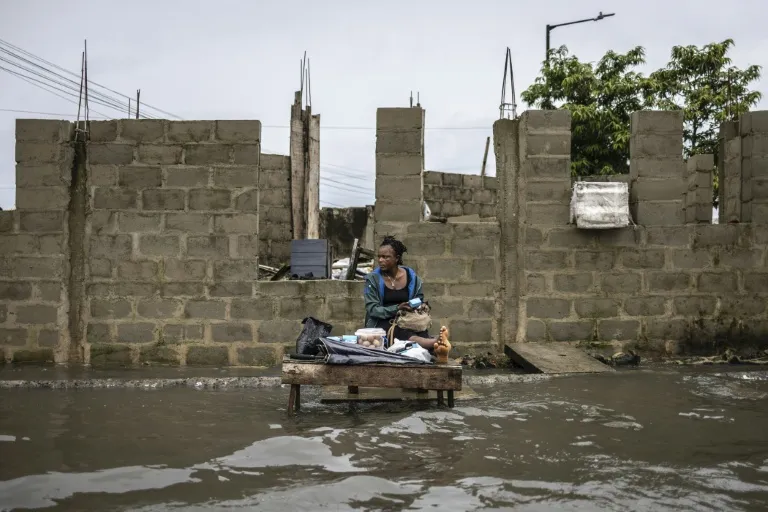
Lagos, a sprawling megacity of approximately 20 million people, is increasingly vulnerable to severe flooding, a crisis exacerbated by the dual pressures of climate change and rapid, often unregulated, urban expansion. The city’s low-lying coastal geography makes it inherently susceptible to inundation, a problem that has been dramatically amplified by rising sea levels, unpredictable rainfall patterns, and extensive groundwater extraction driven by population growth.
The Compounding Factors of Lagos Flooding
The escalating flooding in Lagos is not attributable to a single cause but rather a confluence of environmental and developmental factors. Experts point to climate change as a primary driver, leading to more extreme weather events, including heavier and more erratic rainfall. This is compounded by the city’s geographical reality: situated on a low-lying coastal plain, Lagos is naturally prone to flooding.
Furthermore, the relentless pace of urbanization presents significant challenges. As Nigeria’s economic powerhouse, Lagos attracts thousands of new residents daily, with the United Nations estimating an annual growth rate of 6%. This rapid influx fuels widespread construction of residential, commercial, and industrial buildings, particularly in areas like the Lekki district, which is also a designated special economic zone. This development often occurs without adequate planning or infrastructure to manage increased water runoff.
Groundwater Extraction and Infrastructure Deficiencies
A critical, yet often overlooked, aspect of the crisis is the widespread reliance on groundwater. A significant portion of Lagos households lack access to treated piped water, forcing them to drill boreholes for potable water. This unregulated extraction disrupts the natural underground water equilibrium and can contribute to land subsidence. The World Economic Forum has highlighted Lagos as one of the cities sinking at an alarming rate, with some reports indicating subsidence of up to 87 millimeters per year.
Compounding these issues are deficiencies in urban infrastructure. Inadequate drainage systems, poor waste management, and the loss of natural water absorption surfaces like wetlands further diminish the city’s resilience. Heaps of plastic waste and debris frequently clog open drainage channels and waterways, impeding water flow and exacerbating flooding during heavy downpours. The destruction of wetlands and unstructured land reclamation for development also reduce the landscape’s natural capacity to absorb excess rainwater.
The Human Impact of Persistent Flooding
The human cost of these recurring floods is immense. Residents describe waking up to find their homes and belongings submerged. In the Apostolic Church of Nigeria in Lekki, chairs and cushions were found piled in knee-deep floodwaters that had engulfed the building. For families like that of 42-year-old Akpan, the floods mean ruined schoolbooks and a constant disruption to daily life. Uche Adibua, a 46-year-old resident of the Okota area, expressed dismay that flooding, which was not a common occurrence before, has become a persistent problem since the rains began this year, stating, “It is like we are under siege with the flood.”
Rainfall Patterns and Climate Change Link
The intensity and frequency of rainfall have demonstrably increased. Nigeria experiences heavy rains between May and November, and recent years have seen rainfall totals exceeding historical averages. For instance, authorities forecast annual rainfall of 1,952 mm last year, above the 2012-2022 average of 1,721 mm. Projections for the current year range even wider, from 1,650 mm to 3,030 mm.
Scientific analyses, such as those conducted by World Weather Attribution, suggest that recent extreme rain events, like the late June storms that caused widespread flooding and fatalities across West Africa, have been intensified by climate change. Ibidun Adelekan, a geography professor at the University of Ibadan, confirmed that Lagos experiences heavier rainstorms than in the past, a phenomenon linked to broader climatic shifts. The city’s extensive coastline, spanning 180 kilometers, and its numerous waterways make it particularly susceptible to these intensified weather patterns.
Debate Over Infrastructure Projects and Solutions
Amidst the escalating crisis, questions arise about the impact of major infrastructure projects. Some residents in the Lekki district have pointed to the ongoing construction of the 700-kilometer Lagos-Calabar coastal highway as a potential contributor to worsening flood conditions. Babatunde Vaughn, a technology consultant whose home is near the highway, noted that flooding had not previously affected his residence and suggested the highway construction was the most significant recent development. He stated, “Water has never entered the house before.”
However, government officials and the construction company involved reject this assertion. The Minister of Works, Dave Umahi, has maintained that the highway project is designed to act as a protective buffer against coastal flooding for surrounding communities. Hitech, the Nigerian firm building the road, supports this view.
Pathways to Mitigation and Adaptation
Environmentalists and experts propose a range of solutions focused on both immediate relief and long-term resilience. Key recommendations include updating and enforcing building codes, implementing stricter regulations on urban development, and significantly improving and expanding drainage systems to cope with increased rainfall volumes. Independent environmentalist Olumide Idowu emphasized that “annual flooding in Lagos is caused by heavy rainfall, inadequate drainage, clogged gutters laden with debris and fast urban growth that hinders natural water absorption.”
Tokunbo Wahab, Lagos State’s environmental chief, acknowledged that “illegal dredging and land reclamation” have created “significant environmental challenges,” with vital wetlands being filled and built upon. Addressing these issues, alongside improving waste management and promoting sustainable urban planning, is crucial for mitigating the devastating impact of flooding on Lagos and its residents.
Conclusion
The persistent flooding in Lagos is a complex problem rooted in the interplay of global climate change and intense local urban pressures. Addressing this crisis requires a multi-faceted approach, combining robust infrastructure development, stricter environmental regulations, sustainable urban planning, and effective waste management. Without concerted action, the city’s vulnerability to water-related disasters will continue to grow, threatening the lives and livelihoods of millions.
