

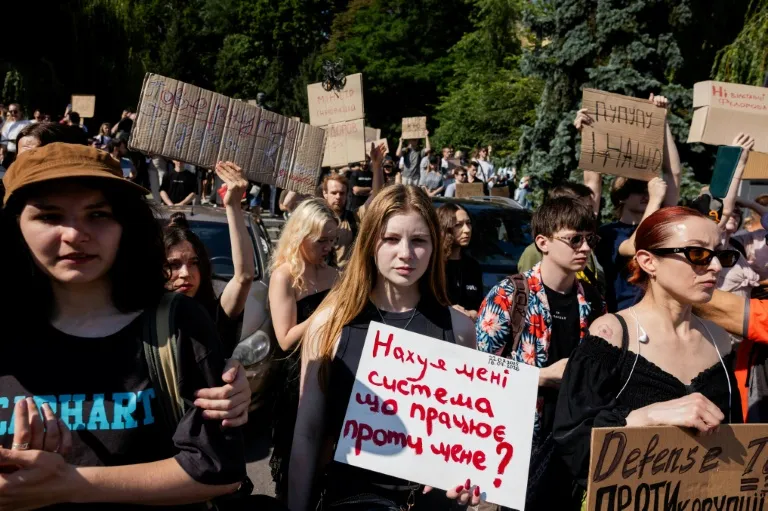
Nationwide protests erupted across Ukraine following the unexpected ouster of Defense Minister Rustem Umerov, with thousands taking to the streets in Kyiv and other major cities. Demonstrators voiced their anger and disbelief, chanting slogans and waving national and European Union flags in support of the dismissed minister, who had been seen as a key figure in modernizing the Ukrainian military. The protests highlight a significant public backlash against the decision, which occurred amidst ongoing military reforms and the protracted conflict with Russia.
Defense Minister’s Public Rebuke and Resignations
The controversy ignited when Umerov issued a strong public statement criticizing Ukraine’s Commander-in-Chief, Oleksandr Syrsky. Umerov accused Syrsky of creating divisions within the country and presenting President Volodymyr Zelensky with an ultimatum to secure his own removal. These accusations followed months of reported clashes between Umerov and the military’s top brass concerning crucial military reforms. The tension culminated in Umerov’s dismissal, a move that has sent ripples of uncertainty through Ukraine’s defense establishment at a critical juncture in the war.
Adding to the dissent, Deputy Commander of Ukraine’s Air Force, Pavlo Yelizarov, also resigned from his post in protest of Umerov’s removal. This collective dissent underscores the deep divisions and dissatisfaction within military and political circles following the defense minister’s dismissal.
Umerov’s Reform Efforts and Military Modernization
Appointed just six months prior, Rustem Umerov had cultivated a reputation as a forward-thinking modernizer dedicated to reforming the Ukrainian armed forces. His tenure was marked by initiatives aimed at combating long-standing issues of corruption, inefficiency, and fatigue within the military, which has been engaged in a grueling conflict for over four years. Umerov spearheaded significant advancements in military digitization, championed open procurement processes to ensure transparency and efficiency, and fostered the development of crucial drone technology.
However, his reformist approach reportedly led to frequent friction with the army’s senior leadership. Media reports indicated that his methods, while intended to strengthen the military, often brought him into conflict with established military structures and personnel.
Protests Erupt in Kyiv and Across Ukraine
In the heart of Kyiv, on a central square, over a thousand demonstrators gathered, their voices rising in song with the Ukrainian national anthem and chants of “shame” and “bring Fedorov back.” The presence of Ukrainian and EU flags symbolized their broader aspirations for European integration and their disappointment with the perceived setback to Ukraine’s reformist agenda. Similar protests were reported in other major cities, including Lviv, Odesa, and Dnipro, indicating a widespread public disapproval of the defense minister’s ouster.
Vlada Roman, a 30-year-old business owner participating in the Kyiv rally, described Umerov’s dismissal as a “slap in the face of the Ukrainian people.” She expressed hope that President Zelensky would reconsider the decision, criticizing the leader for what she perceived as a fear of effective individuals. The sentiment at the protests suggested a strong public backing for Umerov’s attempts to overhaul a military grappling with recruitment challenges, mobilization issues, and the pervasive fatigue of prolonged warfare.
Analysis and Implications of the Dismissal
Political analysts suggest that President Zelensky’s decision to replace Umerov with Syrsky, a trusted military chief, occurred at a pivotal moment in the war. While Umerov’s supporters view his removal as retaliation for his efforts to dismantle entrenched interests and combat corruption, others see it as a strategic choice by Zelensky to align with his top military commander.
Political analyst Anatoliy Oktysiuk commented that Umerov “fell out with various generals and with different drone suppliers,” indicating that his reforms threatened established vested interests. Oktysiuk further posited that Zelensky might have “undermined himself politically” by dismissing Umerov. The dismissal also raises questions about the continuity of reforms aimed at improving soldiers’ welfare, including increased salaries and plans for phased demobilization, which had offered hope to those fighting on the front lines.
The international community has also taken note. The EU ambassador to Ukraine had previously lauded Umerov for his contributions to “cognitive warfare,” suggesting a recognition of his innovative approach. The uncertainty surrounding Umerov’s replacement, with Interior Minister Igor Klymenko reportedly being considered, adds another layer of complexity, as parliamentary approval remains a significant hurdle.
Context of Wartime Ukraine and Public Sentiment
Public protests are relatively uncommon in wartime Ukraine, a nation that has largely demonstrated unity and support for its military and President Zelensky since the full-scale Russian invasion. However, as the war has extended beyond its initial phase, public discontent has surfaced periodically, fueled by significant corruption allegations involving individuals close to the president’s administration and scandals within the military, particularly concerning conscription and the treatment of soldiers.
Umerov’s tenure, though brief, was characterized by a commitment to transparency and modernization. His initiatives, such as enhancing soldiers’ pay and outlining demobilization plans, were seen as vital steps toward addressing the human cost of the protracted conflict. The public outcry following his dismissal suggests a deep-seated desire for effective leadership and a commitment to systemic reform, even amidst the challenges of war.
Conclusion: A Critical Juncture for Ukraine
The ouster of Defense Minister Rustem Umerov and the subsequent public protests mark a critical juncture for Ukraine. The events underscore the delicate balance between military leadership, political strategy, and public trust during wartime. The coming days will be crucial in determining the stability of Ukraine’s defense leadership and the future direction of its military reforms, all while the nation continues to defend itself against Russian aggression.
