

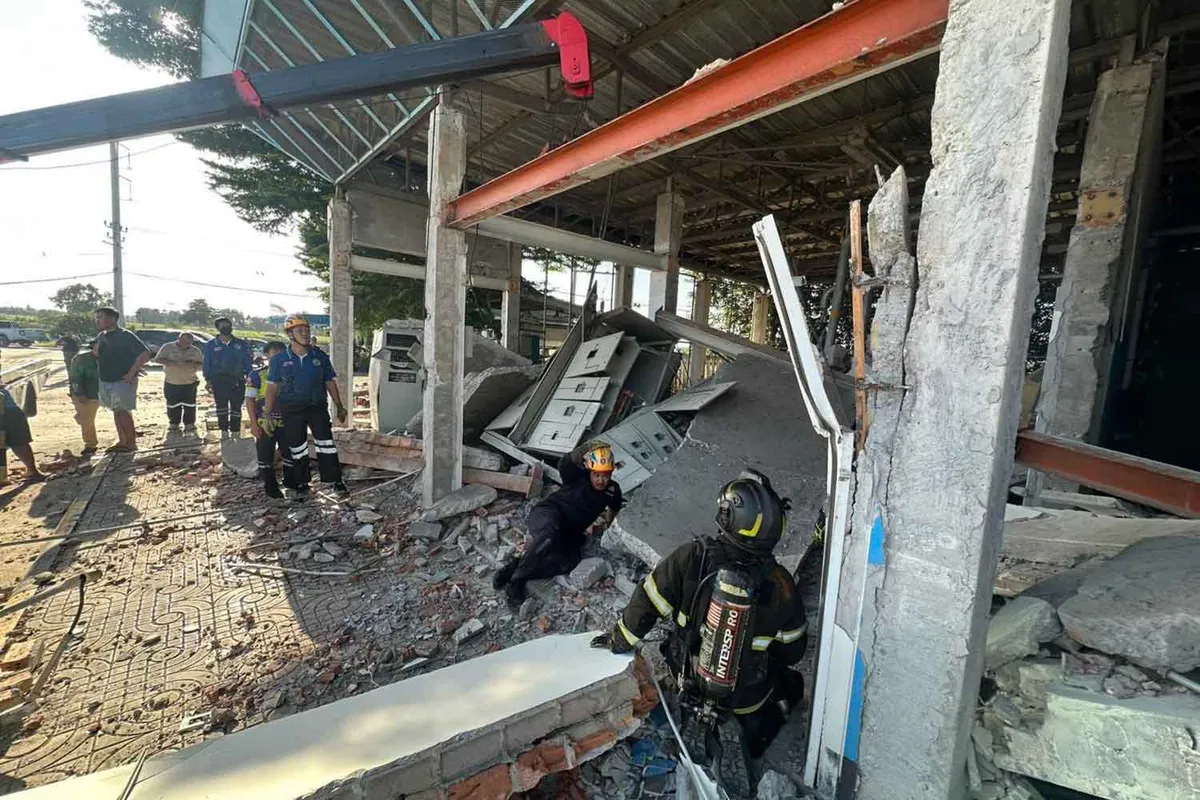
A devastating explosion at a PTT natural gas vehicle (NGV) station in Bor Win, Chonburi province, has resulted in the tragic death of a technician. The incident occurred on Highway No. 331 around 3:30 PM, prompting an immediate response from local authorities and the energy company.
Explosion Rocks PTT NGV Station
Emergency services were alerted to a significant explosion at the PTT station, which serves natural gas vehicles. Upon arrival, responders found substantial damage to the facility. Concrete walls had been severely compromised, indicating the immense force of the blast. Amidst the debris, the body of a technician was discovered, trapped beneath a collapsed section of the structure.
Sequence of Events Leading to the Tragedy
Initial reports suggest that the explosion followed the detection of a burning smell emanating from the station’s power control room. Station attendants, noticing the unusual odor, dispatched two technicians to investigate the source of the problem. Tragically, the explosion occurred while one of these technicians was inside the control room, attempting to assess the situation. The victim has been identified as Santi Duangsri, a 40-year-old technician.
PTT’s Response and Investigation
PTT, the energy company operating the station, has characterized the event as a severe fire. In the immediate aftermath, the company’s dedicated emergency response team took swift action to secure the site. They successfully shut down all operational systems at the NGV station and implemented a temporary closure of the facility. These measures were enacted to prioritize public safety and prevent any further risks to the surrounding community.
PTT has stated that a thorough investigation into the cause of the explosion is currently underway. The company has also extended its deepest condolences to the family of Santi Duangsri during this difficult time. The investigation aims to determine the precise factors that led to the malfunction and subsequent explosion, ensuring that such a tragic event can be prevented in the future.
Understanding NGV Station Safety
Natural gas vehicle (NGV) stations are designed with multiple safety protocols to handle the storage and dispensing of compressed natural gas. These facilities typically include:
- Robust Infrastructure: NGV stations are built with reinforced structures and specialized piping designed to withstand high pressures.
- Leak Detection Systems: Advanced sensors are usually in place to detect any natural gas leaks promptly.
- Emergency Shutdown Procedures: Protocols are established for quickly isolating gas flow and shutting down operations in case of an emergency.
- Ventilation Systems: Adequate ventilation is crucial in areas where natural gas is handled to prevent the buildup of potentially explosive concentrations.
- Regular Maintenance and Inspections: Routine checks and maintenance are vital to ensure all equipment, including power control systems, operates correctly and safely.
The incident at the Bor Win PTT station underscores the critical importance of these safety measures and the potential risks involved in the handling of high-pressure fuel systems. While NGV technology is generally considered safe when properly managed, unforeseen malfunctions or external factors can, in rare instances, lead to severe accidents.
The Role of Power Control Rooms
Power control rooms in industrial facilities like NGV stations are central hubs for managing and monitoring operations. They house critical electrical systems, control panels, and communication equipment. The presence of a burning smell originating from such a room suggests a potential electrical fault, overheating component, or other malfunction within the machinery or wiring. Technicians investigating such issues often deal with live electrical systems, making their work inherently hazardous. The swiftness with which a minor issue can escalate in such an environment highlights the bravery and risks undertaken by these professionals.
Community Impact and Future Prevention
The explosion at the PTT NGV station has not only claimed a life but also raised concerns within the local community regarding the safety of such facilities. PTT’s commitment to a thorough investigation and its emphasis on public safety are crucial steps in rebuilding trust. The findings from this investigation will likely inform enhanced safety protocols and operational guidelines for NGV stations across the network, aiming to prevent similar tragedies from occurring again.
The loss of Santi Duangsri serves as a somber reminder of the dangers faced by workers in critical infrastructure sectors. The focus now shifts to understanding the root cause of the explosion and implementing robust measures to ensure the safety of both personnel and the public at all PTT NGV stations.
