

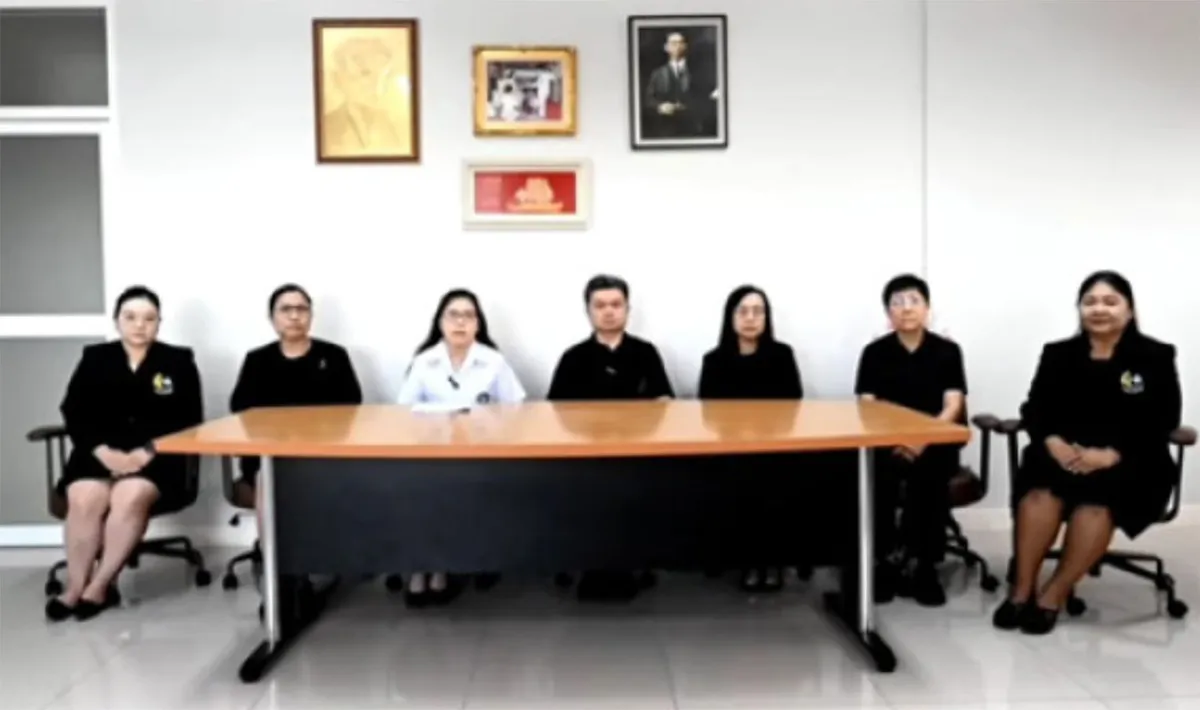
A public hospital is conducting a thorough investigation into the death of an infant, following a complaint from the parents who raised concerns about a staff lunch party held near the Neonatal Intensive Care Unit (NICU) shortly before their child’s passing. The hospital acknowledged the family’s distress and the questions surrounding the event’s proximity to patient care areas.
Initial Review and Hospital Response
Dr. Parichart Tirawat, the hospital director, confirmed on Friday that an initial review indicated staff did indeed hold a lunch gathering in an area adjacent to the NICU. A transparent plastic curtain was the only separation between the dining area and the space where newborn patients were being treated. Dr. Parichart deemed holding a meal near a patient-care zone as “inappropriate” and stated that the hospital would review its policies concerning staff activities within medical facilities.
To address the incident comprehensively, a fact-finding committee has been established. This committee is tasked with:
- Reviewing whether treatment procedures adhered to established medical standards.
- Examining the effectiveness of infection-control measures in place.
- Consulting with relevant medical specialists to gain further insight into the circumstances.
Hospital representatives have also met with the bereaved family to offer condolences and discuss their concerns. “The hospital will thoroughly investigate the facts and review safety and infection-prevention measures to ensure confidence among patients and the public,” Dr. Parichart stated, promising further updates as the investigation progresses.
Parents’ Concerns and Timeline of Events
The case gained public attention after the parents of a premature baby boy approached the Pavena Foundation for Children and Women for assistance. They voiced suspicions that the lunch gathering, held close to the NICU, might have compromised infection-control protocols and potentially contributed to their son’s death.
According to the family’s account, their son was born via caesarean section on July 17. He was diagnosed with persistent pulmonary hypertension and subsequently admitted to the NICU. Doctors had reportedly informed the parents that the infant’s condition was improving, his medication was being reduced, and plans were being made for his transfer to the Queen Sirikit National Institute of Child Health once he stabilized.
However, during a visit on July 20, the parents observed approximately six Chinese-style banquet tables set up near the NICU. Hospital executives, medical staff, and guests were reportedly dining at these tables. They noted that catering staff were serving food without face masks, and the dining area was separated from the incubators housing newborns by only a plastic partition. The parents also stated they were prevented from seeing their son during the event. When they inquired about potential infection risks, hospital staff assured them that the babies were protected within sterile incubators.
Sudden Deterioration and Conflicting Information
The following day, hospital personnel informed the parents that their son’s condition had suddenly worsened. Despite resuscitation efforts, the infant passed away later that day. The parents were told by doctors that the baby had developed a bloodstream infection. However, the official death certificate listed pulmonary hypertension as the cause of death, leading to further questions and doubts for the grieving parents.
The parents also alleged that the hospital did not initially initiate a police investigation or a post-mortem examination, and instead encouraged them to proceed with cremation. This lack of immediate official inquiry added to their distress and suspicion.
Autopsy and Further Investigations
Following their appeal to the Pavena Foundation, authorities coordinated a forensic examination at the Police General Hospital in Bangkok. Preliminary findings from this examination reportedly revealed a depression on the infant’s right skull and a fracture in his left ankle. The exact cause and timing of these injuries are still under investigation. A comprehensive autopsy report is anticipated within 30 to 45 days.
In parallel, the Ang Thong Provincial Public Health Office has been notified of the hospital’s initial findings. Dr. Taweechoke Rojaramkul confirmed that the office will conduct its own independent review of the matter to ensure all aspects are thoroughly examined.
Conclusion
The hospital’s commitment to a full investigation, coupled with the ongoing forensic examination and the provincial health office’s review, aims to provide clarity and accountability regarding the infant’s death. The outcome of these inquiries is expected to inform future hospital policies and reinforce patient safety protocols.
