

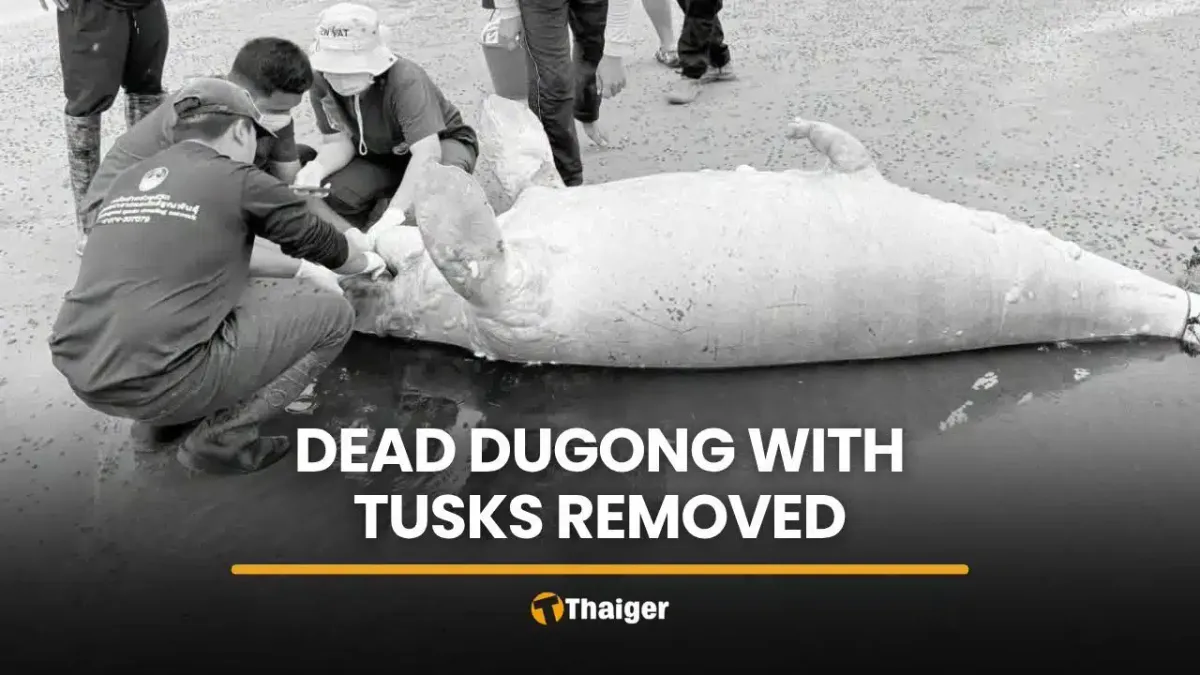
Authorities in Krabi, Thailand, have launched an investigation into the discovery of a dead dugong found with its tusks deliberately removed. The incident, which occurred on July 24, has prompted a formal inquiry by Legacy Marine officials and the Department of Marine and Coastal Resources (DMCR), with potential legal action pending against any identified perpetrators.
Discovery of the Deceased Dugong
The carcass of the male dugong was discovered washed ashore at Laem Son Na, located in the Koh Sriboya subdistrict of Nuea Khlong district. The animal measured approximately 296 centimeters in length. Initial observations indicated that the dugong was in the early stages of decomposition, though its body remained largely intact, showing only minor abrasions consistent with having been beached.
Upon closer examination by officials, it became apparent that both of the dugong’s tusks had been surgically removed. Wounds around the animal’s mouth suggested the use of a sharp instrument, leading investigators to believe the tusks were extracted after the dugong had already died. To ascertain the precise cause of death, the carcass was transported to the Lower Andaman Sea Marine and Coastal Resources Research Centre for a comprehensive necropsy.
Legal Protections and Significance of Dugongs
Dugongs are a protected species under Thai law and are classified as rare marine animals. These gentle marine mammals play a crucial role in maintaining the health of seagrass ecosystems, which are vital habitats for numerous marine species. The illegal removal of tusks or any form of desecration of a dugong carcass is considered a serious offense, resulting in the destruction of valuable natural resources.
Officials emphasized that such actions constitute a significant criminal offense. A police report was officially filed on July 24 at the Khlong Khanan Police Station in Nuea Khlong district. The DMCR has stated its intention to pursue legal action under the provisions of the Wildlife Preservation and Protection Act of 2019.
Penalties for Wildlife Crimes
The Wildlife Preservation and Protection Act of 2019 outlines severe penalties for offenses related to protected species like dugongs. Individuals found guilty of illegally removing tusks, or otherwise unlawfully interfering with a dugong carcass, face substantial consequences. These penalties can include:
- Imprisonment ranging from three to 15 years.
- A fine between 300,000 and 1.5 million Thai baht.
- Or both imprisonment and a fine, at the discretion of the court.
The severe penalties underscore the Thai government’s commitment to protecting its natural heritage and deterring illegal activities that harm endangered wildlife.
Broader Conservation Efforts
This incident occurs against a backdrop of ongoing conservation challenges for dugong populations in Thailand. In related conservation news, environmental groups and researchers are actively engaged in efforts to restore seagrass beds within the Andaman Sea. These restoration initiatives are critical, as dugong numbers have seen a significant decline in recent years, largely attributed to the loss of their primary food source and the degradation of their essential habitats.
The work to protect and restore seagrass ecosystems is paramount not only for the survival of dugongs but also for the overall biodiversity and health of the marine environment in the region. Conservationists are employing various strategies, including community engagement and scientific research, to combat the threats facing these vital underwater meadows.
Conclusion
The investigation into the removed tusks of the Krabi dugong highlights the persistent threats faced by protected marine species. Authorities are committed to identifying those responsible and ensuring they face the full extent of the law. Simultaneously, broader conservation efforts continue, focusing on habitat restoration and the protection of these magnificent creatures, underscoring the delicate balance between human activity and marine wildlife preservation.
