

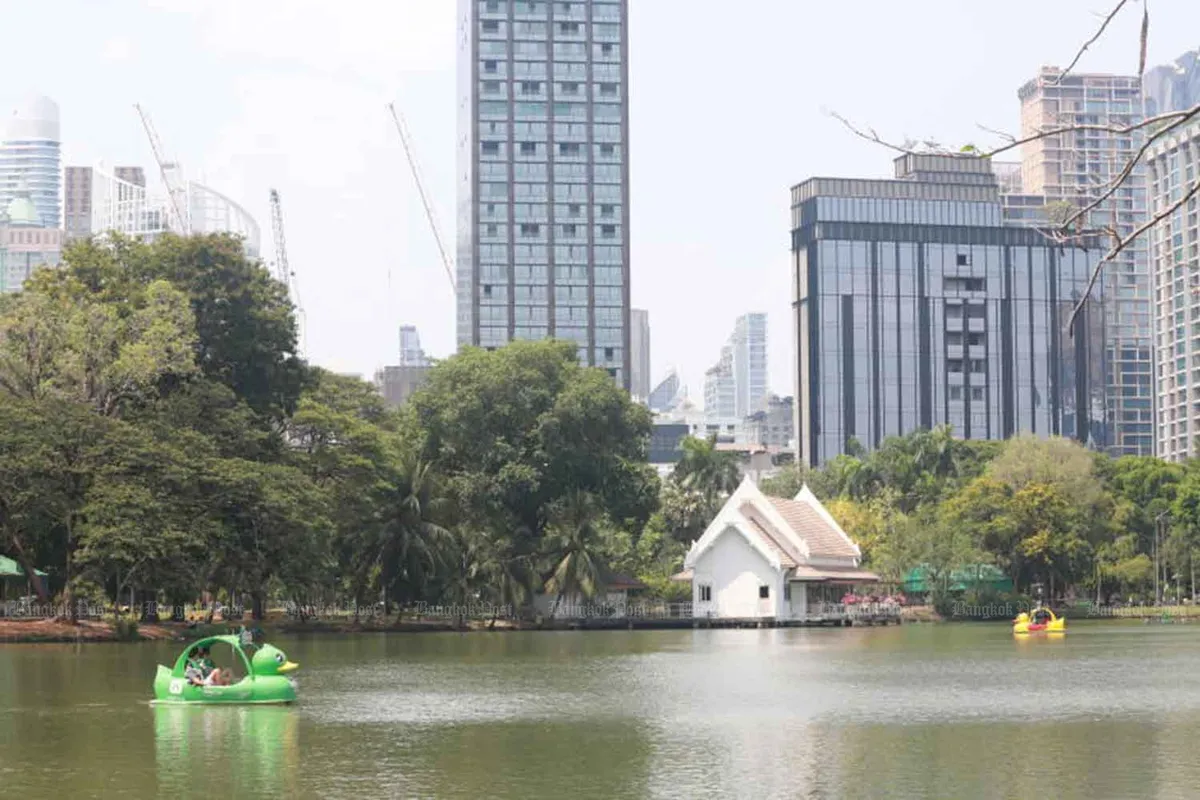
Bangkok’s beloved Lumpini Park is set to pilot a new smart parking system aimed at tackling chronic congestion and ensuring parking spaces are utilized efficiently. The initiative, spearheaded by the Bangkok Metropolitan Administration (BMA), seeks to resolve the persistent issue of vehicles occupying spots for extended durations, thereby limiting availability for park visitors, especially during peak morning and evening hours when the park is most frequented by exercisers.
This modernization effort is a key component of the city’s broader strategy to integrate technology into public facilities, enhancing user experience and operational effectiveness. By implementing smart parking solutions at Lumpini Park, one of the capital’s most significant green spaces, the BMA intends to optimize the use of its 377 car parking spaces, which include 348 standard bays and 29 double-parked areas, alongside 191 designated spots for motorcycles. The affected car park is situated near the Witthayu Road entrance, extending towards Sarasin Road.
Introducing Advanced Parking Technology
The core of the smart parking upgrade involves the introduction of an automatic license plate recognition (LPR) system. This technology will work in tandem with QR code-based online payment options, designed to significantly expedite the process of vehicle entry and exit. Officials estimate that the LPR system can process each vehicle in under eight seconds, a substantial improvement over traditional methods.
To further bolster the system’s capabilities and user safety, additional Closed-Circuit Television (CCTV) cameras will be installed throughout the parking area. These cameras are intended to enhance overall security, providing better surveillance and peace of mind for park visitors and their vehicles.
Trial Period and Official Rollout
Before the system is fully implemented, a trial period will commence on September 15th and conclude on September 30th. This two-week evaluation phase is crucial for officials to meticulously assess the smart parking system’s performance under real-world conditions. During this time, feedback will be gathered, and any necessary adjustments or fine-tuning will be made to ensure a smooth and effective transition.
Following the successful completion of the trial period and subsequent optimizations, the smart parking system is scheduled for an official launch on October 1st. This phased approach underscores the BMA’s commitment to a well-executed technological upgrade that benefits the public.
Addressing Long-Term Parking Challenges
The problem of long-term vehicle parking in Lumpini Park’s car park has been a persistent challenge. Motorists often leave their cars for extended periods, sometimes for days, while they travel elsewhere. This practice significantly reduces the number of available parking spaces for legitimate park users, particularly during busy periods. The new system aims to deter such long-term parking by making the process more efficient for short-term visitors and potentially implementing policies that address extended stays.
The strategic placement of the car park, near major roads and accessible entrances, makes it a convenient, albeit sometimes problematic, parking option. The modernization aims to balance this convenience with the primary purpose of the park: providing a recreational space for the community.
Benefits of Smart Parking Implementation
The implementation of a smart parking system at Lumpini Park is expected to yield several key benefits:
- Improved Traffic Flow: Faster entry and exit times will reduce congestion within and around the car park.
- Enhanced Space Utilization: By discouraging long-term, non-visitor parking, more spaces will be available for those visiting the park.
- Increased Efficiency: Automated processes and online payments streamline operations for both users and administrators.
- Better Security: Expanded CCTV coverage will improve safety and deter potential incidents.
- Technological Advancement: Aligns with the city’s goal of modernizing public services through technology.
The BMA’s investment in this smart parking solution reflects a forward-thinking approach to urban management, aiming to create a more seamless and enjoyable experience for the millions who visit Lumpini Park each year. The success of this trial will likely pave the way for similar upgrades in other public spaces across Bangkok.
