

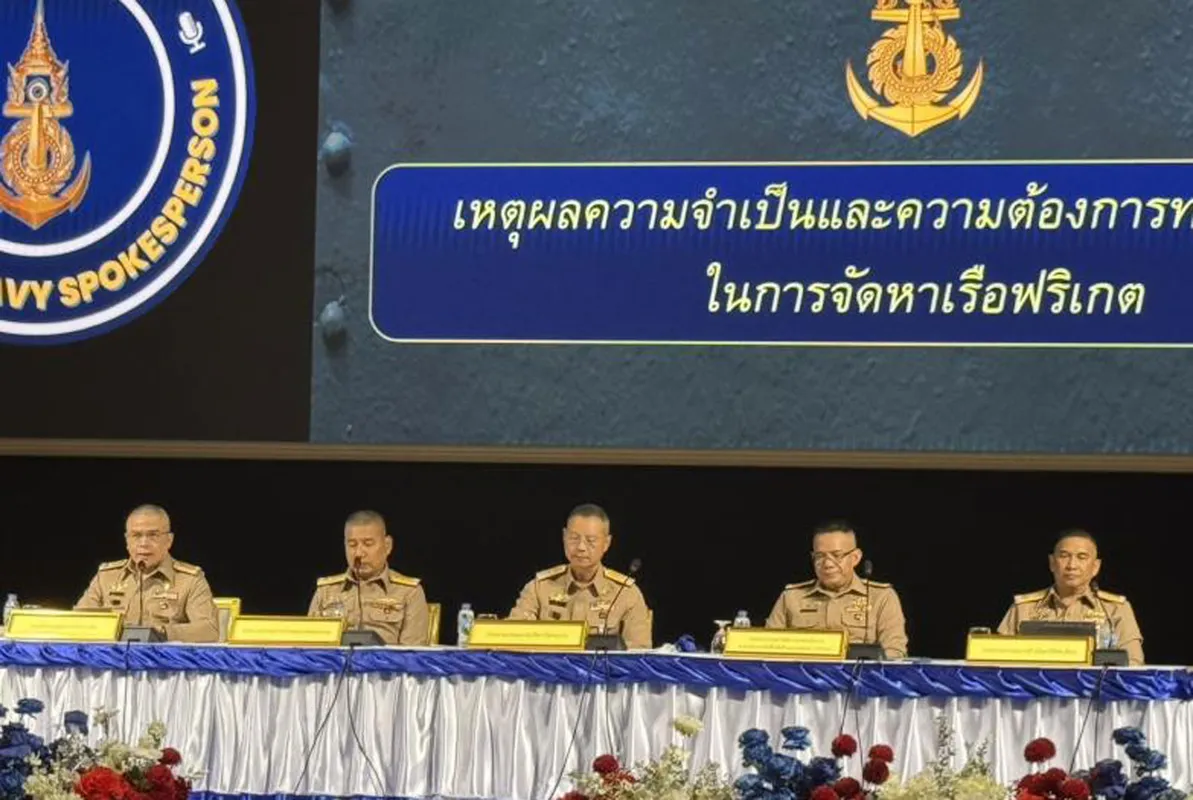
The Royal Thai Navy is defending its recent procurement process for a new frigate, which has attracted public attention due to only one company, South Korea’s Hanwha Ocean, meeting the qualifications. The contract, valued at 17 billion baht, is for a single vessel, and the navy insists the bidding adhered to all regulations and transparency standards.
Background of the Frigate Procurement
The Royal Thai Navy has been seeking to acquire a modern frigate to enhance its maritime defense capabilities. This acquisition is part of a broader naval modernization plan aimed at ensuring Thailand’s security interests in the region. The procurement process, initiated some time ago, involved specific technical and financial requirements designed to secure a state-of-the-art vessel capable of meeting the navy’s operational needs.
The bidding process was reportedly open to international shipbuilders, with several companies initially expressing interest. However, as the evaluation progressed, only Hanwha Ocean, a prominent South Korean defense contractor, submitted a bid that satisfied all the stringent criteria set forth by the navy. This outcome has led to questions from the public and defense observers regarding the fairness and competitiveness of the tender.
Navy’s Stance on the Bidding Process
In response to the scrutiny, the Royal Thai Navy has reiterated its commitment to a fair and transparent bidding process. Officials have stated that the evaluation committee strictly followed established procurement laws and regulations. The navy emphasized that the qualification criteria were technical and financial, designed to ensure the selected bidder could deliver a vessel of the required quality and specifications within the allocated budget.
According to navy spokespersons, the process involved multiple stages of review. Companies were required to demonstrate their technical expertise, financial stability, and capacity to meet the complex demands of modern warship construction. The navy maintains that the criteria were applied impartially to all potential bidders. The fact that only one company ultimately qualified does not, in their view, invalidate the process itself.
Key Qualification Criteria
- Technical Specifications: The ability to design and build a frigate meeting advanced combat system requirements, including weaponry, sensors, and propulsion.
- Financial Viability: Demonstrating the financial strength to undertake a project of this magnitude and manage associated costs.
- Delivery Schedule: Proposing a realistic timeline for construction and delivery that aligns with the navy’s operational planning.
- Past Performance: A track record of successfully delivering similar naval vessels to international clients.
Hanwha Ocean’s Role and Capabilities
Hanwha Ocean, formerly known as Daewoo Shipbuilding & Marine Engineering (DSME), is a globally recognized shipbuilder with extensive experience in constructing various types of vessels, including naval warships. The company has a significant history of supplying advanced naval platforms to several navies worldwide. Its qualification for the Thai frigate project is seen by the navy as a testament to its robust capabilities.
The company’s proposal is understood to meet the specific requirements outlined by the Royal Thai Navy, including advanced combat systems and stealth features, which are crucial for modern naval operations. The 17-billion-baht contract is a significant undertaking, and Hanwha Ocean’s established reputation in the defense sector likely played a crucial role in its successful bid.
Addressing Public Concerns
The navy acknowledges the public’s desire for competitive bidding to ensure the best value for taxpayer money. However, they argue that in defense procurements, especially for highly specialized assets like modern frigates, the number of qualified bidders can sometimes be limited by the technical complexity and the specific requirements of the procuring nation. The navy stressed that the primary objective is to acquire a capable and reliable platform that meets national security needs, rather than simply maximizing the number of competing companies.
Officials have indicated that they are open to providing further clarification on the process to ensure public confidence. They aim to demonstrate that the selection of Hanwha Ocean was the result of a rigorous and objective evaluation, free from undue influence. The navy’s commitment is to transparency and accountability in all its procurement activities.
Future Implications and Naval Modernization
The acquisition of this new frigate is a critical step in the Royal Thai Navy’s ongoing modernization efforts. A modern frigate provides enhanced capabilities for maritime surveillance, anti-submarine warfare, anti-air defense, and surface engagement, significantly boosting the navy’s operational effectiveness. The selection of Hanwha Ocean, despite the limited competition, is expected to pave the way for the delivery of a technologically advanced warship.
The navy is focused on ensuring that the project proceeds smoothly and that the frigate is delivered on time and meets all performance specifications. This procurement is part of a long-term strategy to maintain a modern and capable naval force that can effectively protect Thailand’s extensive coastline and maritime interests in a dynamic geopolitical environment.
Conclusion
The Royal Thai Navy stands firm in its position regarding the recent frigate procurement, asserting that the process involving Hanwha Ocean was conducted in accordance with all regulations and standards. While the limited number of qualified bidders has raised questions, the navy emphasizes that the selection was based on stringent technical and financial evaluations aimed at securing a critical defense asset. The focus remains on the successful delivery of the 17-billion-baht frigate to bolster national maritime security.
