

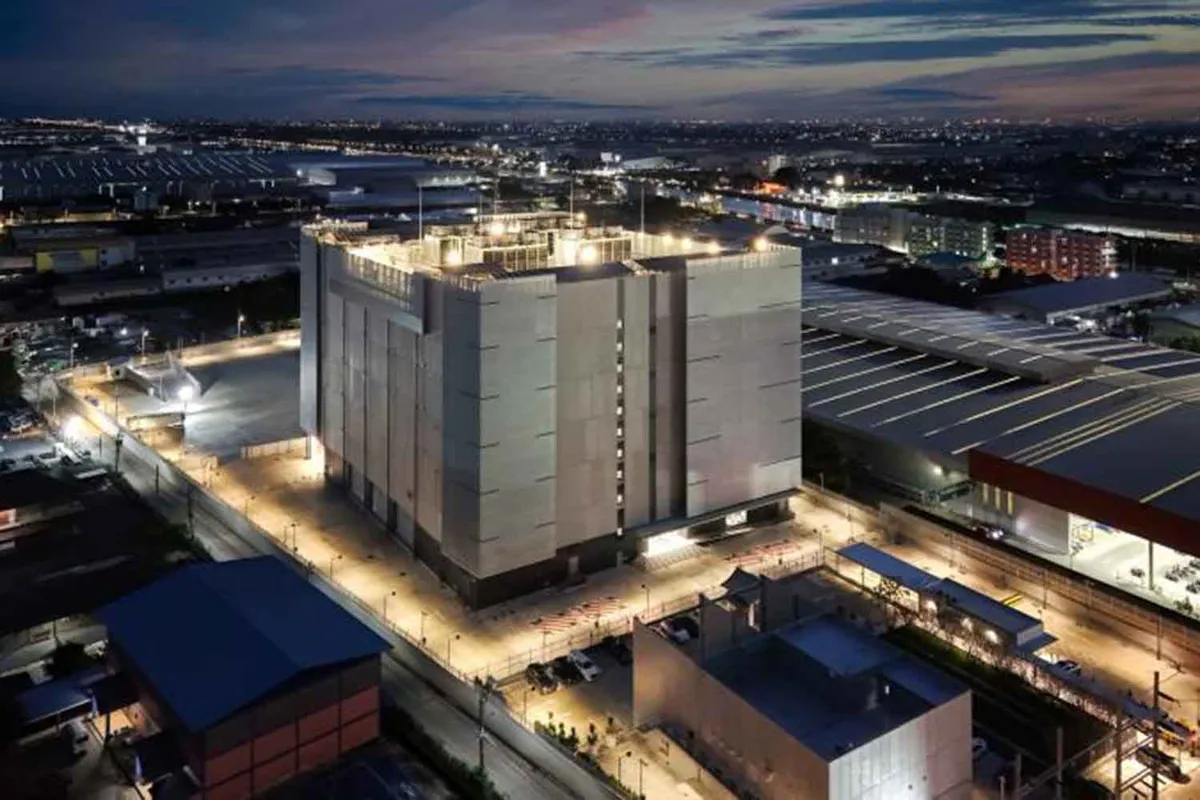
A new governmental body, the Data Centre Policy Committee, has been established to steer the development of Thailand’s burgeoning data center industry. This committee will be tasked with formulating national policies and coordinating efforts among state agencies responsible for the approval and regulation of data center projects, according to a government spokesperson. The initiative aims to provide a clear strategic direction for the nation’s digital economy while ensuring that the rapid expansion of data centers does not strain critical resources like energy and water.
Committee Structure and Mandate
The committee will be chaired by a deputy prime minister, who will be appointed by Prime Minister Anutin Charnvirakul. Serving as deputy chairs will be the ministers overseeing digital economy and society, interior, and energy. The committee’s membership will also include senior government officials and up to three experts selected by the prime minister. This diverse composition is intended to bring a wide range of expertise to bear on the complex issues surrounding data center development.
The core mandate of the Data Centre Policy Committee includes several key areas:
- Setting Regulatory Standards: Establishing clear guidelines and benchmarks for the construction and operation of data centers.
- Industry Impact Monitoring: Overseeing the effects of the data center industry on national resources, including electricity consumption, water usage, cybersecurity, and environmental protection.
- Strategic Support: Aligning data center development with Thailand’s broader ambition to become a leading regional hub for the digital economy.
A primary objective, as stated by the government spokesperson, is to ensure that the growth of data center businesses proceeds in a manner that is sustainable and does not compromise the country’s energy security or water resources. This focus on responsible development is crucial given the significant resource demands of these facilities.
Rapid Growth and Investment in Data Centers
The digital sector has seen remarkable growth in recent years, becoming a major draw for investment. In 2025, it represented the largest category for applications submitted to the Board of Investment (BoI), with a total value of 746 billion baht. A substantial portion of this investment was directly linked to data center projects. The value of dedicated data center applications surged dramatically, increasing more than sevenfold from 99 billion baht in 2024 to 728 billion baht in 2025.
This trend continued into the first quarter of 2026, when data centers constituted the overwhelming majority of a record-breaking 1 trillion baht in applications. The BoI has already approved 16 data centers specifically designed to support artificial intelligence (AI) developers. However, none of these approved facilities have been constructed yet, highlighting a current gap in the country’s legal and regulatory framework for such digital infrastructure.
Current Regulatory Landscape and Future Legislation
Currently, the approval process for data center projects relies on existing building control and land-use regulations. This is largely because these facilities are not classified as factories under current legislation, leading to a fragmented regulatory approach. Recognizing this deficiency, a new, specific law governing data centers is under development.
The Ministry of Commerce has issued 1,145 permits for AI data center businesses. The majority of these, 669, are located in Bangkok, with a significant concentration on Rama IX Road. Other provinces where these businesses have been established include Nonthaburi, Pathum Thani, Phuket, Chon Buri, Nakhon Ratchasima, Rayong, and Khon Kaen.
Environmental Concerns and Public Petitions
The cabinet’s decision to establish the Data Centre Policy Committee occurred concurrently with a petition submitted to the government by Srisuwan Janya, president of the Anti-Global Warming Association. Mr. Janya urged the prime minister to implement stricter environmental controls on data centers, cloud service facilities, and advanced electronics projects.
His petition raised concerns that large-scale data centers consume vast quantities of electricity and water. These high demands, he warned, could potentially create competition for essential resources with households and agricultural sectors, underscoring the need for careful planning and regulation to prevent resource scarcity.
Moving Forward: Balancing Growth and Sustainability
The establishment of the Data Centre Policy Committee marks a significant step towards a more structured and regulated approach to the rapid growth of Thailand’s digital infrastructure. By creating a dedicated body to oversee policy, set standards, and monitor impacts, the government aims to foster a thriving data center industry that aligns with national economic goals while safeguarding vital environmental and resource security. The development of specific legislation is expected to further clarify the regulatory landscape, providing greater certainty for investors and ensuring responsible development practices.
