

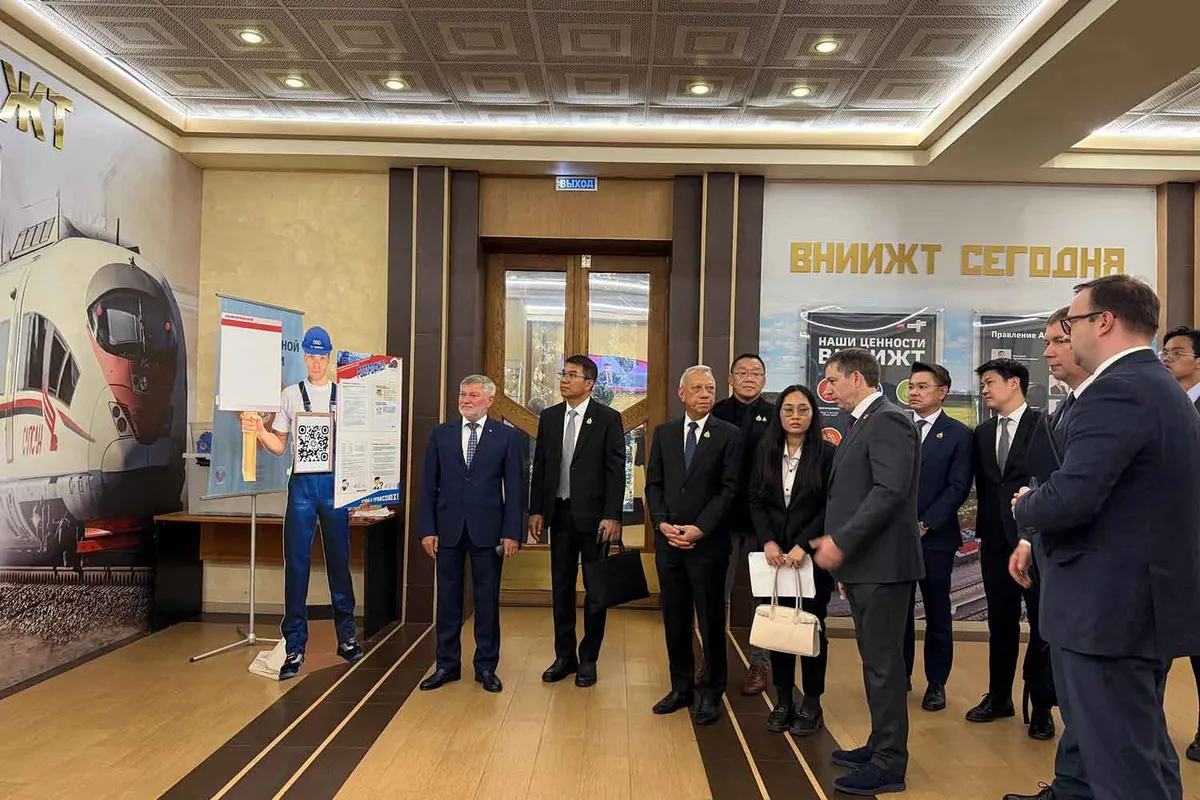
Thailand is set to deepen its collaboration with Russia on railway transportation development, aiming to enhance the nation’s infrastructure, reduce logistics costs, and foster regional connectivity. A significant step forward was taken during an official visit to Russia, where Thai officials met with representatives from the All-Russian Scientific Research Institute of Railway Transport (VNIIZHT) to discuss advancing a memorandum of understanding (MoU) on communication cooperation.
Advancing Railway Development Through International Partnership
The meeting, held on a Wednesday, involved Thailand’s Transport Minister Phiphat Ratchakitprakarn, permanent secretary Chayathan Promsorn, and other ministry executives. They engaged with Mikhail Mekhedov, deputy director of VNIIZHT, a venerable institution established in 1918 that has been instrumental in shaping Russia’s extensive railway system. VNIIZHT’s expertise encompasses a broad spectrum of railway operations, including system development, infrastructure enhancement, rolling stock technology, and cutting-edge digital innovations.
Minister Phiphat highlighted that railway transportation development is a key priority for the Thai government. The primary objectives are to significantly lower logistics expenses and to bolster connectivity across the region. The discussions with VNIIZHT are anticipated to transition from preliminary talks into concrete, collaborative projects between the two nations. This partnership is seen as crucial for Thailand to leverage international expertise and standards in its own railway modernization efforts.
A Multi-faceted Approach to Cooperation
Thailand’s engagement with VNIIZHT is not solely focused on importing technology. Instead, the emphasis is on building a sustainable framework for railway advancement that benefits Thailand in the long term. The initial phases of cooperation are slated to concentrate on several key areas:
- Human Resource Development: Cultivating skilled personnel within Thailand to manage and advance the railway sector.
- Expert Exchanges: Facilitating the sharing of knowledge and best practices between Thai and Russian railway professionals.
- Joint Research Initiatives: Collaborating on research projects to address specific challenges and explore new opportunities in railway technology.
- Technology Transfer: Acquiring and adapting technologies related to maintenance, system trials, and the establishment of robust supply chains.
A notable aspect of the planned cooperation includes the domestic production of rolling stock wheels. This initiative aims to strengthen Thailand’s indigenous railway manufacturing capabilities and reduce reliance on foreign suppliers. Minister Phiphat stressed that the government would carefully select development strategies that align with Thailand’s unique circumstances, with a core objective of nurturing domestic talent for future technological self-sufficiency.
Educational and Technological Exchange Programs
The collaboration extends to educational and technological exchange programs designed to equip Thai professionals with advanced skills. Permanent Secretary Chayathan elaborated on some of the short-term initiatives planned under the MoU. These include an exchange program involving 19 transportation colleges across Russia. A key partner in this educational initiative is the Russian University of Transport, which offers comprehensive curricula in railway engineering and the implementation of digital systems.
During the visit, the Thai delegation also had the opportunity to observe and learn from Russia’s sophisticated forecasting and analytical systems. These systems are capable of calculating the potential impact of various external factors on railway operations. Such factors include environmental conditions like weather patterns, humidity levels, and historical flood data, providing valuable insights for operational planning and risk management.
Future Outlook and Strategic Importance
The burgeoning partnership between Thailand and Russia in the railway sector signifies a strategic move for Thailand to accelerate its infrastructure development goals. By combining international expertise with a focus on domestic capacity building, Thailand aims to create a more efficient, cost-effective, and interconnected transportation network. This collaboration is expected to yield significant benefits, not only for the logistics industry but also for enhancing regional trade and travel, ultimately contributing to Thailand’s economic growth and development.
The focus on human resource development and technology transfer underscores a long-term vision. Thailand seeks to become a regional hub for railway expertise, capable of developing and maintaining its own advanced railway systems. The insights gained from Russia’s extensive experience, particularly in areas like digital integration and operational analytics, are invaluable in this pursuit.
