

Myanmar is actively working to advance the stalled Dawei Special Economic Zone (SEZ) project, a crucial infrastructure initiative aimed at connecting southern Myanmar with Thailand’s eastern seaboard and the Indian Ocean. This development coincides with a period of renewed diplomatic engagement between Thailand and Myanmar, spearheaded by Thai Prime Minister Srettha Thavisin’s administration. The project, which includes plans for a deep-sea port and extensive industrial facilities, has the potential to significantly boost regional trade and connectivity.
Dawei Project: A Strategic Gateway
The Dawei SEZ, located in Myanmar’s Tanintharyi Region, has long been envisioned as a vital economic corridor. Its strategic location offers a direct sea link for landlocked regions and provides an alternative route for cargo transit, potentially alleviating pressure on existing trade routes. The project’s revival is seen as a key component of Thailand’s strategy to foster closer economic ties with its neighbor and enhance its own position as a regional logistics hub.
Initial plans for the Dawei project were ambitious, encompassing not only a deep-sea port capable of handling large vessels but also significant industrial estates, power plants, and transportation infrastructure, including roads and railways. The goal was to create a self-sufficient economic zone that would attract foreign investment and stimulate growth in both countries.
Renewed Diplomatic Push and Regional Dynamics
The renewed focus on the Dawei project is occurring against a backdrop of significant political changes in Myanmar. Since the military seized power in February 2021, the country has faced international isolation and sanctions, particularly from Western nations. Myanmar’s current leadership, headed by Min Aung Hlaing, has been seeking international legitimacy and avenues for economic cooperation.
Thailand, under Prime Minister Srettha Thavisin, has adopted a policy of “calibrated re-engagement” with Myanmar. This approach aims to encourage Myanmar’s return to stability and adherence to regional agreements, such as the ASEAN Five-Point Consensus, which calls for an immediate cessation of violence and dialogue among all parties. While ASEAN has barred Myanmar’s top leaders from its summits, Thailand has maintained dialogue, viewing constructive engagement as more productive than complete isolation.
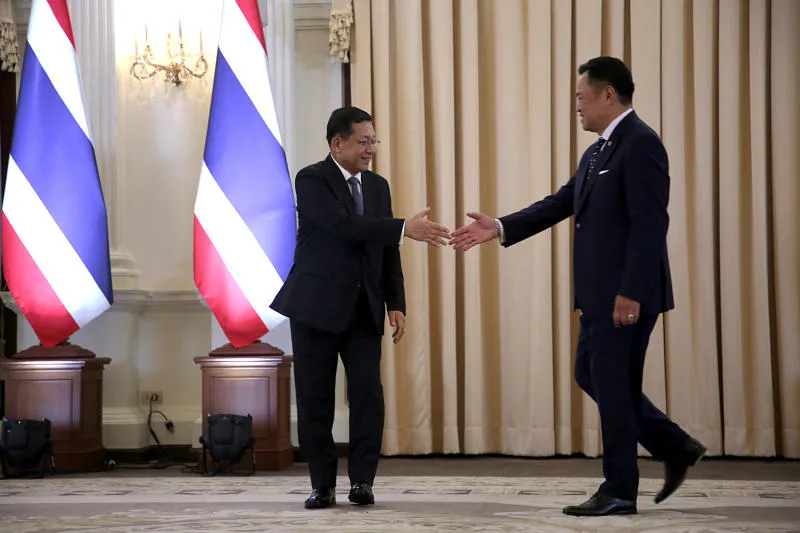
During a recent visit to Thailand, Min Aung Hlaing was received with diplomatic courtesies, including a red-carpet ceremony and a meeting with Thai officials. Discussions reportedly focused on enhancing bilateral relations, promoting peace and economic development within Myanmar, and improving ties with the Association of Southeast Asian Nations (ASEAN). Min Aung Hlaing expressed a commitment to pursuing democracy, economic growth, and stronger relations with ASEAN, stating, “Myanmar is on the path of democracy and heading towards a better future.” He also emphasized strengthening friendly relations for public benefit and fostering better ties with ASEAN.
Economic Cooperation and Business Summit
Thai Prime Minister Srettha Thavisin has been a strong proponent of deepening economic ties with Myanmar. He stated that both nations are poised for a “new chapter in economic cooperation,” with a focus on increasing bilateral trade and enhancing collaboration in the energy sector. This sentiment was echoed at a Thailand-Myanmar business summit, which brought together business leaders from both countries to explore investment opportunities and partnerships.
The summit highlighted the potential for increased trade in goods and services, as well as opportunities in sectors such as energy, agriculture, and infrastructure development. The revival of the Dawei project was a central theme, with discussions centering on how to overcome previous hurdles and attract the necessary investment to bring the ambitious
