

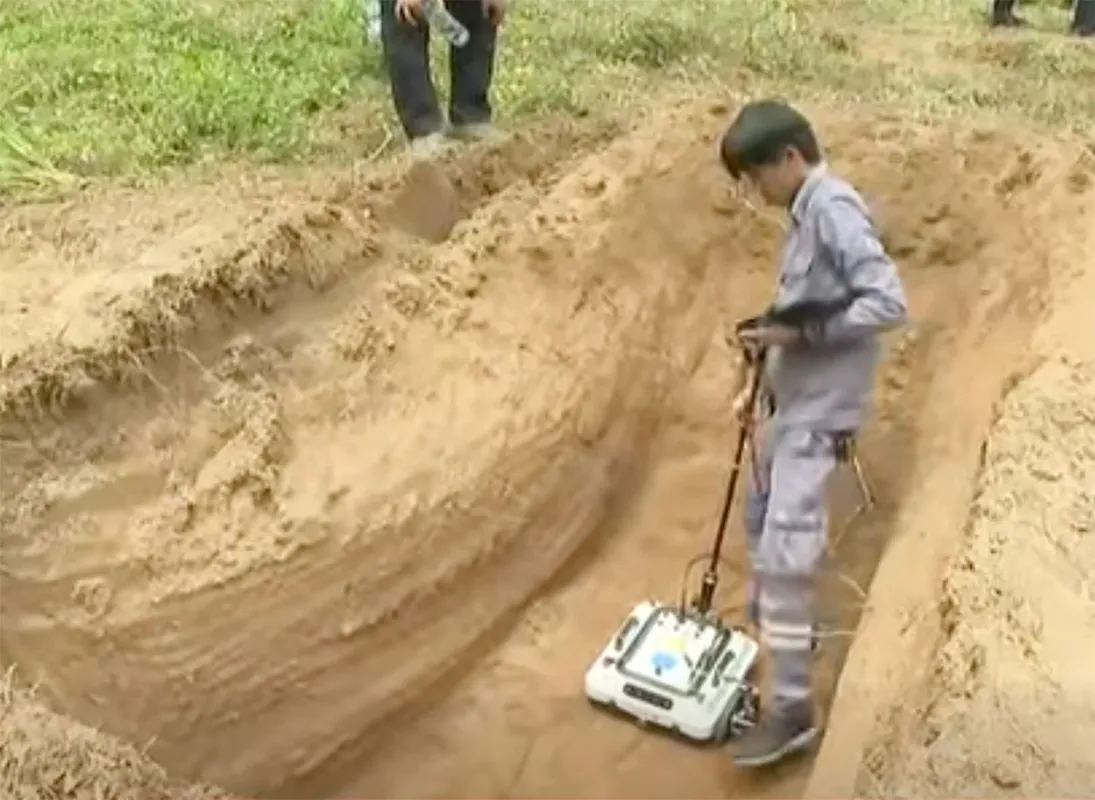
Authorities in Chon Buri have concluded a thorough examination of seven potential burial locations near a recent discovery of human remains, reporting no additional bodies or skeletal evidence were found. The operation, conducted on Thursday, aimed to uncover further clues in ongoing murder investigations.
Comprehensive Search Conducted in Chon Buri
Specialists utilized advanced geophysical techniques to scan the suspected areas in tambon Huay Yai. The search was prompted by the recent discovery of the bodies of a Thai father, mother, and daughter, and the ongoing investigation into the alleged involvement of Thana “Pong” Kerdthong, one of four individuals apprehended in connection with multiple homicides.
Geophysical Scans and Excavation
Geophysics experts from Silpakorn University were instrumental in the operation, deploying three ground-penetrating radar (GPR) units. These devices are commonly used in archaeological fieldwork to detect subsurface anomalies without invasive digging. The GPR scans focused on seven specific locations identified as potential sites for further burials or concealed evidence.
Following the radar scans, officials employed a small excavator to carefully dig into the identified patches. Each excavation reached a depth of approximately two meters. Despite the meticulous nature of both the scanning and digging phases, no additional human remains were uncovered, according to Pol Lt Gen Chatchai Surachetphong, commissioner of Provincial Police Region 2.
Investigation Context and Suspect Information
The search was part of a broader effort to investigate the murders of five individuals, with suspicions pointing towards a group including Thana Kerdthong. The investigation has been complex, marked by challenges in obtaining precise information from suspects.
Crime Reenactment and Suspect Hesitation
During a crime reenactment the previous Friday, Thana Kerdthong reportedly led investigators to an area near where Russian victims were found, and also close to the site where the Thai family’s remains were discovered. However, his directions were described as hesitant, and he allegedly changed the locations he pointed out multiple times. This inconsistency raised concerns among investigators about the reliability of his statements and led to the decision to employ scientific methods to ensure nothing was missed.
The use of GPR technology was intended to enhance the accuracy of the search, providing a more definitive assessment of the ground conditions and potentially revealing hidden evidence that might have been overlooked during initial searches or through less precise methods.
Future Search Plans
Pol Lt Gen Chatchai Surachetphong indicated that there are currently no immediate plans for further excavations at this specific site. Any decision to resume digging or expand the search would be contingent upon the emergence of new, credible information or leads.
Factors influencing future actions include the development of new investigative directions, the prevailing soil conditions at the site, and ongoing assessments by geological and forensic experts. The authorities remain committed to a thorough and evidence-based approach to resolving the ongoing murder cases.
Conclusion
The recent geophysical survey and subsequent excavations in Chon Buri have concluded without yielding further evidence of additional bodies. While this particular search has ended, the broader investigation into the series of murders continues, with authorities prepared to pursue new leads as they develop. The commitment to uncovering the full truth remains paramount, utilizing both traditional investigative techniques and modern scientific tools.
