

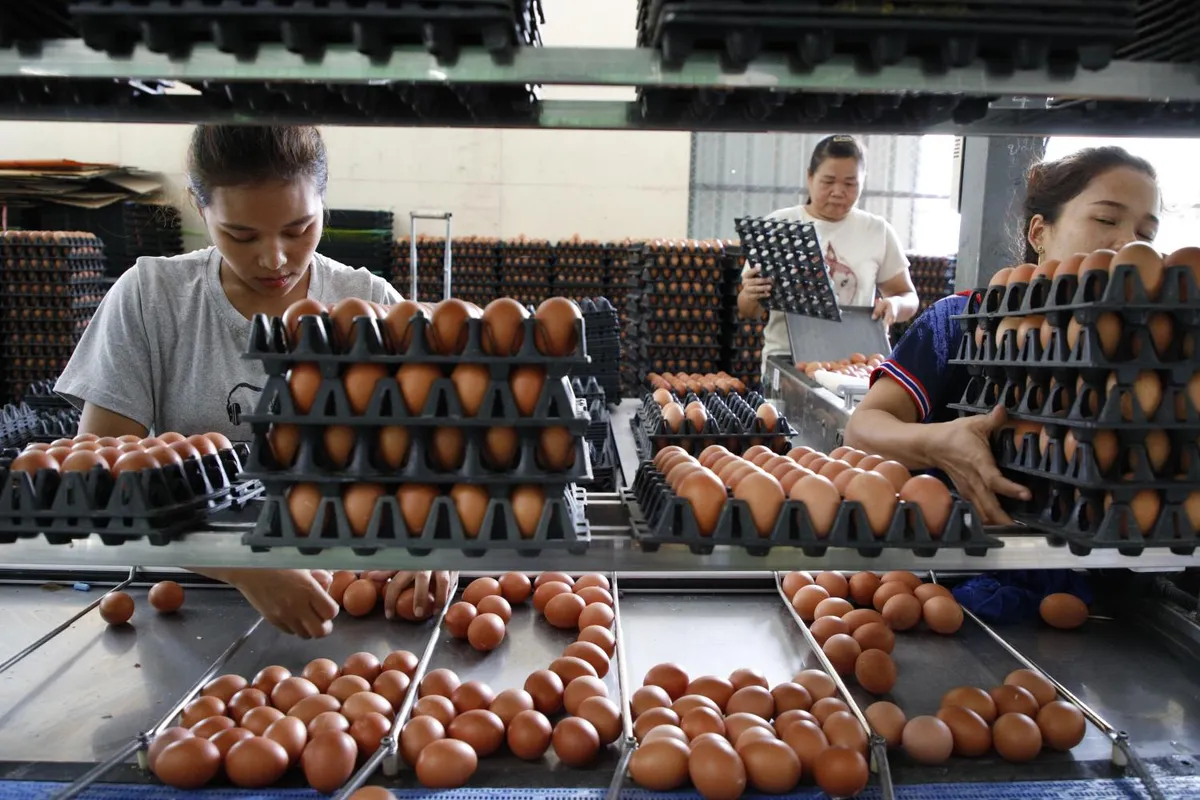
The farm-gate price for mixed chicken eggs has reached a two-year peak, with a recommended price of 4 baht per egg, an increase from the previous 3.80 baht. This adjustment, effective Friday, was announced by a consortium of layer farmer cooperatives spanning Ang Thong, Chachoengsao, Chiang Mai, and Chon Buri provinces. The rising cost of production is the primary driver behind this significant price hike.
Factors Contributing to Increased Egg Prices
Manoch Chootubtim, president of the Layer Farmers Association, explained that several factors have converged to reduce egg supplies. Fluctuating weather patterns, characterized by intense heat and heavy rainfall, have directly impacted hen productivity, leading to a decline in egg output. These adverse conditions also make the hens more susceptible to illnesses, further exacerbating the reduction in laying capacity. To mitigate these health issues and support flock well-being, farmers are incurring additional expenses for nutritional supplements.
Escalating Operating Expenses
Beyond the direct effects of weather on the hens, farmers are grappling with substantial increases in their overall operating costs. Feed prices, a major component of poultry farming expenses, have seen a notable rise. Earlier in the year, feed was priced around 13 baht per kilogramme, but current costs have climbed to between 14 and 16 baht per kilogramme. This surge in feed prices alone places a considerable strain on farmers’ margins, necessitating the adjustment in egg prices to maintain profitability.
Projected Market Trends
Looking ahead, Mr. Chootubtim expressed optimism that egg prices may begin to decrease by October. He anticipates that improved weather conditions will foster more favorable environments for hen productivity and reduce the incidence of heat-related illnesses. As the health and laying capacity of the flocks improve, a subsequent increase in egg supply is expected to enter the market, potentially easing price pressures.
Impact on Consumers and Food Businesses
The ripple effect of higher egg prices is being felt across the food industry. Chanon Koetcharoen, president of the Restaurant Association, indicated that restaurant operators might respond by opting for smaller eggs, which typically come with a lower price tag. However, he noted that the prices for popular street food items, such as fried eggs typically sold for 10-15 baht each, are unlikely to see immediate changes, as vendors may absorb some of the increased costs to maintain customer affordability.
Government Intervention and Support
In response to the rising costs and potential consumer impact, the Department of Internal Trade (DIT) has announced a plan to offer relief. From August 13th to August 31st, the DIT will make 3.42 million eggs available through the nationwide “Thai Chuay Thai” initiative. These eggs will be sold at prices approximately 10% lower than prevailing market rates, aiming to provide a more affordable option for consumers during this period of elevated prices.
Current Production Levels and Outlook
The DIT clarified that while there is no outright shortage of eggs, current production levels are falling below typical standards. The department forecasts daily egg production to reach approximately 43.4 million eggs this month, representing a 3% decrease from usual output. Data from the Department of Livestock Development indicates that in 2025, Thailand produced an average of 43 million eggs per day, with the vast majority, 97%, allocated for domestic consumption and the remainder designated for export markets.
Understanding the Dynamics of Egg Production
The recent surge in egg prices underscores the sensitivity of agricultural markets to environmental factors and operational costs. The interplay between fluctuating weather, flock health, and the escalating price of essential inputs like feed creates a complex challenge for egg producers. Farmers must constantly adapt their strategies to maintain flock health and optimize production, often facing difficult decisions regarding pricing to ensure the sustainability of their operations.
The Role of Cooperatives and Associations
The coordinated effort by layer farmer cooperatives in announcing the recommended farm-gate price highlights the importance of collective action in the agricultural sector. These organizations play a crucial role in advocating for their members, sharing best practices, and negotiating market conditions. The Layer Farmers Association, through its leadership, provides vital insights into the challenges faced by producers and offers projections for market stabilization.
Consumer Adaptation Strategies
As consumers and businesses navigate the current price environment, adaptation is key. The potential shift towards smaller egg sizes by restaurants is a practical response to cost management. Similarly, government initiatives like the “Thai Chuay Thai” program aim to cushion the impact on household budgets. Understanding these market dynamics allows for more informed purchasing decisions and supports the broader food supply chain.
Conclusion: A Market in Transition
The current spike in egg prices reflects a confluence of challenging weather conditions and increased production costs. While farmers and consumers alike are feeling the pinch, there are indications of potential relief in the coming months as weather patterns stabilize and production recovers. The ongoing efforts by farmer associations and government agencies aim to balance market stability with affordability, ensuring the continued availability of this essential food item.
