

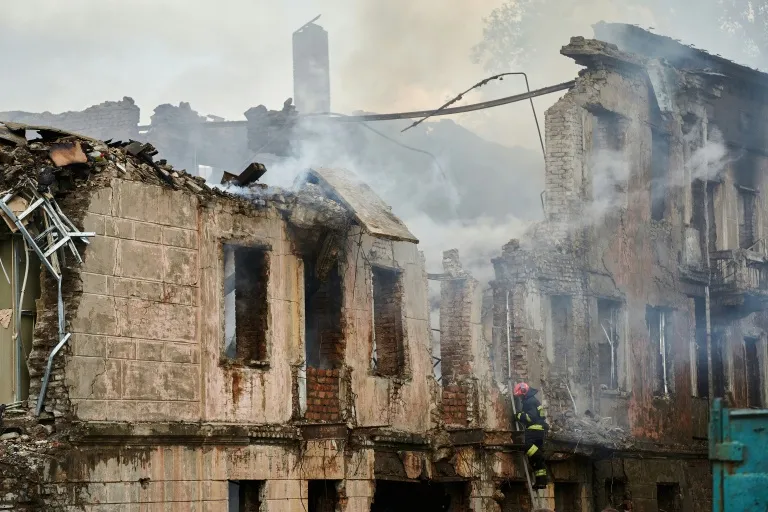
The World Health Organization (WHO) has voiced strong condemnation regarding the persistent and widespread attacks on healthcare facilities and personnel globally, highlighting a critical lack of accountability for these violations. These assaults, documented across 29 countries and territories, have tragically resulted in approximately 5,700 deaths and 8,500 injuries, according to WHO data. The organization emphasizes that healthcare services and infrastructure must remain protected zones, free from violence.
Global Scale of Attacks on Healthcare
Altaf Musani, director of the WHO’s humanitarian and disaster management unit, presented alarming figures at a media briefing in Geneva. He detailed over 10,000 verified incidents of attacks on healthcare, a number that underscores the severity of the issue. Musani stated that despite the extensive documentation of these events, “not a single one has entered the accountability system.” This assertion points to a significant gap in ensuring justice for victims and deterring future aggressions.
In the current year alone, the UN health agency has recorded 914 attacks, leading to 911 fatalities and 1,486 injuries. The majority of these incidents in 2026 have been concentrated in Ukraine, Lebanon, and the Palestinian territories. Other nations reporting significant attacks include Myanmar, Iran, Sudan, the Democratic Republic of Congo, South Sudan, Russia, Syria, and Nigeria.
Types of Attacks and Their Impact
Musani elaborated on the nature of these assaults, noting that attacks involving heavy weaponry are the most frequently reported type this year. These are closely followed by the obstruction of healthcare services and psychological violence directed at health workers and patients. Furthermore, there have been 44 reported incidents involving the abduction, arrest, or detention of healthcare professionals and individuals seeking care, affecting a total of 148 people.
The Long-Lasting Repercussions of Healthcare Attacks
The impact of attacking a hospital or healthcare facility extends far beyond the immediate casualties. Musani explained that such actions create a ripple effect, jeopardizing future medical care. “When a hospital is attacked, the impact is not only on the people inside that hospital that day,” he stated. “It is the patient who cannot receive care tomorrow, the ambulance that cannot make its next referral, the health worker who cannot return to work, or the medicine supply that can no longer reach other facilities.”
Case Studies: Gaza, Ukraine, and DR Congo
The devastating consequences are starkly illustrated in several regions. By the end of 2025, all 36 hospitals in the Gaza Strip had sustained damage, severely limiting the capacity to treat the population. In Ukraine, the WHO has verified over 3,000 attacks since the full-scale Russian invasion began in 2022. A recent incident involved the destruction of a WHO warehouse in Dnipro, highlighting the direct impact on the delivery of essential medical supplies. Musani observed a “substantial increase in the number of attacks” in Ukraine, which is “clearly affecting our ability to provide supplies to health facilities.”
In the Democratic Republic of Congo, 12 attacks on healthcare have been verified since the Ebola outbreak was declared in May. These incidents have significantly hampered critical public health efforts. “These incidents have disrupted surveillance, case investigation, contact tracing, treatment and community engagements showing how attacks can undermine not only health services, but also the capacity to detect and contain outbreaks,” Musani added.
The Legal Framework and Accountability Gap
Health facilities, personnel, and the broader health system are protected under international humanitarian and human rights law, including specific provisions within the Geneva Conventions. Despite this legal framework, the WHO’s findings indicate a profound failure to enforce these protections and hold perpetrators accountable. The organization, while verifying and recording attacks, does not conduct investigations or assign blame, a role that typically falls to national authorities or international judicial bodies. However, the lack of any cases entering the accountability system, as highlighted by Musani, suggests a systemic failure at multiple levels.
