

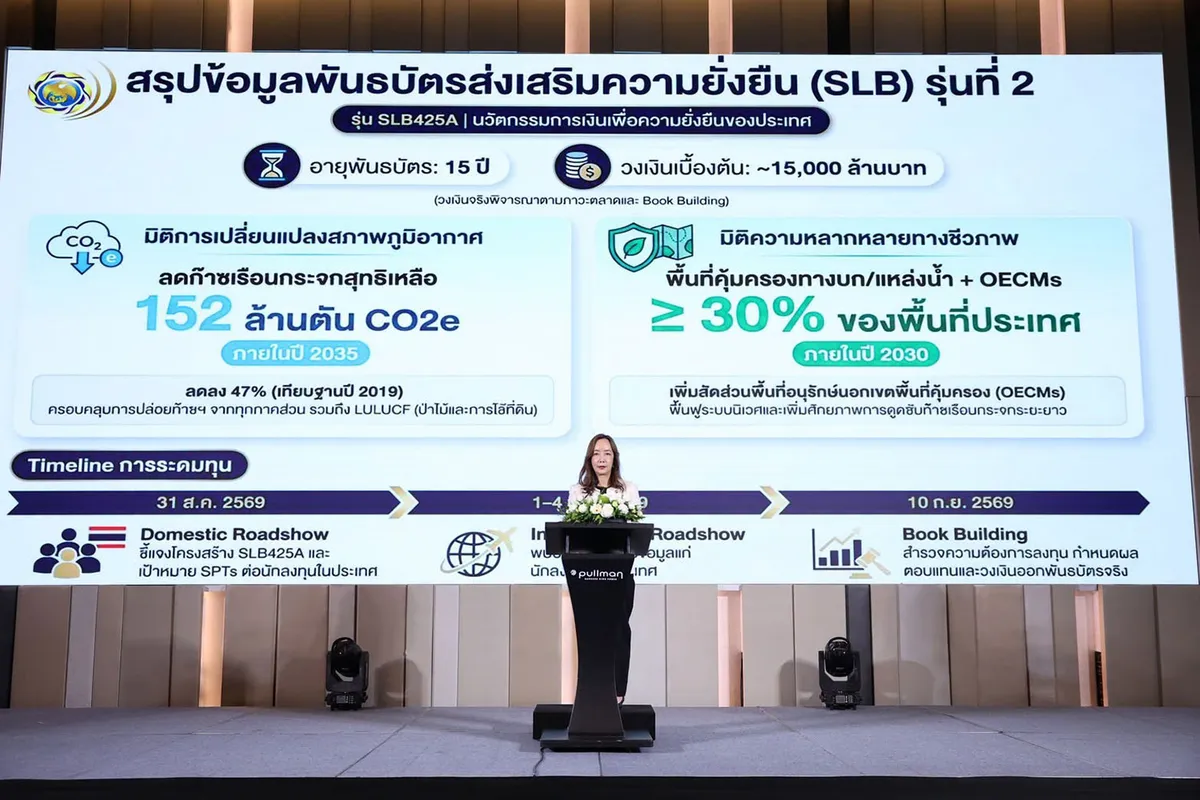
Thailand is preparing to issue its second sovereign sustainability-linked bond (SLB), aiming to raise approximately 15 billion baht (approximately $410 million USD). This financial instrument is designed to directly support the nation’s ambitious climate action and biodiversity conservation objectives, linking the cost of borrowing to the achievement of specific national targets.
Key Sustainability Targets Drive Bond Performance
The new bond, identified as SLB425A, will be tied to two critical performance indicators, according to Jindarat Viriyataveekul, director-general of the Public Debt Management Office (PDMO). These targets reflect Thailand’s commitment to environmental stewardship and sustainable development.
Greenhouse Gas Emission Reduction
The primary objective is to significantly reduce Thailand’s net greenhouse gas emissions. This includes emissions stemming from land use, land-use change, and forestry. The target is to bring these emissions down to 152 million tonnes of carbon dioxide equivalent by the year 2035. This represents a substantial 47% reduction compared to the baseline emissions recorded in 2019.
Biodiversity and Protected Areas Expansion
The second key performance indicator focuses on expanding and enhancing the protection of natural habitats. By 2030, Thailand aims to designate at least 30% of its total land and inland water areas as protected zones. This also encompasses increasing biodiversity conservation efforts in areas outside of formally recognized protected zones, ensuring a broader and more effective approach to safeguarding the country’s rich natural heritage.
Innovative Financial Mechanism for Sustainability
Ms. Jindarat highlighted the strategic importance of this second SLB, stating, “The second SLB will be an important mechanism supporting climate action alongside biodiversity conservation while encouraging participation from the financial and capital markets in advancing the country’s sustainability goals.”
A key distinction of this sustainability-linked bond, compared to conventional green or sustainability bonds, lies in its structure. Instead of earmarking funds for specific environmental projects, this SLB’s financial terms are directly linked to the achievement of national policy targets and measurable outcomes. The proceeds raised are intended to help finance the government’s overall budget deficit, providing flexibility while still being underpinned by concrete sustainability commitments.
Bond Pricing and Investor Engagement
The final coupon rate for the bond is yet to be determined. It will be influenced by investor demand during the issuance process and prevailing market conditions. The PDMO anticipates confirming the precise interest rate and the final issue size on September 10.
The structure of the bond includes a mechanism that penalizes failure to meet the sustainability targets. If Thailand successfully achieves the set greenhouse gas reduction and protected area expansion goals, the coupon rate will remain at the initially agreed level. However, should the country fall short of these targets, the bond will incur a higher interest cost, thereby incentivizing diligent performance.
To facilitate investor understanding and participation, the PDMO has outlined a comprehensive roadshow schedule. A domestic investor roadshow is planned for August 31. This will be followed by engagements with overseas investors from September 1 to September 4. These meetings are crucial for explaining the bond’s unique fundraising framework and its underlying financial structure.
Thailand’s Pioneering Role in Sovereign Sustainability Bonds
Thailand has established itself as a leader in sustainable sovereign debt issuance in Asia. In November 2024, the nation became the first government in the region to successfully issue a sovereign sustainability-linked bond. The inaugural offering garnered significant investor interest, exceeding expectations. This strong demand prompted the PDMO to increase the size of that initial offering from its planned 20 billion baht to 30 billion baht, demonstrating a robust appetite for such instruments.
The success of the first SLB paved the way for this second issuance, underscoring Thailand’s ongoing commitment to leveraging financial markets to drive its environmental and social agenda. The government continues to explore innovative financial tools to fund its development priorities while adhering to international sustainability standards.
Broader Implications for Sustainable Finance
The issuance of this second SLB signifies a maturing approach to sustainable finance within Thailand and potentially across the region. By directly linking borrowing costs to national environmental outcomes, the government is creating a powerful incentive for policy implementation and performance monitoring. This model can encourage greater transparency and accountability in achieving climate and biodiversity goals.
Furthermore, the involvement of both domestic and international investors highlights the growing global demand for sustainable investment opportunities. As more countries adopt similar financial mechanisms, it could lead to a significant shift in capital allocation towards environmentally and socially responsible initiatives worldwide. The success of Thailand’s SLB program serves as a compelling case study for other nations looking to integrate sustainability into their sovereign debt strategies.
