

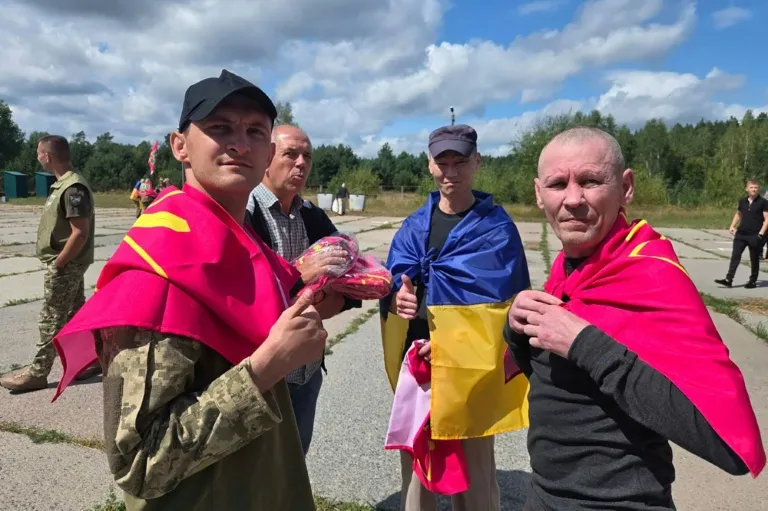
In a significant humanitarian development, Russia and Ukraine have conducted a large-scale prisoner exchange, with each side releasing 103 captured soldiers. This exchange, facilitated by the United Arab Emirates, marks one of the few instances of cooperation between the two nations since the commencement of hostilities in February 2022.
Key Details of the Exchange
The operation saw the return of 103 Ukrainian servicemen from Russian captivity. President Volodymyr Zelensky confirmed the repatriation, highlighting that the freed individuals included defenders who fought in the besieged city of Mariupol, a key port city that endured a devastating months-long siege in 2022. Soldiers captured across seven different frontline regions were also part of the exchange. President Zelensky reiterated the commitment to bringing all Ukrainian citizens held captive back home, stating, “We remember every man and woman who still remains in captivity. We are doing everything possible to bring all our people home.”
Similarly, the Russian Ministry of Defence announced the return of 103 Russian servicemen. The ministry confirmed that these soldiers were handed over in exchange for Ukrainian prisoners of war. The freed Russian soldiers were reported to be in Belarus and were scheduled to be flown back to Russia for rehabilitation following immediate medical and psychological care.
Role of the United Arab Emirates
The United Arab Emirates played a crucial role as the mediator in this latest prisoner exchange. The Gulf state has established itself as a key diplomatic broker, having successfully facilitated numerous prisoner swaps between Moscow and Kyiv since the conflict began. The UAE’s consistent efforts underscore its commitment to humanitarian initiatives and de-escalation, providing a vital channel for communication and negotiation amidst the ongoing conflict.
Context of the Conflict
This prisoner exchange occurs against a backdrop of stalled peace talks and escalating conflict. Negotiations aimed at achieving a comprehensive ceasefire and a lasting resolution to the war remain largely frozen. International observers, including United Nations agencies, have noted a concerning rise in civilian casualties, with figures in 2026 reportedly reaching their highest levels since the initial months of the full-scale invasion. The ongoing fighting continues to exact a heavy toll on civilian populations in affected regions.
Mariupol Defenders’ Release
The inclusion of defenders from Mariupol in the exchange holds particular significance. The city became a symbol of Ukrainian resistance during its prolonged siege. The capture and subsequent captivity of its defenders represented a major point of contention and a focus of concern for Ukraine. Their return is a moment of relief for many families and a testament to the ongoing efforts to account for all those who served on the front lines.
Broader Implications of Prisoner Exchanges
While prisoner exchanges do not resolve the underlying political and military disputes, they serve as critical humanitarian gestures. These operations offer tangible hope to families of captured soldiers and can, in some limited ways, maintain lines of communication between the warring parties. The UAE’s continued involvement highlights the importance of neutral third-party mediation in facilitating such exchanges, even when broader diplomatic progress is elusive. The success of this exchange may pave the way for future humanitarian operations, though the path to a broader peace remains exceptionally challenging.
Looking Ahead
The exchange of 103 soldiers by both Russia and Ukraine is a welcome development on the humanitarian front. It underscores the persistent human cost of the conflict and the ongoing efforts to alleviate suffering where possible. However, with diplomatic channels for a full peace settlement remaining largely inactive and civilian casualties on the rise, the broader outlook for the conflict remains uncertain. The focus now shifts to the rehabilitation of the exchanged soldiers and the continued, albeit difficult, pursuit of peace by international mediators.
