

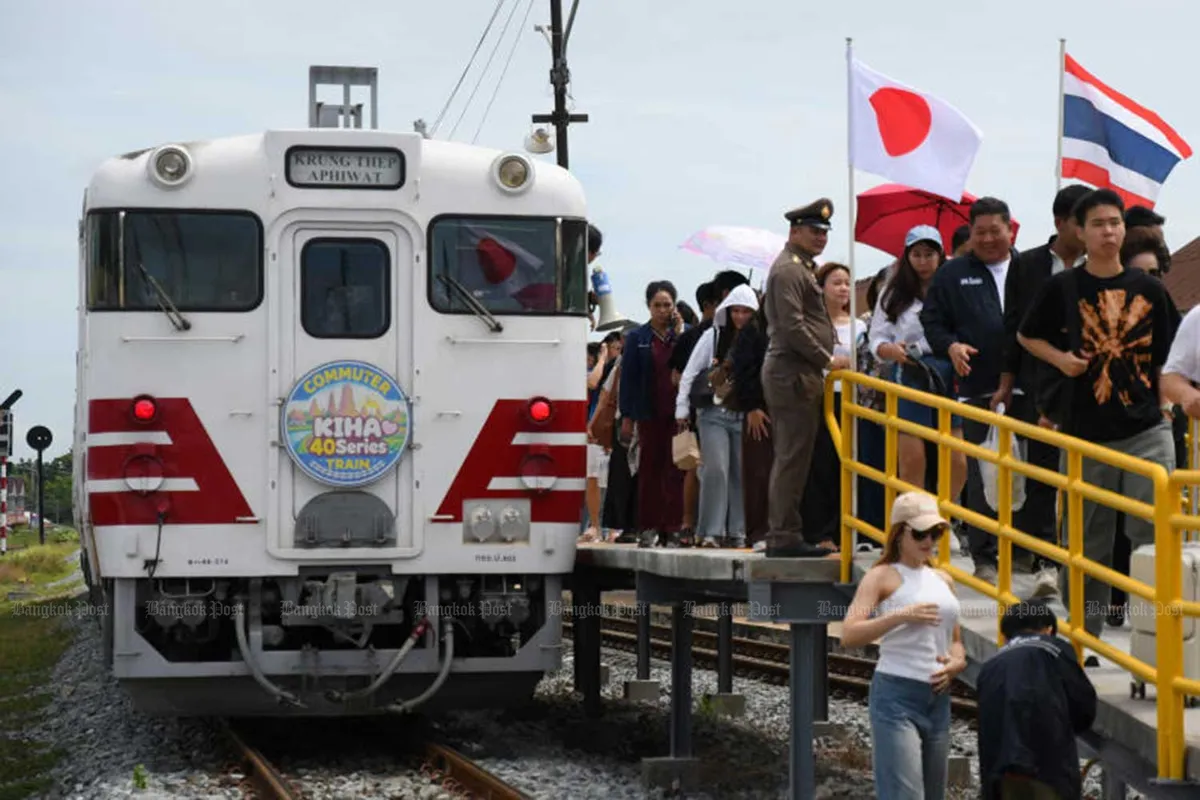
The State Railway of Thailand (SRT) has set an ambitious goal to double its tourism revenue within the next three to five years. This strategic push aims to transform rail travel into a significant growth engine for the nation’s tourism sector, leveraging new rolling stock and an open-access policy that permits private companies to operate their own rail services.
Expanding Tourist Experiences and Revenue Streams
SRT Governor, Anont Siriprecha, outlined the vision, stating, “We want to encourage new tourism experiences that can extend the length of stay and attract local communities across Thailand.” The strategy involves not only enhancing the appeal of existing services but also introducing new, specialized offerings to cater to a wider range of travelers.
A key element of this plan is the introduction of upgraded and luxurious train carriages. The SRT is looking to procure new fleets, including the ‘Royal Blossom’ multiple-unit trains, which can accommodate up to 150 passengers and are suitable for day trips. These are distinct from the existing 181 ‘Khajohn’ trains, which have a capacity of around 100 passengers and are primarily used for weekend travel packages.
For the luxury segment, SRT is working with private operators to offer premium services. For instance, one travel agent has already booked ‘Prestige’ carriages for groups of over 30 foreign tourists, offering five-day trips to northern Thailand at a cost of approximately 100,000 baht per person. These carriages are equipped with sleeping compartments, dining areas, and meeting rooms, providing a high-end travel experience.
A New Business Model for SRT
The SRT’s evolving business model encompasses both direct ticket sales for tourist trains and chartering trains to operators. This dual approach, coupled with the addition of locally produced trains and increased imports of carriages, is central to achieving the target of doubling revenue from dedicated tourist trains within three to five years.
The SRT is capitalizing on the 2025 Rail Transport Act, which allows private operators to lease state railway lines and offer their own train services. This open-access policy is particularly attractive to companies like International Minerals Corporation, which has expressed interest in operating luxury rail services under the new regulations. The SRT notes that there is considerable vacant rail trackage, presenting an opportunity for private firms to utilize these resources efficiently.
Infrastructure Development and Network Expansion
Beyond rolling stock and operational models, SRT is also focused on expanding its physical network. By 2029, the country is expected to add 776 kilometers of railway track, connecting 444 stations across 74 provinces. This expansion will significantly increase the reach of the rail network, which currently spans 4,400 kilometers and serves 464 stations across 47 provinces.
Significant progress is also being made on double-track railway projects. SRT Governor Anont Siriprecha confirmed that the remaining phases of the northern double-track project, connecting Chiang Mai to the North and Nong Khai to the Northeast, are proceeding. Additionally, the agency has completed a study for a route connecting the South to the Malaysian border, a key component of the planned infrastructure development.
The agency has also completed a feasibility study for a project to replace the canceled Land Bridge project. This new development, highlighted by Prime Minister Anutin Charnvirakul, aims to fill the missing link between Ranong and Chumphon, a crucial corridor for transportation development.
Future Outlook
The SRT’s comprehensive strategy, combining upgraded infrastructure, innovative operational models, and a focus on enhancing the tourist experience, positions the railway system to become a vital contributor to Thailand’s tourism economy. By embracing private sector participation and expanding its network, SRT is charting a course for significant growth and improved connectivity across the nation.
