

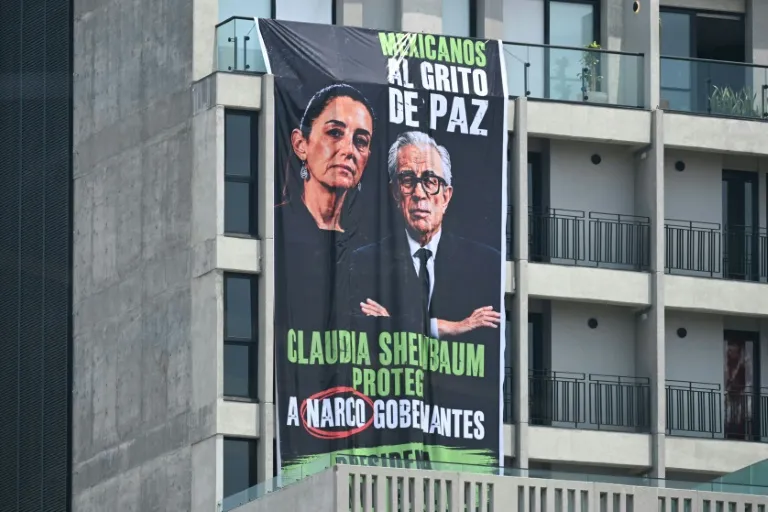
Ruben Rocha Moya, the governor of Mexico’s Sinaloa state, has returned to his official duties following a period of absence related to drug trafficking charges filed against him by the United States. Rocha Moya, a close ally of Mexican President Claudia Sheinbaum, asserted his innocence upon resuming office, stating he had committed no wrongdoing and was returning with a clear conscience.
US Drug Charges and Extradition Request
In April, the U.S. Department of Justice indicted Rocha Moya along with nine other politicians from Mexico’s ruling party. The charges allege collusion with the Sinaloa Cartel to facilitate drug distribution within the United States. Consequently, the U.S. formally requested their extradition. This marked a significant development, as it was the first instance of a sitting Mexican politician being publicly charged by U.S. authorities.
President Sheinbaum had previously called on the U.S. to provide “irrefutable” evidence before taking action against Rocha Moya. The 77-year-old governor had stepped aside on May 1 to cooperate with a domestic investigation into the allegations. His return to power on Friday has created a potential diplomatic tension between Mexico City and Washington regarding his legal standing.
Background of the Accusations
Rocha Moya, originally from Badiraguato, the same town in Sinaloa that infamous drug lord Joaquin “El Chapo” Guzman also hails from, has maintained his innocence. He stated on the social media platform X that after 112 days of investigation by the Mexican Attorney General’s Office, “there is not a shred of evidence to substantiate our involvement in any criminal conduct.”
U.S. prosecutors contend that Rocha Moya received assistance from “El Chapo” Guzman’s sons to secure his governorship in 2021. Further complicating the situation, Ivan “El Mayo” Zambada, a former associate of “El Chapo,” reportedly named Rocha Moya when denouncing a kidnapping incident that led to Zambada’s capture in the United States in July 2024. Zambada claimed he was lured to a meeting purportedly called by Rocha Moya.
Political Implications and Diplomatic Challenges
The case presents a significant challenge for President Sheinbaum’s administration. David Mora, an analyst with the Crisis Group, described the Rocha Moya situation as “the most difficult” for Sheinbaum, citing Rocha Moya’s long-standing friendship and political alliance with former President Andres Manuel Lopez Obrador, Sheinbaum’s mentor. This close relationship places Sheinbaum in a “very complex” position, especially if the U.S. administration intensifies pressure for extradition.
The dynamic is further strained by the broader context of U.S.-Mexico relations under U.S. President Donald Trump. Trump has been vocal in demanding greater cooperation from Mexico in combating drug trafficking and has also initiated a review of the North American Free Trade Agreement (NAFTA), a critical economic pact for Mexico. Analysts suggest Sheinbaum is navigating a delicate balance, attempting to assert Mexican sovereignty while avoiding direct confrontation with Trump, who is demanding tangible results in the war on drugs.
In response to actions perceived as potential violations of international law and Mexican sovereignty, Sheinbaum’s administration has initiated its own investigation into whether the U.S. acted unlawfully in extraditing Zambada from Mexico. This move underscores Mexico’s determination to protect its legal and constitutional frameworks amidst increasing U.S. pressure.
Sinaloa Cartel and its Influence
The Sinaloa Cartel, co-founded by the incarcerated “El Chapo” Guzman, is one of six Mexican drug organizations designated as Foreign Terrorist Organizations by the U.S. government. The cartel has long been a central focus of U.S. law enforcement efforts due to its extensive reach and involvement in international drug trafficking. The allegations against Rocha Moya highlight the persistent influence and operational capacity of these powerful criminal organizations within Mexico and their alleged connections to political figures.
Rocha Moya’s Defense and Political Stance
Rocha Moya has consistently denied any involvement in criminal activities, framing the accusations as a politically motivated “hit job” orchestrated by “national and foreign ultra right” elements targeting the political left. His return to office, despite the ongoing U.S. indictment and extradition request, signals a potential assertion of Mexican jurisdiction and a challenge to U.S. legal authority in this matter. The governor’s professional background includes a career in teaching, academia, and extensive political experience prior to his current role.
Conclusion
The return of Governor Ruben Rocha Moya to his post in Sinaloa signifies a critical juncture in the relationship between Mexico and the United States concerning drug trafficking and legal jurisdiction. With the U.S. pursuing extradition and Mexico asserting its sovereignty and demanding evidence, the situation remains highly charged. President Sheinbaum faces the difficult task of managing these diplomatic pressures while upholding her administration’s commitment to both national security and legal principles.
