

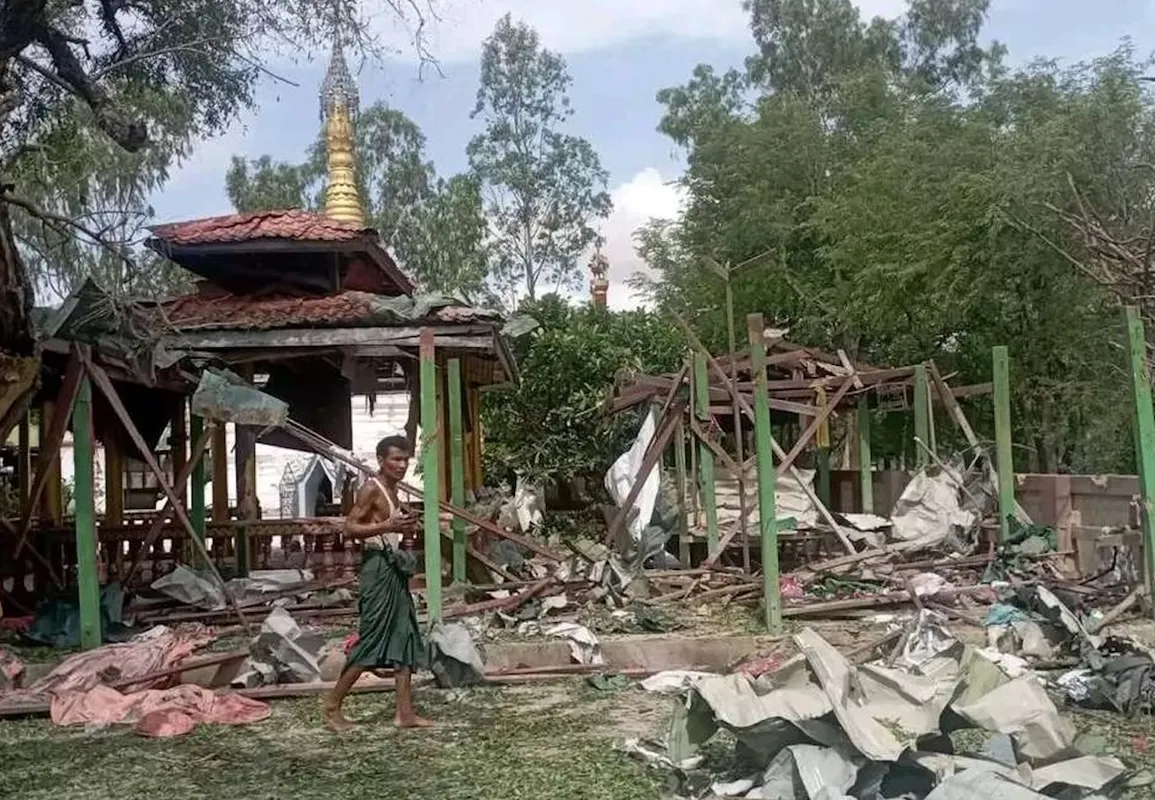
An airstrike on a monastery in Myanmar’s central Sagaing region on Friday morning resulted in the deaths of 14 individuals, including 11 men and three women. The attack occurred around 9 a.m. in Myaung township, hitting a hall within the monastery complex. According to Nway Oo Myaung, a pro-democracy activist involved in the recovery efforts, the victims were older individuals, aged between 50 and 70, who were participating in a three-month meditation retreat marking the Buddhist Lent period.
Details of the Monastery Airstrike
Nway Oo Myaung stated that the targeted individuals were not accidental casualties, asserting that the monastery was deliberately attacked. He described the scene, noting that older people had entered the meditation center for the duration of Buddhist Lent. The ages of those killed ranged from 50 to 70 years old.
A second opposition fighter, who spoke on condition of anonymity, corroborated the incident on Saturday. He reported that five of the deceased were from his village, while the remaining nine hailed from other nearby villages. This fighter also recounted a harrowing second bombing run by aircraft while rescue efforts were underway, adding another layer of tragedy to the event.
Broader Context of Conflict in Myanmar
Myanmar has been embroiled in a widespread civil conflict since the military seized power in a 2021 coup, ousting the democratically elected government led by Aung San Suu Kyi and detaining the Nobel Peace Prize laureate. The ensuing years have seen intense fighting between the military and a coalition of pro-democracy forces and ethnic minority rebel groups.
Estimates suggest that over 100,000 people have lost their lives across the country in the last five years due to the ongoing conflict. The military frequently employs its air power, utilizing jets supplied by China and Russia, to counter rebel advances, according to analysts.
Allegations of Civilian Targeting
The recent airstrike on the monastery aligns with a pattern of alleged indiscriminate attacks against civilians. Investigators from the United Nations’ Independent Investigative Mechanism for Myanmar (IIMM) released a report last week accusing the military of conducting “indiscriminate and intentional aerial attacks against civilians.” The report highlighted that public buildings, particularly monasteries and schools, are often the sites of reported aerial assaults.
Myanmar’s military-backed government has dismissed the IIMM’s findings, labeling them as “one-sided allegations against Myanmar’s security forces based on unverifiable and inaccurate information.”
Political Landscape and International Relations
Following five years of military rule, the junta organized elections earlier this year, presenting them as a move towards restoring normalcy. However, democracy advocates widely criticized the vote as a sham designed to legitimize military control while excluding key opposition figures like Aung San Suu Kyi, banning her party, and imprisoning dissenters.
The outcome of these elections saw coup leader Min Aung Hlaing assume the role of civilian president in April. He has since been actively engaged in diplomatic efforts to overcome Myanmar’s post-coup international isolation and secure recognition abroad. Several neighboring countries, including Thailand, India, China, and Laos, have extended diplomatic engagement to Min Aung Hlaing, drawing criticism from human rights campaigners who argue this grants him undue legitimacy.
In a further demonstration of ongoing international alliances, Min Aung Hlaing visited Russia and Belarus this week. Both nations have maintained steadfast support for Myanmar’s military regime since the 2021 coup.
Escalation of Aerial Attacks
The IIMM report also noted a significant increase in aerial attacks in the months leading up to the recent elections. This escalation suggests a potential strategy by the military to suppress opposition and consolidate control in the period surrounding the controversial polls.
The targeting of civilian infrastructure, such as religious sites and educational institutions, raises serious concerns about the conduct of the conflict and the protection of non-combatants. The ongoing violence and the methods employed by the military continue to be a major focus for international monitoring bodies and human rights organizations.
Conclusion
The airstrike on the Myaung monastery is a tragic incident that underscores the severe humanitarian cost of the ongoing conflict in Myanmar. The deaths of 14 civilians, including elderly individuals engaged in religious practice, highlight the devastating impact of aerial warfare on vulnerable populations. As the country grapples with internal strife and international scrutiny, the repeated allegations of indiscriminate attacks against civilians by the military demand continued attention and accountability from the global community.
