

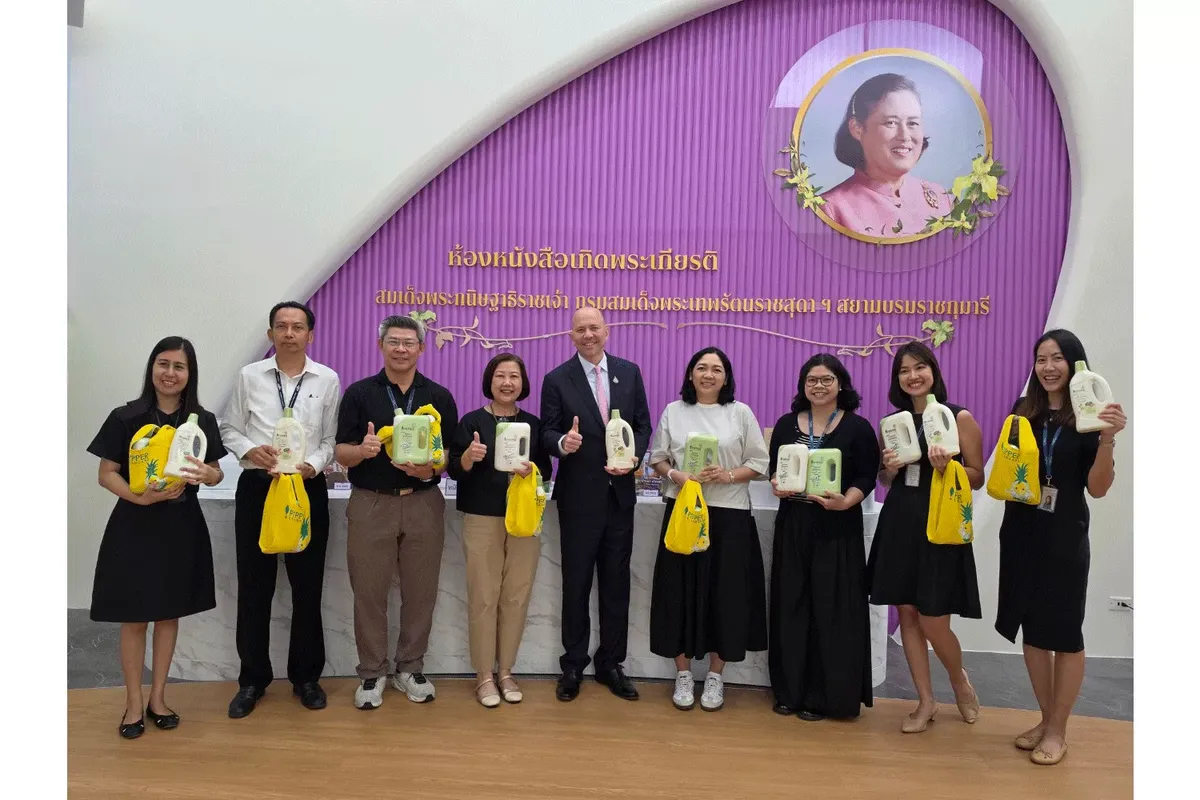
Peter Wainman, the chief executive officer of Pipper Standard®, engaged in discussions with Thailand’s National Science and Technology Development Agency (NSTDA) on May 25, 2026. The meeting centered on potential collaborations aimed at leveraging Pipper Standard’s specialized enzyme-based solutions to bolster Thailand’s burgeoning CleanTech industry. Wainman, often referred to as the “Green Tony Stark” due to his transformative journey from a personal health challenge to developing globally patented clean technology innovations, expressed enthusiasm for the dialogue.
Advancing Thailand’s CleanTech Landscape
The primary objective of the meeting was to identify areas where Pipper Standard’s innovative enzyme technologies could align with and support NSTDA’s strategic initiatives. NSTDA, a key governmental body, is dedicated to fostering scientific advancement and technological development across Thailand, with a particular focus on sustainable and environmentally friendly solutions. The agency plays a crucial role in driving research, development, and commercialization of new technologies that can address national and global challenges.
“It was valuable to connect with NSTDA and understand their work in advancing Thai science and technology,” Wainman stated following the meeting. “We’re exploring how our approach could support their goals in the future.” This sentiment highlights a mutual interest in exploring synergistic opportunities that could accelerate the adoption of sustainable practices and technologies within Thailand.
Pipper Standard’s Enzyme-Based Innovations
Pipper Standard® has garnered attention for its pioneering work in developing enzyme-based solutions designed to tackle a range of environmental issues. Enzymes, as biological catalysts, offer highly specific and efficient mechanisms for breaking down complex substances, making them ideal for applications in waste management, pollution control, and resource recovery. The company’s patented technologies represent a significant leap forward in creating more sustainable and less resource-intensive processes compared to traditional chemical or mechanical methods.
The company’s focus on enzyme technology stems from Wainman’s personal experience, which catalyzed a deep dive into scientific research and innovation. This personal drive has translated into a business model centered on creating impactful, eco-friendly solutions. The potential application of these solutions within Thailand’s industrial and environmental sectors is vast, ranging from improving wastewater treatment to developing novel biodegradable materials.
NSTDA’s Role in Technological Development
The National Science and Technology Development Agency (NSTDA) was established in 1991 with a mandate to drive Thailand’s economic and social development through science and technology. It operates under the Ministry of Higher Education, Science, Research and Innovation and is instrumental in supporting research institutions, universities, and private companies in their innovation endeavors. NSTDA’s strategic pillars include enhancing national competitiveness, promoting sustainable development, and improving quality of life through technological advancements.
NSTDA actively seeks partnerships with both domestic and international entities to bring cutting-edge technologies to Thailand. Their initiatives often involve funding research projects, providing technical expertise, facilitating technology transfer, and supporting the incubation and scaling of innovative startups. The agency’s engagement with Pipper Standard® signifies its commitment to exploring novel solutions for its CleanTech objectives.
Exploring Future Collaboration Opportunities
The discussions between Pipper Standard and NSTDA are expected to lay the groundwork for future collaborative projects. These could potentially involve joint research and development initiatives, pilot testing of Pipper Standard’s enzyme technologies in Thai industrial settings, and the development of specialized applications tailored to the country’s specific environmental needs. Such collaborations could significantly contribute to Thailand’s ambition of becoming a leader in the CleanTech sector within the Southeast Asian region.
Furthermore, the partnership could foster knowledge exchange and capacity building, empowering Thai researchers and industries with advanced enzyme technology expertise. This aligns with NSTDA’s broader mission to cultivate a robust innovation ecosystem that can drive sustainable economic growth and address pressing environmental challenges. The “Green Tony Stark” moniker attached to Wainman underscores the potential for groundbreaking innovation that could emerge from such a collaboration.
Potential Impact on Thailand’s Sustainability Goals
Thailand has set ambitious goals for environmental protection and sustainable development, aiming to reduce its carbon footprint, improve waste management, and promote a circular economy. CleanTech solutions are central to achieving these objectives. By integrating advanced enzyme technologies, Thailand could enhance the efficiency and effectiveness of its environmental protection measures, leading to cleaner air and water, reduced landfill waste, and more sustainable industrial processes.
The collaboration with Pipper Standard® represents a forward-thinking approach by NSTDA to harness the power of biotechnology for environmental good. The potential for enzyme-based solutions to offer more sustainable alternatives to conventional methods could provide Thailand with a competitive edge in the global CleanTech market and contribute to a healthier planet. The ongoing dialogue signifies a commitment to exploring innovative pathways towards a greener future for Thailand.
