

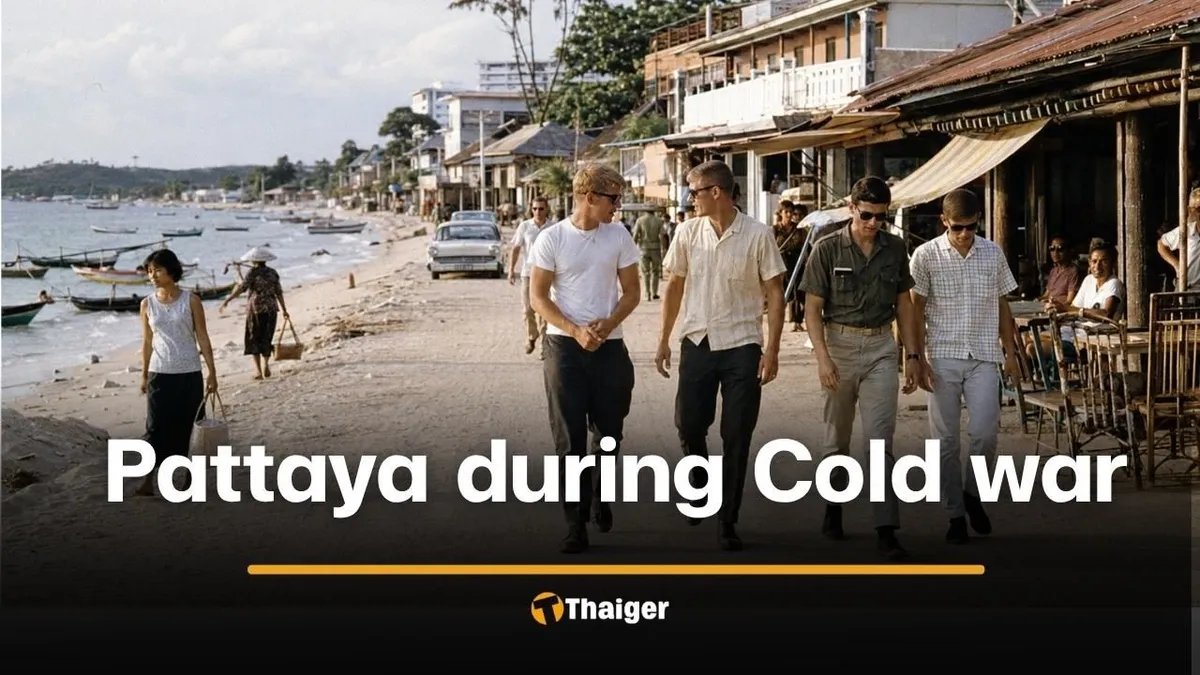
During the Cold War, the United States provided significant financial, military, and technical assistance to Thailand. This support played a crucial role in accelerating the nation’s development and its rise as a key player in Southeast Asia. While this aid helped Thailand build modern infrastructure and institutions, it also coincided with the strengthening of military rule and an increase in social inequality. The strategic partnership between the US and Thailand aimed to contain communism, with Bangkok leveraging the alliance to secure resources for its own modernization.
Thailand’s Strategic Importance and US Alliance
Emerging from World War II with its infrastructure largely intact compared to other Asian nations, Thailand’s economy remained predominantly agricultural. Limited road networks, a nascent industrial sector, and a weak central government presence in remote areas characterized the country. However, the geopolitical landscape shifted dramatically with the communist victories in China in 1949 and the outbreak of the Korean War in 1950, followed by escalating conflict in French Indochina. American policymakers increasingly viewed Thailand as a vital, stable bulwark against communist expansion on mainland Southeast Asia.
Thailand’s commitment to the anti-communist cause was demonstrated through its participation in the Korean War, sending troops and supplies. In return, Washington substantially increased its military and economic aid. The relationship solidified with Thailand’s membership in the Southeast Asia Treaty Organization (SEATO) in 1954, hosting its headquarters and becoming a regional anchor. A pivotal moment arrived in 1962 with the Rusk-Thanat Communiqué, which explicitly guaranteed US assistance to Thailand in the event of communist aggression, offering Bangkok a stronger security assurance amidst the escalating conflicts in Laos and Vietnam. Thailand transitioned from a friendly nation to a cornerstone of American regional strategy.
Infrastructure Development: Roads for Security, Benefits for Economy
A tangible outcome of the US-Thai alliance was the significant investment in infrastructure. American strategists believed that poor transportation and limited government services made rural areas susceptible to communist insurgencies. Consequently, Washington funded the construction of highways, regional airports, communication networks, and rural development initiatives. Between fiscal years 1954 and 1958 alone, the US allocated $55.7 million for highway construction in Thailand, representing over half of all American economic assistance during that period, according to declassified diplomatic records. This funding was explicitly linked to preserving stability and preventing communist advances, as noted in correspondence from Secretary of State John Foster Dulles to Field Marshal Sarit Thanarat in 1958.
The most prominent example was the Friendship Highway, but it was part of a larger network designed to connect Bangkok with provincial centers and border regions. Airfields were expanded at key locations such as Korat, Takhli, Udon Thani, Ubon Ratchathani, and Chiang Mai. While these projects served immediate military objectives—facilitating the movement of fuel, equipment, and troops, and enabling US operations near Indochina—their economic impact was far-reaching. Improved roads provided farmers with access to wider markets, spurred agricultural land expansion, and diversified commercial crops beyond rice and rubber. Provincial towns saw growth in construction, retail, transportation, and financial services. Furthermore, these infrastructure improvements enabled the central government to extend essential services like education, healthcare, and administration to previously inaccessible areas.
The Vietnam War Era: Economic Injection and Social Change
The escalation of the Vietnam War significantly amplified American involvement in Thailand. US forces utilized Thai bases at U-Tapao, Korat, Takhli, Udon Thani, Ubon Ratchathani, and Nakhon Phanom. By late 1966, Thailand hosted over 400 American aircraft and nearly 25,000 US personnel, numbers that later surged above 50,000. Between 1950 and 1975, Thailand received an estimated $650 million in economic aid and $940 million for defense and security, alongside substantial US spending on air bases and military operations. This influx of capital permeated the civilian economy through construction contracts, wages, and local procurement.
Towns near military installations experienced rapid expansion, catering to American personnel and Thai workers. Bangkok, in particular, saw a boom in construction and the hotel industry. Financial, commercial, and tourism sectors flourished, partly fueled by American soldiers on rest and recreation leave. An estimated 30,000 to 70,000 US military visitors annually between 1966 and 1969 contributed significantly to the economy, transforming places like Pattaya from fishing villages into international resort destinations. This period laid the groundwork for Thailand’s mass tourism industry. However, this rapid, often unregulated growth also led to negative consequences, including commercial sex, labor exploitation, and urban challenges that persist today. The economic benefits of the war era were not uniformly distributed, and the boom towns often faced difficulties when American forces eventually departed.
Beyond Infrastructure: Modernizing Institutions and Human Capital
US assistance extended beyond physical infrastructure to encompass institutional development. American advisors collaborated with Thai agencies on public administration, agriculture, education, public health, policing, and economic planning. Thailand established its Board of Investment in 1960 and launched its first National Economic Development Plan in 1961, influenced by American development theories and World Bank recommendations, focusing on infrastructure and incentives for manufacturing. US-supported educational programs were crucial in training teachers, officials, and technical specialists needed to staff these expanding institutions. A notable partnership with Indiana University between 1954 and 1959 reformed teacher training and curriculum development at Chulalongkorn University.
Cooperation in public health also expanded, exemplified by the SEATO Medical Research Laboratory (later the Armed Forces Research Institute of Medical Sciences), which studied diseases like malaria and cholera. Scholarships and overseas training programs produced a generation of Thai professionals—economists, engineers, military officers, educators, and civil servants—who were familiar with American institutions and often rose to senior positions, carrying their expertise into subsequent decades.
Thailand’s Competitive Edge and Development Challenges
While US aid was a significant factor, it represented a modest portion of Thailand’s GNP, averaging about 0.7% between 1950 and 1970. Its true value lay in its timing and strategic application, funding critical infrastructure during Thailand’s early industrialization phase, reducing security risks, and attracting private investment. Thailand’s advantage was also bolstered by regional circumstances: unlike its neighbors Vietnam, Laos, and Cambodia, which were consumed by war, Thailand remained a stable, open market. Neighboring Burma (Myanmar) pursued economic isolation, and even other allies like the Philippines faced political instability that hindered investment.
Thailand maintained an open commercial economy, exported agricultural goods, and provided foreign companies with relatively stable infrastructure. This environment fostered rapid economic growth, averaging 7.4% annually between 1960 and 1972. Poverty rates declined significantly, and the economy diversified away from rice exports. However, Thailand did not surpass all ASEAN peers; Singapore and Malaysia, with their inherited colonial infrastructure and different economic models, maintained higher GDP per capita. Thailand’s relative gains were most pronounced against war-torn mainland neighbors and politically unstable larger economies.
The Authoritarian Price of Growth
The Cold War partnership, while fostering development, also reinforced authoritarian tendencies. Washington prioritized anti-communist allies, sometimes overlooking restrictions on political rights. Field Marshal Sarit Thanarat’s military government, which seized power in 1957 and ruled directly from 1958, promoted economic development while suppressing political dissent, controlling media, and imprisoning opponents. US assistance expanded Thai military, police, and intelligence agencies. Infrastructure and rural projects, while ostensibly development-focused, also served to enhance state surveillance and control.
The economic benefits of this era were unevenly distributed. Bangkok and areas near military bases received disproportionate investment, leaving many rural communities lagging. While new roads facilitated commercial agriculture, they also contributed to deforestation and land concentration. The growth of tourism and entertainment created jobs but also exposed workers, particularly women, to exploitation. The economic fluctuations following the departure of US forces also presented challenges. Furthermore, Thailand became deeply involved in the Vietnam War, with aircraft operating from Thai bases conducting missions over neighboring countries, often without full public debate within Thailand’s democratic framework.
Enduring Legacy and Shifting Alliances
Following the fall of Saigon in 1975, Thailand requested the withdrawal of US combat forces, which largely concluded by 1976. The physical infrastructure—airfields, highways—remained, transitioning to serve civilian aviation, national trade, and the burgeoning tourism sector. While US aid diminished, Japan emerged as a major investor from the 1970s onward, playing a larger role in transforming Thailand into a regional production base. Nonetheless, the Cold War era fundamentally altered Thailand’s trajectory. US strategic protection reduced geopolitical risks, American funding accelerated infrastructure development, and technical cooperation modernized government institutions. Thailand gained crucial time, capital, and connectivity during a period when many neighbors were embroiled in conflict.
Modern Thailand is not solely a product of American influence. Washington’s aid primarily served its strategic objective of countering communism, and Thai leaders, businesses, and citizens adapted and leveraged this support for their own development. While US assistance did not make Thailand wealthier than every other ASEAN nation, it undeniably facilitated earlier modernization, faster economic growth, and a significant advantage over war-ravaged neighbors during a critical juncture in Southeast Asian history.
