

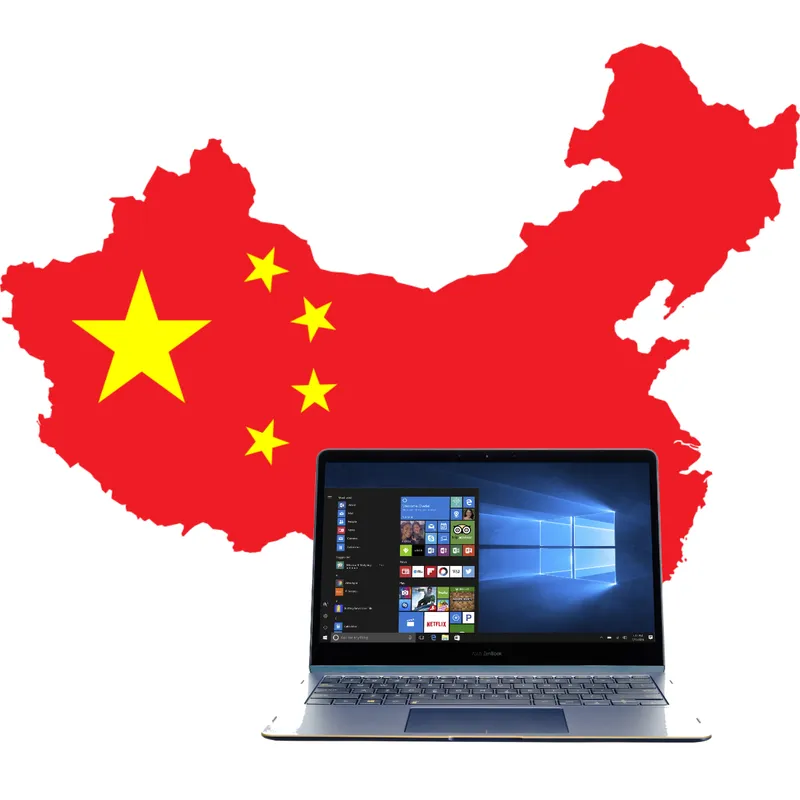
China has officially set a deadline of February 2027 for the complete removal of Windows 10 from government computers. This directive extends to both standard versions of Windows 10 and a specialized edition known as Windows 10 CMIT Government Edition. This specialized version was a collaborative effort between Microsoft and China Electronics Technology Group (CETC), through their joint venture C&M Information Technologies (CMIT), and was designed to adhere to stringent national security, encryption, and data management requirements.
Phased Rollout and National Security Concerns
While the official decommissioning date for the government edition is February 2027, several significant government entities have reportedly begun uninstalling the software preemptively, several months ahead of schedule. This early action is attributed to escalating concerns over national security and data privacy. The current mandate primarily targets specific state-linked organizations rather than imposing a universal ban across all civil service agencies. However, this move is widely interpreted as a significant step in Beijing’s broader strategy to phase out foreign technology in favor of domestic alternatives. This initiative encompasses a wide range of technological components, including office software, computer chips, servers, databases, and cloud infrastructure.
Emergence of Domestic Operating Systems
The vacuum left by the departure of Windows is expected to be filled by a range of homegrown operating systems. Prominent among these are Linux-based platforms such as Kylin OS and UnionTech UOS. Additionally, Huawei’s HarmonyOS is poised to play a crucial role, as it rapidly expands its reach beyond consumer electronics into enterprise and public sector applications. HarmonyOS received a significant boost following the successful safety certification of its HongMeng Kernel desktop version by Chinese regulators in 2026, solidifying its position as a viable option for critical state infrastructure.
China’s Long-Standing Push for Technological Self-Sufficiency
This latest directive is consistent with China’s long-term objectives to reduce its dependence on foreign technology providers. Over the past several years, Beijing has implemented various policies aimed at fostering domestic innovation and procurement. These have included mandatory hardware acquisition guidelines that prioritize “safe and reliable” domestic vendors and the increasing inclusion of Chinese operating systems in public tender requirements. The overarching goal is to construct a comprehensive technology ecosystem that operates entirely under domestic control, minimizing reliance on Western companies.
Challenges in Transition
Even with Microsoft’s efforts to provide customized versions of Windows that offer local authorities enhanced control over updates and encryption protocols, China remains resolute in its pursuit of complete technological sovereignty. The transition to domestic systems like HarmonyOS, Kylin, and UOS presents considerable challenges. A key question remains how smoothly these platforms can be integrated and scaled to fully replace Windows across the complex and extensive networks of government and large corporate entities.
Broader Implications for the Tech Landscape
The decision to purge Windows 10 from government systems underscores a strategic shift in China’s technological landscape. It reflects a growing emphasis on national security, data sovereignty, and the development of a robust indigenous technology sector. This move is not merely about replacing an operating system; it is part of a larger, multi-faceted strategy to build self-reliance across the entire digital infrastructure. The success of this transition will likely depend on the maturity, security, and compatibility of the domestic alternatives that are being rapidly developed and deployed.
Future Outlook
As the February 2027 deadline approaches, the focus will be on the practical implementation of this directive. The ability of Chinese technology firms to provide stable, secure, and scalable solutions will be critical. The government’s commitment to fostering domestic alternatives, coupled with regulatory support, suggests a determined effort to achieve technological independence. The global technology sector will be closely watching how this significant transition unfolds and its potential impact on international technology supply chains and market dynamics.
