

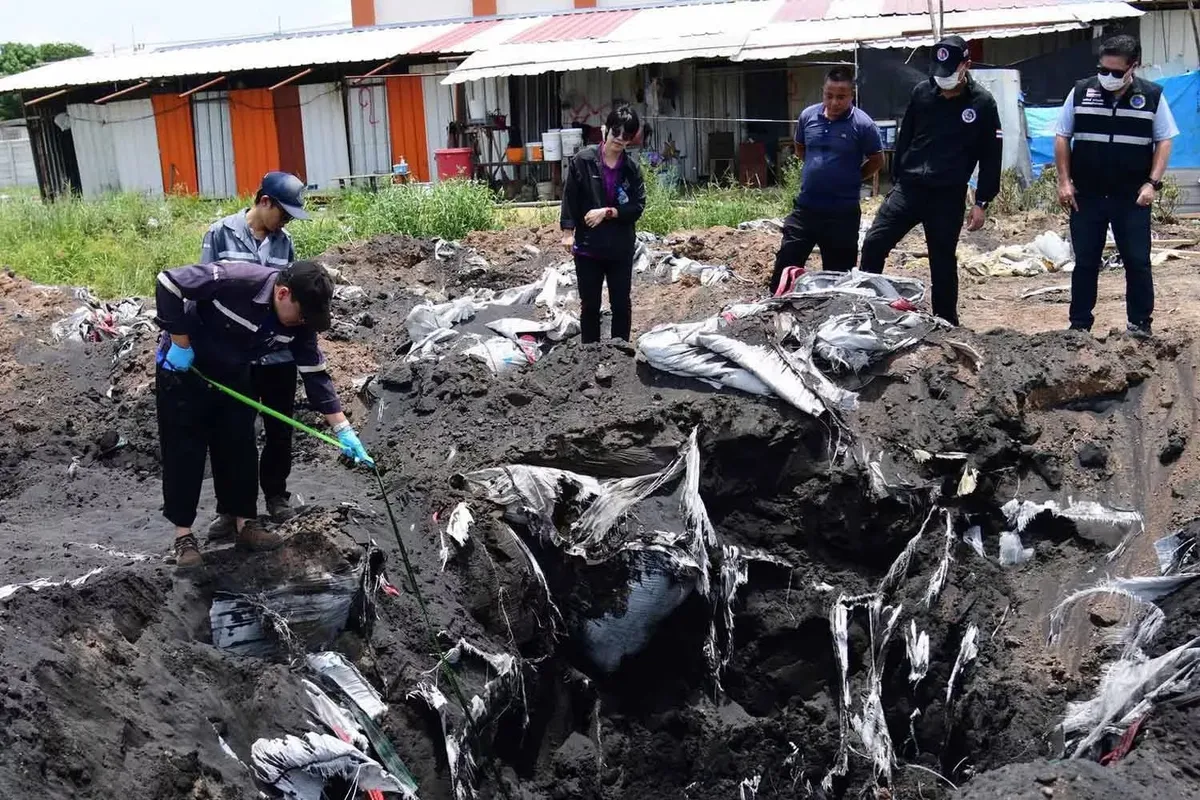
Thai authorities have identified 767 factories operating unlawfully across the nation, a significant finding stemming from a new data-driven inspection model implemented by the Ministry of Industry. This advanced system moves beyond traditional physical checks, leveraging technology to pinpoint irregularities in industrial operations. Deputy government spokeswoman Lalida Persvivatana announced the findings on Monday, detailing how the system analyzes various data streams to detect non-compliance.
New Technology Drives Factory Compliance Checks
The innovative system scrutinizes multiple information sources to identify potential violations. Key indicators include discrepancies between industrial waste management practices and actual production data, imbalances in the consumption of water, electricity, and raw materials, and inconsistencies with reported production processes or output volumes. The analysis also flags potential instances of trade fraud. Once irregularities are detected, the information is relayed to field inspectors via the “i-Auditor” system, which standardizes inspection procedures, records findings, and generates electronic reports.
Since the system’s deployment this year, it has successfully identified unlawful activities at 767 factories nationwide. The consequences for these non-compliant businesses have been swift: 131 factories have been ordered to cease operations, 636 have been instructed to implement corrective measures, and 391 factories are now facing legal proceedings. Specific details regarding the nature of the detected operations were not publicly disclosed.
Eastern Economic Corridor a Hotspot for Violations
A notable concentration of these violations was found within the Eastern Economic Corridor (EEC), a special economic development zone encompassing Chon Buri, Rayong, and Chachoengsao provinces, along with surrounding areas. According to Ms. Lalida, 53% of the factories found in violation were located within this strategically important region.
Thailand’s Industrial Landscape
Thailand’s industrial sector is substantial, with the Department of Industrial Works reporting a total of 77,058 registered industrial factories nationwide. Of these, 5,961 are situated within designated industrial estates.
The remaining factories, operating outside of industrial estates, are categorized based on their size and operational requirements:
- Category 1: 47 smaller factories with minimal environmental or safety impact, which are not mandated to obtain an operating license.
- Category 2: 3,361 medium-sized plants that are required to notify authorities before commencing operations.
- Category 3: 67,689 large-scale operations that must secure an operating permit prior to establishment and operation.
Ensuring Fair Competition and Public Safety
The government emphasizes that regulatory oversight aims to protect the public and foster a fair competitive environment within the industrial sector. Ms. Lalida stated, “Businesses that invest in wastewater treatment systems, waste management, and safety standards should not be disadvantaged by operators who cut costs by failing to comply with legal requirements.” This stance underscores the government’s commitment to penalizing businesses that gain an unfair advantage by circumventing environmental and safety regulations.
Public Participation in Monitoring
In addition to technological solutions, the Ministry of Industry has established a platform for public engagement in monitoring factory activities. The “Jaeng Ut” (report the industry) platform encourages citizens to report concerns or provide tips regarding factory operations. To facilitate effective reporting, individuals are asked to provide specific details, including the location of the incident, a clear description of the issue, the date and time, and any supporting evidence that can be safely collected.
This multi-pronged approach, combining advanced data analysis with public vigilance, aims to enhance compliance and ensure that Thailand’s industrial growth is both sustainable and responsible, safeguarding both the environment and public well-being.
