

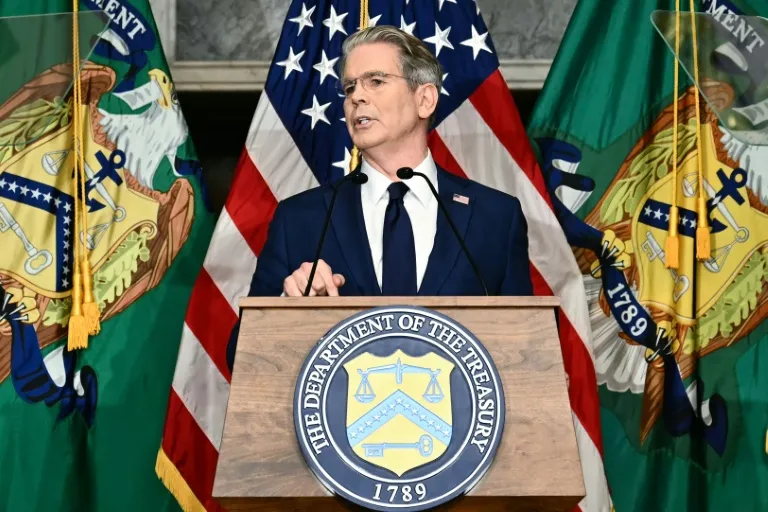
Finance ministers and central bank governors from the Group of Twenty (G20) convened in Asheville, North Carolina, for crucial discussions on global economic growth and stability. The two-day meeting, hosted by the United States, navigated a complex landscape shaped by international trade dynamics, geopolitical conflicts, and the ongoing challenge of fostering collaborative solutions to pressing economic issues.
US Priorities for the G20 Agenda
Under the rotating presidency of the United States, the G20 summit placed a significant emphasis on promoting robust economic growth worldwide. A senior U.S. Treasury official outlined key priorities for the gathering, including addressing “global imbalances” and tackling sovereign debt challenges. The discussions aimed to encourage member economies to steer clear of policies that could flood global markets with excess production and capacity, a move that can distort prices and create unfair competition.
This focus on production capacity and trade barriers comes amid heightened scrutiny of certain nations’ industrial output, which critics argue can depress global prices. The U.S. Treasury official noted that some G20 partners have experienced the effects of such practices, while the U.S. itself has implemented trade barriers. This echoes broader concerns about practices that may lead to dumping and hinder fair market competition.
Navigating Geopolitical and Trade Complexities
The Asheville meetings were underscored by significant geopolitical undercurrents. The fallout from ongoing international conflicts and trade disputes cast a shadow over the proceedings, raising questions about the group’s capacity for unified action on economic challenges. The U.S. Treasury Secretary, Scott Bessent, was notably present, a contrast to his absence from the previous year’s meeting hosted by South Africa, which has since been excluded from the G20 by the U.S.
The U.S. extended an invitation to Poland to participate, despite its non-permanent member status, signaling a shift in engagement. Tensions with the current U.S. administration led Brazil’s finance minister to forgo the gathering. Meanwhile, a representative from Russia was in attendance, prompting commentary from a European official who expressed reservations about Russia’s participation given its ongoing conflict with Ukraine.
The issue of “global imbalances” was acknowledged as a particularly sensitive topic, requiring “difficult conversations” among member nations, according to Josh Lipsky of the Atlantic Council. He further observed that existing trade friction, such as the U.S.-Canada trade dispute, can impact the cohesion of even smaller groups like the G7, whose finance ministers were also expected to convene on the sidelines of the G20 talks.
Media Access and Scrutiny
A point of contention arose regarding media accreditation for the summit. Several prominent U.S. news organizations, including The New York Times and Bloomberg News, reported being denied credentials to cover the event. A spokesperson for The New York Times characterized this as an “effort by the administration to undermine independent journalism” and an attempt to “evade public scrutiny.”
In response, a Treasury spokesperson stated that nearly 300 media representatives from approximately a dozen countries were invited, including journalists from The New York Times, NPR, and The Washington Post. The official emphasized that media personnel would have substantial access to policymakers and highlighted the responsibility to report factual information, urging against coverage that prioritizes “clicks, engagement, or sensationalism.”
Economic Outlook and Sanctions Pressure
Beyond the broader economic agenda, the summit also served as a platform for direct diplomatic engagement. Secretary Bessent was slated to hold bilateral meetings with counterparts, advocating for increased economic isolation of Iran. He intended to deliver a strong message urging compliance with U.S. sanctions, linking continued access to the dollar-based financial system to adherence to these measures.
Business leaders were also present, contributing to discussions on obstacles to investment, innovation, and productivity. Regarding concerns about rising Treasury bond yields, seen as an indicator of interest rates, a Treasury official expressed optimism that interest costs would moderate as inflation eases over time.
Background of the G20
The G20, comprising 19 nations, the European Union, and the African Union, was established following the 1997-1998 Asian financial crisis. Its foundational purpose is to foster global economic and financial stability through cooperation and dialogue among major economies.
The Asheville summit, therefore, represented a critical juncture for the G20, testing its ability to foster consensus and drive collective action on global economic challenges amidst a backdrop of evolving geopolitical realities and trade policies.
